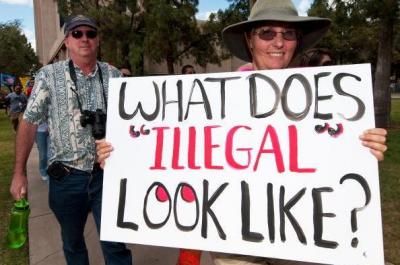
Sharron Angle …


I ask you is this woman really qualified to be in a position of power? definitely against what family is all about

Sharron Angle believes Harry Reid’s continued support for amnesty and special benefits for illegal immigrants is at the expense of Nevada taxpayers.

credit to Getty images for photo

http://www.youtube.com/watch?v=-TrIKQagJPs

Urgent Update: GOP’s Deceptive Ads and Expanding their Ad Buy


Rapid Reponse


Breaking: Republicans expand ad buys into seven additional districts bringing the total to over 60 races.

With just 24 hours to go before our ad buy deadline, news reports broke yesterday that the Republicans’ campaign attack squad has expanded their advertising blitz.

The claims in Republican ads have already been debunked by the Pulitzer Prize winning PolitiFact. Yet, they now have the resources to EXPAND their false attacks into more districts. It’s Rove-style dirty politics at its worst.

It’s up to us to set the record straight but we have to go all-in before tomorrow’s deadline hits.

We have just 24 hours left before our deadline to wire more money for ads but we’re still $72,179 short.

Please contribute $5, $10 or more to our Rapid Response Ad Fund today and your gift will be matched dollar-for-dollar by a group of committed Democrats.

We can stop them — we have done it before. But I need you to help us stand up to their smears.

Onward to Victory,

Jon Vogel
Jon Vogel
DCCC Executive Director

P.S. We have set up a Tip Box to report abusive or deceptive robocalls, mailers, or internet scams/rumors. If you see this kind of widespread abuse in your district, you should send a message to our Tip Box by emailing at dccc@dccc.org. Please contribute to our Rapid Response Ad Fund now so we can continue to keep fighting back.

thrumming Thursday &some News


i hope that people who have yet to decide who they will be voting for understand the need for a change in the way the mid-term elections are viewed in the year 2010. The idea that the midterms are no big deal is just old school politics because the end result or impact was usually in your own particular state. We all have to accept that the mid-terms are a beacon of the change some of us voted for in 2008 because the fact is …what happens on Nov. 2 will determine our future and could move us forward into the 21st Century or the middle and lower class could continue living with the status quo. It will be the difference between moving stem cell research along, standing up and speaking out for the current Hyde amendment, agreeing to move immigration reform to the table and keeping laws like SB1070 and the birther law out of the hands of states willing to engage in racial profiling to control their reasonably suspicious people, btw the idea that being undocumented here in the US  refers to Hispanics only is absurd. The US is going through non-partisan realities that need to be handled by people(All of Congress) who care about health care reform and all the corrections that are needed, equal wages for equal work, maintain religious freedom as well as the separation of church and state, a woman’s right to choose, oil prices, our environment,education, local and national disaster response time improvements. We are ten years out and parts of New Orleans still look like such a disaster. We told Haiti we would help but not only is that not moving forward quick enough there are reports that money donated have yet to become a reality. It is obvious we all need to be watchdogs of our own destiny, vote out Republicans who have a history of definitely making bad decisions or things will get worse. We have people who claim to be lobbying when in fact they are bribing officials and embezzling funds not just from Wall Street, Main Street or even Average Joe but from 1st nation people and Black Farmers, we have sexual predators who are in charge of and who make laws that will guarantee the safety of our kids, government officials making passes at young men in what should be safe environments for anyone while at work. We have candidates from the right who clearly are on the extremist side of the issues trying to get into positions of power who obviously only plan to represent only a select few and will repeal, replace and eliminate as soon as they grab power. If you listen to both sides of any political debate, interview or panel discussion it all seems extremely simple to me… a change has to be made and yes, I definitely am biased. I believe for change, positive change for All Americans is to get truer Dems on the floor of Congress… our vote on November is the way to start showing our power as Americans… Vote Dems November 2nd

im just sayin

Other News …

**Jobless claims fall below 450thousand

**CO’Donnell complains the media is assassinating her

**President Obama will be in Maryland and Illinois to do some campaigning

**Today is the annv of the Afghanistan war

**Apple will be making their version of the iPhone

**October is Breast Cancer awareness month

**Reports are that Karzai and Taliban have been meeting

**The NRA will endorse 58 Democrats stating it’s useful and good practice to support those politicians that support them no matter what side of the aisle

**Insurance companies are by passing HCR rules

**Desmond Tutu retires

CSPAN

Senate HELP Cmte. Hearing on Retirement Security Senate HELP Cmte. Hearing on Retirement Security
Today
Sen. Carl. Levin (D-MI) Press Conference on Private Security Contractors in Afghanistan Sen. Carl. Levin (D-MI) Press Conference on Private Security Contractors in Afghanistan
Today
Pres. Obama Remarks at MD Gov. O'Malley Rally Pres. Obama Remarks at MD Gov. O’Malley Rally
Today
International Monetary Fund and World Bank Press Conferences International Monetary Fund and World Bank Press Conferences
Today
White House Briefing with Press Secretary Robert Gibbs White House Briefing with Press Secretary Robert Gibbs
Today
U.S. Energy Association Annual Energy Supply Forum U.S. Energy Association Annual Energy Supply Forum
Today
Nat'l Foundation for Infectious Diseases Press Conference on Influenza Prevention Nat’l Foundation for Infectious Diseases Press Conference on Influenza Prevention
Today
Connecticut Senate Debate Connecticut Senate Debate
Today
Nat'l Foundation for Infectious Diseases Press Conference on Influenza Prevention Nat’l Foundation for Infectious Diseases Press Conference on Influenza Prevention
Today
Connecticut Senate Debate Connecticut Senate Debate
Today
Delaware House At Large Race Debate Delaware House At Large Race Debate
Wednesday
Debate for Florida's U.S. Senate Seat Debate for Florida’s U.S. Senate Seat
Wednesday
Pennsylvania 7th House District Debate Pennsylvania 7th House District Debate
Friday
Council on Foreign Relations Discussion on Global Finance Council on Foreign Relations Discussion on Global Finance
Wednesday
Bipartisan Policy Center Conference on National Security Bipartisan Policy Center Conference on National Security
Wednesday
Pres. Obama Presents Medal of Honor Pres. Obama Presents Medal of Honor
Wednesday
State Department Press Briefing State Department Press Briefing
Wednesday
British P.M. David Cameron Remarks at Conservative Party Conference British P.M. David Cameron Remarks at Conservative Party Conference
Wednesday

Stop auto makers from weakening fuel efficiency laws


Change.org

Do you want new cars and trucks sold in America to get 60 MPG by 2025?  

Sign the Petition

The White House made a major announcement this week about its plan to set new fuel economy standards as high as 62 MPG for cars and trucks by 2025. The new rules could save Americans billions of dollars at the pump and help curb our dangerous addiction to oil.

But the auto industry is expected to put up a big fight to keep the new fuel economy standards as low as possible.

Right now the EPA is accepting public comment, and this is our chance to make sure Washington policymakers hear us loud and clear: We don’t want our country held hostage by Big Auto or Big Oil anymore. It’s way past time to bring more fuel-efficient cars on the market.

Don’t let the car manufacturers drown out the American consumer. Tell the White House and EPA officials to aim high and set new fuel economy standards that put consumers and a cleaner, greener future ahead of corporate profits.

The truth is, the technology exists right now to improve fuel economy for cars and trucks – and automakers know it. But the auto industry has always been slow to adopt new fuel-saving and safety technology in the absence of strong standards. They opposed mandatory seat belts and air-bags and claimed that the first fuel efficiency standards would prevent Americans from being able to choose the kind of car or truck they want to drive. Today, we know that these standards have made Americans safer, saved them money, cleaned up our air, and lessened the country’s dependence on oil.

60 MPG is entirely doable, but the auto industry is lobbying federal policymakers right now to keep new fuel standards low. Make sure the White House and the EPA know where you stand on the new standards.

Tell the EPA and the Obama administration to stand up to Big Auto and set the bar high for fuel economy- at least 60 MPG by 2025!

Thanks for taking action,

– The Change.org Team

8 ‘gotchas’ of the Credit CARD Act …as reported by Bankrate.com


By Leslie McFadden • Bankrate.com
Credit card bill 

Highlights
  • That great, low interest rate can still increase if you miss payments.
  • Although you’ll get notice of a rate increase, you can’t reject it.
  • Interest-rate increases are restricted, but penalty rates are not capped.

Over the past year, the Credit Card Accountability, Responsibility and Disclosure Act of 2009, or Credit CARD Act, has rolled out in three major stages. The last batch of reforms recently took effect Aug. 22. Among the numerous new protections for consumers: restrictions on interest rate increases, limits on penalty fees and more time to reject changes in terms.

Now that all of the provisions have taken effect, it’s important to understand where the law falls short. The CARD Act doesn’t put controls on every possible adjustment a card issuer might make to increase profitability or reduce risk. Some of the protections leave wiggle room for credit card issuers to raise rates and impose fees, and allow them to make certain changes quietly.

8 limitations of the Credit CARD Act
  • Certain rate increases allowed during the first year.
  • Rate hikes on future purchases can take effect quickly.
  • Not every change in terms requires advance notice.
  • You can’t opt out of rate increases and certain changes.
  • No cap on penalty interest rates.
  • Rate reductions aren’t guaranteed despite required evaluations.
  • Inactivity can still trigger penalties.
  • No cap on certain fees.

Certain rate increases allowed during the first year. In general, the CARD Act prohibits rate increases and other “significant changes” in terms during the first year after account opening. It also points to four exceptions where an increase would be allowed during the first year: if the credit card has a variable rate tied to an index and the index has increased, if the account is 60 days delinquent, if a hardship plan has ended or if the promotional rate has expired. Promotional rates must last for a period of at least six months. Translation: That great, low interest rate can still increase if you neglect to make payments on time during the first year or if the promotional period doesn’t span a full 12 months.

Rate hikes on future purchases can take effect quickly. After the first year following an account opening, rate increases can be applied to future transactions with 45 days’ advance notice of the change. The issuer can even apply the higher rate to new purchases charged during the 45-day period.

“After 14 days, the new rate will apply to further transactions. At the end of the 45-day period, the bank can begin charging the new rate for any balances you accrued after the 14th day after the bank sent the notice,” states HelpWithMyBank.gov, a website operated by the Office of the Comptroller of the Currency.

In other words, piling on purchases during the 45-day period can prove to be an expensive move.

Not every change in terms requires advance notice. Rate increases on future transactions and changes to fees that are required to be disclosed at account opening in a table, along with increases to the required minimum payment, must be announced to the consumer at least 45 days in advance.

advertisement

Other changes can take effect quietly. According to HelpWithMyBank.gov, “The bank does not have to provide you notice if it closes your account, suspends future credit privileges or reduces your credit line.” Issuers do have to give a 45-day notice before imposing a penalty for going over a lowered credit limit.

For this reason, it’s a good idea to read all correspondence and carefully inspect your statement for changes.

You can’t opt out of rate increases and certain changes. The CARD Act specifically gives consumers the right to reject a rate increase where the 45-day advance notice requirement is applicable. Unfortunately, the Federal Reserve issued a contradictory regulation in 2010, negating the requirement that issuers inform consumers that they may decline a rate increase.

“You still get 45 days notice of the rate increase — you just can’t reject it,” says Chi Chi Wu, a staff attorney at the National Consumer Law Center.

If you shutter your account, you still aren’t fully protected from subsequent rate hikes. “If you close your account, obviously the rate won’t apply to future (purchases). However, if there’s any other rate change that’s permitted on the existing balance … you can’t reject those changes even if you close your account,” says Wu.

Permitted rate hikes on existing debt would include those triggered by a 60-day delinquency, a change in the index for a variable-rate card, the expiration of a promotional rate or the termination of a hardship plan.

What about other changes in terms? “You can reject changes to the fees that are disclosed in the account-opening table,” says Wu. Consumers can’t reject changes to terms that are not included in the table, and they can’t reject an increase to the minimum payment.

No cap on penalty interest rates. Even though the Credit CARD Act restricts when interest rates can increase, it doesn’t actually cap penalty rates. Falling behind on payments could still mean a steep rate hike after 60 days of nonpayment, not to mention a late fee and a lower credit score. The median penalty interest rate among the 12 largest bank card issuers is 29.9 percent, according to recent research from the Pew Health Group.

Rate reductions aren’t guaranteed despite required evaluations. A provision that took effect Aug. 22 requires issuers to evaluate rate increases that were imposed on or after Jan. 1, 2009, every six months, but they only have to lower the rate if the factors reviewed indicate that a rate reduction is appropriate. The law doesn’t require a specific amount of reduction in rate. The only exception is if the rate increase was triggered by a 60-day delinquency. If the cardholder pays on time for six months following the rate hike, the bank must terminate the rate increase.

Inactivity can still trigger penalties. The final set of rules that took effect Aug. 22 bans issuers from assessing a fee for not using the card. It doesn’t prohibit issuers from assessing an annual fee in general. It also doesn’t prevent issuers from closing the account or lowering the limit due to infrequent use. As our recent study of credit card fees shows, a number of card issuers may shutter accounts if they go unused for too long.

No caps on certain fees. The Credit CARD Act limits penalty fees, imposed for violations such as late payments or exceeding the limit, and prevents the total amount of nonpenalty fees that can be charged on a card in the first year to no more than 25 percent of the initial credit limit. For example, if the credit limit upon signup is $1,000, setup fees can’t total more $250 for the first year.

Yet, the amount of any nonpenalty fee, such as a balance transfer fee or foreign transaction fee, isn’t restricted. You can merely reject increases to fees that were disclosed at account opening in a summary table when you receive the notification letter. Rejecting an increase could result in account closure.