© Provided by WGHP-TV Greensboro

I fear not the man who has practiced 10,000 kicks once, but I fear the man who has practiced one kick 10,000 times.

What happens if Section 219 has no brakes

It reads like a blank check for deeper military‑industrial fusion, passed at a moment when Israel’s conduct is under unprecedented global scrutiny.
Section 219 of the House version of the Fiscal Year 2027 National Defense Authorization Act (NDAA) establishes the “United States–Israel Defense Technology Cooperation Initiative,” a framework to expand and accelerate U.S.–Israel defense technology collaboration across a wide range of military domains
Creates an Executive Agent: The Secretary of Defense must designate an executive agent to lead and coordinate U.S.–Israel defense technology cooperation. This agent’s authority takes precedence over other DoD component heads in matters related to Section 219
Expands Cooperation: It directs the Pentagon to deepen integration in areas such as:
Industrial Integration: Encourages co-production and co-development of technologies, embedding Israeli innovations into U.S. defense systems and supply chains
Reporting Requirements: Mandates regular briefings and annual reports to Congress on progress, technology transitions, and adoption of Israeli defense innovations
Legislative Background
Originally part of the U.S.–Israel FUTURES Act (H.R. 7540/S. 3855), which sought to formalize deeper U.S.–Israel defense ties
In the House NDAA, it was renumbered from Section 224 to Section 219
This is an overt abomination of American Values
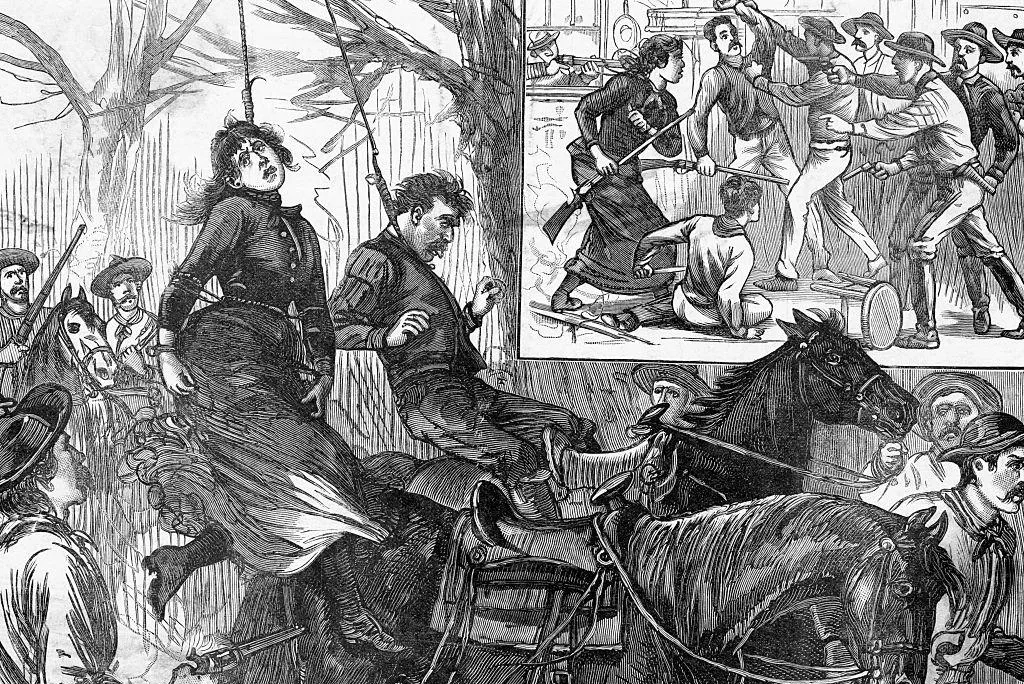
Eliza McGraw | History Correspondent March 12, 2018
On July 20, 1889, in a gulch by Wyoming’s Sweetwater River, six cattlemen lynched a man and a woman accused of cattle rustling. As the purported bodies twisted from the same tree limb, a rider galloped toward the town of Rawlins with the news: cattlemen had exacted revenge on two ruthless thieves, Jim Averell and Ella Watson, the woman they called Cattle Kate.
history.com for the complete article
People aren’t powerless — We are not always aware of what our rights actually are. Lately, it is appearing as if Border Patrol and ICE rely on confusion, intimidation, and silence. Here’s the fast, actionable version so anyone can resist and report misconduct.
These protections have existed for decades under Supreme Court rulings limiting suspicionless stops.
Phone: 1‑877‑463‑4466 Report: “Warrantless immigration boarding / mass ID check.”
Phone: 1‑800‑872‑7245 Report unauthorized law enforcement questioning.
TSA: 1‑866‑289‑9673 Report improper ID demands on domestic flights.
DHS Civil Rights (CRCL) Email: CRCL@hq.dhs.gov Phone: 202‑401‑1474
DHS Inspector General (OIG) Hotline: 1‑800‑323‑8603 Email: DHSOIGHOTLINE@oig.dhs.gov
These organizations actively track bus/train sweeps and usually intervene.
As Human beings, we comply because we think we have no choice, but we do. Hopefully, sharing this information helps others report unlawful ID sweeps and hold agencies accountable.
Sources: Public information, the internet, multiple legal and civil rights organizations available to everyone above!
Nativegrl77

Tue, Jul 21, 10:00 AM PDT to Wed, Jul 22, 11:00 PM PDT
What ~ Reminders
Hot conditions with high temperatures up to 88 to 95 degrees expected and low temperatures from 60 to 65 degrees. This will pose a moderate to major risk of heat-related illness.
Where
Eastern Kitsap County, City of Seattle, Downtown Everett / Marysville Area, Eastside, Foothills and Valleys of Central King County, Foothills and Valleys of Pierce and Southern King Counties, Foothills and Valleys of Snohomish and Northern King Counties, Lowlands of Pierce and Southern King Counties, and Shoreline / Lynnwood / South Everett Area.
When
From 10 AM Tuesday to 11 PM PDT Wednesday.
Impacts
Heat will significantly increase the risk of heat-related illnesses for those who are sensitive to heat, especially those without effective cooling or adequate hydration.
Additional Details
Areas closest to the water will experience cooler daytime high temperatures.
Summary
Drink plenty of fluids, stay in an air-conditioned room, stay out of the sun, and check up on relatives and neighbors. Young children and pets should never be left unattended in vehicles under any circumstances. Take extra precautions if you work or spend time outside. When possible, reschedule strenuous activities to early morning or evening. Know the signs and symptoms of heat exhaustion and heat stroke. Wear lightweight and loose-fitting clothing when possible. To reduce risk during outdoor work, the Occupational Safety and Health Administration recommends scheduling frequent rest breaks in shaded or air-conditioned environments. Anyone overcome by heat should be moved to a cool and shaded location. Heat stroke is an emergency! Call 9 1 1. For sheltering information and other human services in your area, dial 2 1 1 during business hours or visit wa211.org anytime.
Issued By
NWS Seattle WA


You must be logged in to post a comment.