
This was first posted in 2022 … there could be a lot of updates
Daily Archives: 07/23/2026

1967 – Detroit Riots of 1967 begin
AFP VIA GETTY IMAGES
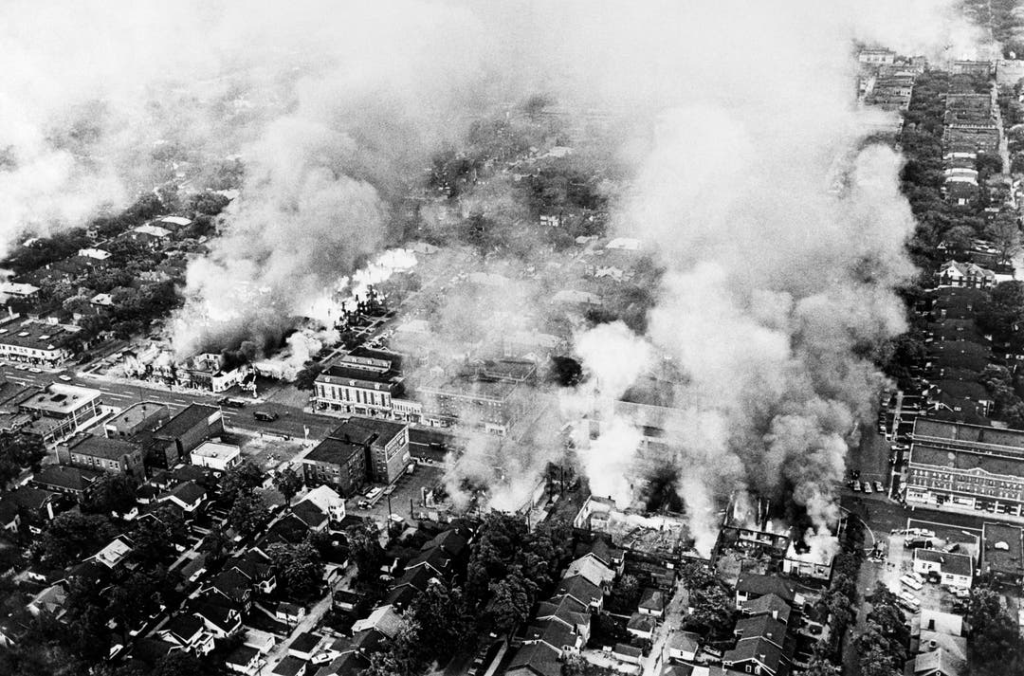
AERIAL VIEW OF BURNING BUILDINGS IN DETROIT ON JULY 25, 1967 DURING RIOTS THAT ERUPTED FOLLOWING A POLICE OPERATION
The 1967 Detroit Riots were among the bloodiest in American history. The strife occurred during a period of Detroit’s history when the once-affluent city was struggling economically, and race relations nationwide were at an all-time low.
The Detroit Police Department’s vice squad often raided illegal drinking establishments in the city’s poorer neighborhoods and at 3:35 a.m.
Sunday morning, July 23, they moved against a club that was hosting a party for returning Vietnam War veterans. The early-morning police activity drew a crowd of onlookers, and the situation rapidly deteriorated.
Soon thousands of people had spilled out onto the street from nearby buildings, throwing rocks and bottles at the police, who quickly fled the scene. Looting began on 12th Street, where the club was located, and shops and businesses were ransacked.
By dawn, the first fire broke out, and soon much of the street was ablaze. By midmorning, every policeman and fireman in Detroit was called to duty. Back on 12th Street, officers struggled to control the crowd.
The rioting continued all week, and the U.S. Army and the National Guard were called in to quell the worst of the violence. By the time the bloodshed, burning and looting ended after five days, some 43 people were dead, many more seriously injured and nearly 1,400 buildings had been burned or ransacked.
READ MORE: The 1967 Riots: When Outrage Over Racial Injustice Boiled Over
Share this:

Dodd-Frank – The history
Congress’ Financial Reform Law Is Doing Important Work
The Dodd–Frank Wall Street Reform and Consumer Protection Act was enacted on July 21, 2010, and signed into law by President Barack Obama
In 2015, Congress’s financial reform law turned five. Dodd-Frank, the massive package of Wall Street reforms passed in the wake of the Great Recession, is massively underrated. The package overhauled the financial sector with the goals of tightening up enforcement and increasing consumer protections.
One major component of the law was the establishment of the Consumer Financial Protection Bureau, or CFPB—the only financial regulator dedicated to protecting consumers. In its four years of existence, the CFPB has helped return more than $10.1 billion to more than 17 million consumers in addition to protecting Americans from predatory lenders and deceptive mortgage practices.
 Despite this extraordinary success at keeping Wall Street responsible and protecting hard-working Americans, the law continues to be under attack. In fact, even though Dodd-Frank isn’t even fully in place yet, Congress has tried 139 times to either amend or repeal parts of the law. And the financial industry has spent $3.25 billion to influence the government in the five years since the law was passed. That means that if financial industry spending in the last five years were a country, it would be the 158th largest economy—bigger than 30 developing nations.
The powerful lobby against the rule has been successful in hamstringing the full implementation of the law. As a part of the package, many regulatory agencies were tasked with creating separate rules and because of the excessive lobbying and infighting, there are still 83 separate rules that haven’t been written yet. Included in the unfinished laws, are important rules like mandating disclosure of CEO-to-worker pay ratios and strengthening the controversial “Volcker Rule.”
BOTTOM LINE: We have Dodd-Frank to thank for the common sense reforms that have helped keep Wall Street accountable and level the playing field between consumers and the financial industry. But despite Dodd-Frank’s success, powerful lobby groups and conservative lawmakers have continued to thwart the law’s implementation.
Share this:

President Nixon refuses to hand over tapes
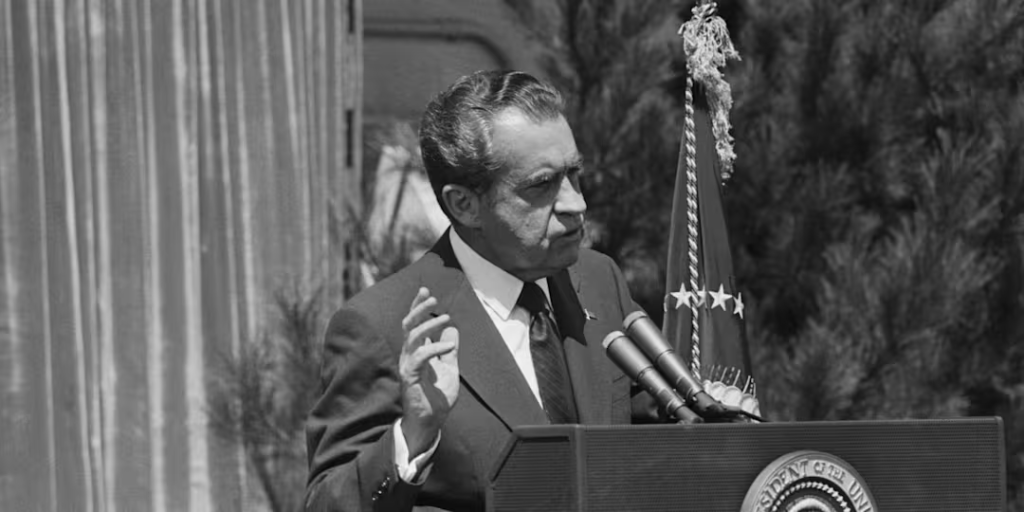
On July 23, 1973, President Richard Nixon refuses to hand over his secret audio recordings to the Senate Watergate Committee and Special Prosecutor Archibald Cox, citing executive privilege. His refusal kicked off a legal battle that culminated in the U.S. Supreme Court’s unanimous ruling one year later that Nixon must hand over the tapes.
Between February 16, 1971, and July 18, 1973, Nixon secretly recorded some 3,700 hours of meetings and telephone conversations in the Oval Office, the Cabinet Room, his office in the Executive Office Building, the Lincoln Sitting Room and the Aspen Lodge at Camp David. Presidential aide Alexander Butterfield helped the Secret Service install the recording system at Nixon’s request, and Butterfield was one of the few people who knew about it.
Source: for the complete article history.com
Share this:

Sport Mascots and Native Americans

JUL 23, 2021
The Cleveland Indians announce that the team will change its name to the Cleveland Guardians at the end of the season, out of respect for Native Americans. It had retired its grinning “Chief Wahoo” logo in 2018.
Source: history.com

 Be a Seed for Change
You must be logged in to post a comment.