
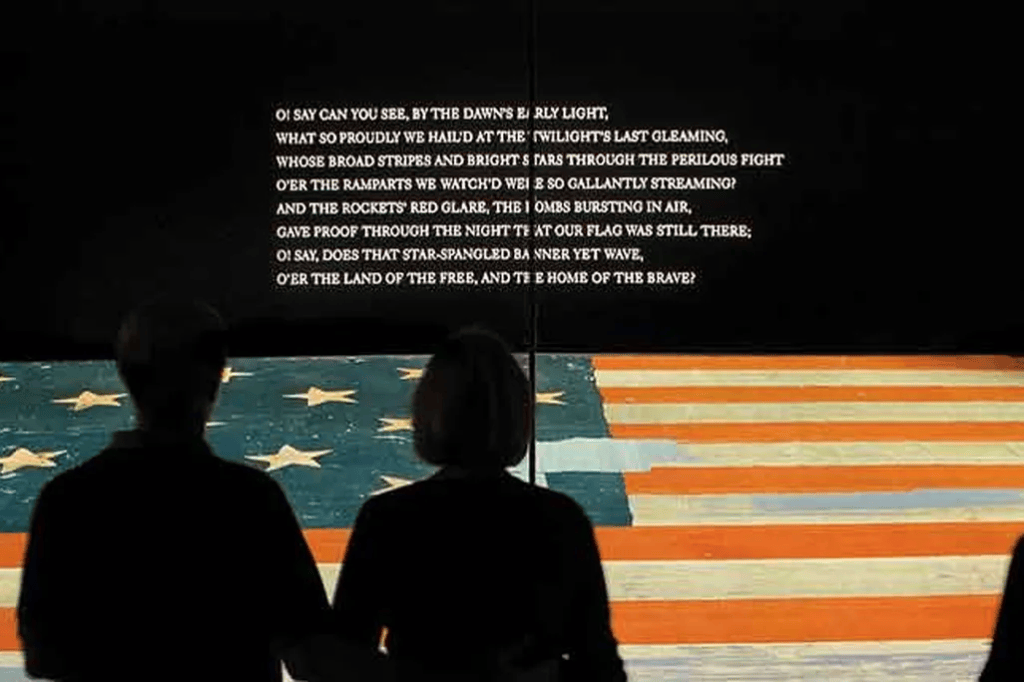
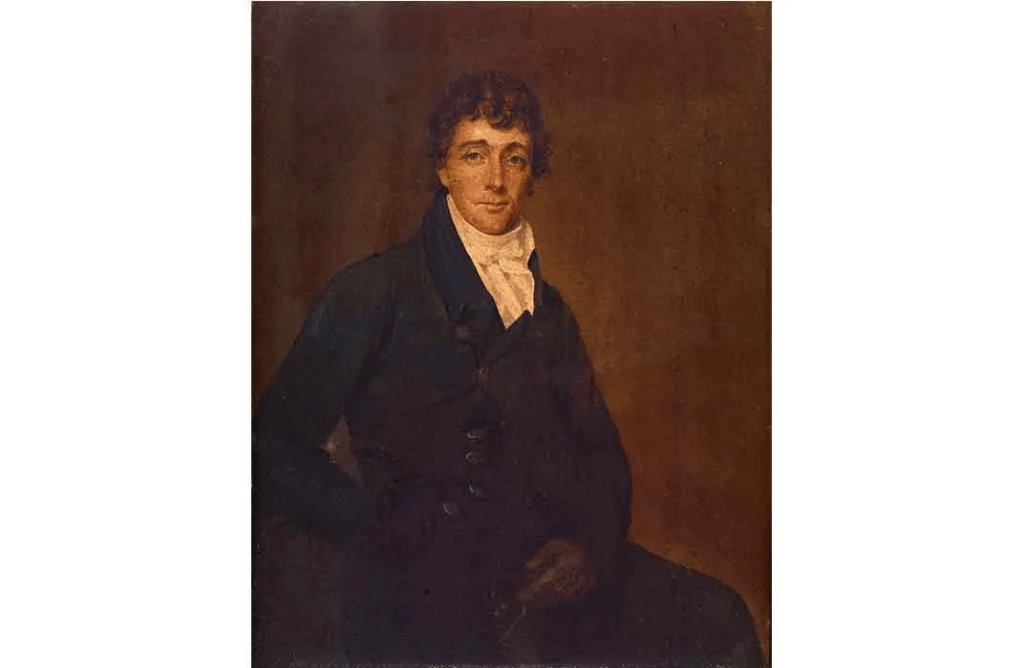
During his lifetime, abolitionists ridiculed Key’s words, sneering that America was more like the “Land of the Free and Home of the Oppressed”
Christopher Wilson | Chair, Division of Home and Community Life, National Museum of American History
Every 4th of July, I ask my family to sit down in front of the radio as if we’re tuning in to one of Franklin Delano Roosevelt’s Fireside Chats, the nationally broadcasted speeches the 32nd president made between 1933 and 1934. Ours is a family tradition of listening while National Public Radio personalities recite the Declaration of Independence. Though the exercise works better in my head than it does in practice—it is always a challenge to get my nine- and six-year kids to sit quietly on a day promising parades and fireworks—I never fail to get something out of the experience.
And I think my children do as well.
We take a bit of time to contemplate the words and ideals that defined the nation. Something about paying attention solely to spoken words for a few minutes provokes deep discussion.
It is instructive and moving to hear the entire text in all its beautiful eloquence and with all the inherent irony of its rhetoric of freedom and equality contrasting with the realities of slavery and the treachery practiced on the “merciless Indian savages.” When we consider the legacy of the Declaration and its author, Thomas Jefferson, we confront and debate this compelling paradox—that the man who trumpeted the “self-evident” truth that “all men are created equal” owned some 175 slaves.
We note the paradox underlying Jefferson’s authorship of the Declaration. It comes up all the time, as in the smash Broadway hit Hamilton when Lin-Manuel Miranda’s Alexander Hamilton takes Jefferson down a peg or two:
A civics lesson from a slaver. Hey neighbor
Your debts are paid cuz you don’t pay for labor
“We plant seeds in the South. We create.”
Yeah, keep ranting. We know who’s really doing the planting
As of 2026, Christopher W. Wilson is still listed as Curator and Chair of the Division of Home and Community Life at the Smithsonian’s National Museum of American History
Source: Smithsonianmag.com for the complete article
A very good read


You must be logged in to post a comment.