Tag Archives: Senate

the Senate considers S.1569,a bill to ensure the complete and timely payment of the obligations of the USgovt ~~ CONGRESS 10/12 ~~ the House considers, appropriations for the Bureau of Indian Affairs


WethePeople

The Senate stands in adjournment until 11:00am on Saturday, October 12, 2013.

The time until noon will be equally divided and controlled between the two Leaders or their designees.

 At noon, there will be a roll call vote on the motion to invoke cloture on the motion to proceed to S.1569, a bill to ensure the complete and timely payment of the obligations of the United States Government until December 31, 2014.

By unanimous consent, the Senate confirmed Executive Calendar #340, the nomination of Lt. Gen. James M. Kowalski, to be Lieutenant General in the Air Force.

12:00 noon The Senate began a 15 minute roll call vote on the motion to invoke cloture on the motion to proceed to S.1569, a bill to ensure the complete and timely payment of the obligations of the United States Government until December 31, 2014;

Not Invoked: 53-45

Senator Reid changed his vote to no and entered a motion to reconsider the failed cloture vote at a later time.

The Senate stands in recess subject to the call of the Chair

2:15pm The Senate has reconvened and has resumed consideration of the motion to proceed to S.1569, a bill to ensure the complete and timely payment of the obligations of the United States Government until December 31, 2014, with senators permitted to speak for up to 10 minutes each

WRAP UP

ROLL CALL VOTE

1)      Motion to invoke cloture on the motion to proceed to S.1569, a bill to ensure the complete and timely payment of the obligations of the United States Government until December 31, 2014; Not Invoked: 53-46

LEGISLATIVE ITEMS

Discharged the Energy Committee and passed S.812, a bill to authorize the Secretary of the Interior to take actions to implement the Agreement between the United States of America and the United Mexican States Concerning Transboundary Hydrocarbon Reservoirs in the Gulf of Mexico.

Began the Rule 14 process of H.J.Res.76, National Nuclear Security Administration Continuing Appropriations Resolution, 2014.

Completed the Rule 14 process of H.J.Res.79, Border Security and Enforcement Continuing Appropriations Resolution, 2014.

EXECUTIVE ITEMS

Confirmed Executive Calendar #340, the nomination of Lt. Gen. James M. Kowalski, to be Lieutenant General in the Air Force.

************************************************

Last Floor Action:
8:28:20 P.M. – The House adjourned.

The next meeting is scheduled for 9:30 a.m. on October 12, 2013.

DEBATE – The House proceeded with forty minutes of debate on H.J. Res. 80.

———————————————————————–

A power plant for the Internet: our newest data center in Alabama


Two technicians servicing server racks in a modern data center
Technicians maintain server racks beneath an extensive network of overhead cables in a modern data center.


Every time you check your Gmail, search on Google for a nearby restaurant, or watch a YouTube video, a server whirs to life in one of our data centers.
Data centers are the engines of the Internet, bringing the power of the web to millions of people around the world. And as millions more people come online, our data centers are growing, too. We’ve recently expanded our data centers in Iowa, Georgia, Singapore and Belgium.
And today we’re announcing a new data center in Alabama—our 14th site globally.
 
This time, we’re doing something we’ve never done before: we’ll be building on the grounds of the Widows Creek coal power plant in Jackson County, which has been scheduled for shutdown. Data centers need a lot of infrastructure to run 24/7, and there’s a lot of potential in redeveloping large industrial sites like former coal power plants. Decades of investment shouldn’t go to waste just because a site has closed; we can repurpose existing electric and other infrastructure to make sure our data centers are reliably serving our users around the world.

At Widows Creek, we can use the plants’ many electric transmission lines to bring in lots of renewable energy to power our new data center. Thanks to an arrangement with Tennessee Valley Authority, our electric utility, we’ll be able to scout new renewable energy projects and work with TVA to bring the power onto their electrical grid. Ultimately, this contributes to our goal of being powered by 100% renewable energy.

In 2010, we were one of the first companies outside of the utility industry to buy large amounts of renewable energy. Since then, we’ve become the largest corporate renewable energy purchaser in the world (in fact we’ve bought the equivalent of over 1.5 percent of the installed wind power capacity in the U.S.). We’re glad to see this trend is catching on among other companies.

Of course, the cleanest energy is the energy you don’t use. Our Alabama data center will incorporate our state-of-the-art energy efficiency technologies. We’ve built our own super-efficient servers, invented more efficient ways to cool our data centers, and even used advanced machine learning to squeeze more out of every watt of power we consume. Compared to five years ago, we now get 3.5 times the computing power out of the same amount of energy.

Since the 1960s, Widows Creek has generated power for the region—now the site will be used to power Internet services and bring information to people around the world. We expect to begin construction early next year and look forward to bringing a Google data center to Alabama.

Source: Posted by Patrick Gammons, Senior Manager, Data Center Energy and Location Strategy

The SOS was right in front of our… my face. Yes, I felt the urgency to post this article back then. They were giving us info about what they were doing,  telling voters the reality of how Data centers will impact our lives in America, and not necessarily in a good way. talk’bout naivete. sigh

The struggle for land, energy, water, and utilities will be felt in real time, with increased costs to constituents in ways no one wants but has no authority to regulate.

Will the negative impact on communities in America affect those who agreed to have a data center in their city, finally causing them to speak up and out against this astronomical amount

image of a data center is from the internet

Nativegrl77

Things You May Not Know about the Declaration of Independence


1. The Declaration of Independence wasn’t signed on July 4, 1776.
On July 1, 1776, the Second Continental Congress met in Philadelphia, and on the following day 12 of the 13 colonies voted in favor of Richard Henry Lee’s motion for independence. The delegates then spent the next two days debating and revising the language of a statement drafted by Thomas Jefferson.

On July 4, Congress officially adopted the Declaration of Independence, and as a result the date is celebrated as Independence Day. Nearly a month would go by, however, before the actual signing of the document took place.

First, New York’s delegates didn’t officially give their support until July 9 because their home assembly hadn’t yet authorized them to vote in favor of independence. Next, it took two weeks for the Declaration to be “engrossed”—written on parchment in a clear hand.

Most of the delegates signed on August 2, but several—Elbridge Gerry, Oliver Wolcott, Lewis Morris, Thomas McKean and Matthew Thornton—signed on a later date. (Two others, John Dickinson and Robert R. Livingston, never signed at all.) The signed parchment copy now resides at the National Archives in the Rotunda for the Charters of Freedom, alongside the Constitution and the Bill of Rights.

2. More than one copy exists.
After the adoption of the Declaration of Independence, the “Committee of Five”—Thomas Jefferson, John Adams, Benjamin Franklin, Roger Sherman and Robert R. Livingston—was charged with overseeing the reproduction of the approved text. This was completed at the shop of Philadelphia printer John Dunlap. On July 5, Dunlap’s copies were dispatched across the 13 colonies to newspapers, local officials and the commanders of the Continental troops. These rare documents, known as “Dunlap broadsides,” predate the engrossed version signed by the delegates. Of the hundreds thought to have been printed on the night of July 4, only 26 copies survive. Most are held in museum and library collections, but three are privately owned.

3. When news of the Declaration of Independence reached New York City, it started a riot.
By July 9, 1776, a copy of the Declaration of Independence had reached New York City. With hundreds of British naval ships occupying New York Harbor, revolutionary spirit and military tensions were running high. George Washington, commander of the Continental forces in New York, read the document aloud in front of City Hall. A raucous crowd cheered the inspiring words, and later that day tore down a nearby statue of George III. The statue was subsequently melted down and shaped into more than 42,000 musket balls for the fledgling American army.

4. Eight of the 56 signers of the Declaration of Independence were born in Britain.
While the majority of the members of the Second Continental Congress were native-born Americans, eight of the men voting for independence from Britain were born there. Gwinnett Button and Robert Morris were born in England, Francis Lewis was born in Wales, James Wilson and John Witherspoon were born in Scotland, George Taylor and Matthew Thornton were born in Ireland and James Smith hailed from Northern Ireland.

5. One signer later recanted.
Richard Stockton, a lawyer from Princeton, New Jersey, became the only signer of the Declaration of Independence to recant his support of the revolution. On November 30, 1776, the hapless delegate was captured by the British and thrown in jail. After months of harsh treatment and meager rations, Stockton repudiated his signature on the Declaration of Independence and swore his allegiance to King George III. A broken man when he regained his freedom, he took a new oath of loyalty to the state of New Jersey in December 1777.

6. There was a 44-year age difference between the youngest and oldest signers.
The oldest signer was Benjamin Franklin, 70 years old when he scrawled his name on the parchment. The youngest was Edward Rutledge, a lawyer from South Carolina who was only 26 at the time. Rutledge narrowly beat out fellow South Carolinian Thomas Lynch Jr., just four months his senior, for the title.

7. Two additional copies have been found in the last 25 years.
In 1989, a Philadelphia man found an original Dunlap Broadside hidden in the back of a picture frame he bought at a flea market for $4. One of the few surviving copies from the official first printing of the Declaration, it was in excellent condition and sold for $8.1 million in 2000. A 26th known Dunlap broadside emerged at the British National Archives in 2009, hidden for centuries in a box of papers captured from American colonists during the Revolutionary War. One of three Dunlap broadsides at the National Archives, the copy remains there to this day.

8. The Declaration of Independence spent World War II in Fort Knox.
On December 23, 1941, just over two weeks after the Japanese attack on Pearl Harbor, the signed Declaration, together with the Constitution, was removed from public display and prepared for evacuation out of Washington, D.C. Under the supervision of armed guards, the founding document was packed in a specially designed container, latched with padlocks, sealed with lead and placed in a larger box. All told, 150 pounds of protective gear surrounded the parchment. On December 26 and 27, accompanied by Secret Service agents, it traveled by train to Louisville, Kentucky, where a cavalry troop of the 13th Armored Division escorted it to Fort Knox. The Declaration was returned to Washington, D.C., in 1944.

9. There is something written on the back of the Declaration of Independence.
In the movie “National Treasure,” Nicholas Cage’s character claims that the back of the Declaration contains a treasure map with encrypted instructions from the founding fathers, written in invisible ink. Unfortunately, this is not the case. There is, however, a simpler message, written upside-down across the bottom of the signed document: “Original Declaration of Independence dated 4th July 1776.” No one knows who exactly wrote this or when, but during the Revolutionary War years the parchment was frequently rolled up for transport. It’s thought that the text was added as a label.

Jefferson Thomas and the courage of Children ~ Black History


Jefferson Thomas and the Courage of Children

by Marian Wright Edelman

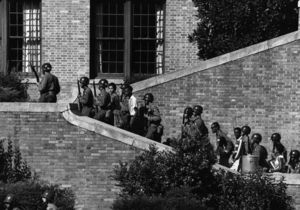
In 1957, Jefferson Thomas and eight fellow black students known as the Little Rock Nine stood up to institutionalized segregation in America‘s education system and helped our nation live up to the promise of Brown v. Board of Education. Thomas passed away, but Change.org Changemaker Marian Wright Edelman writes that his legacy will live on in all who fight for equality.

for the complete article … use the link below

https://www.huffingtonpost.com/marian-wright-edelman/jefferson-thomas-and-the_b_714390.html?ncid=engmodushpmg00000004 via huffingtonpost.com


The impact of SB1070 on people of color… by Joel Dreyfuss


In 2010, the reality of life smacked folks in the face, and people of color were targets in the state of AZ imo we are headed in that same direction, but it’s 2026 now!

The Source: The Root …This is a Re-Post
 
If you’re black and think that state’s new immigration law has nothing to do with you, think again. By: Joel Dreyfuss


A law that makes people suspects on the basis of their looks should outrage African Americans, even if they are worried about illegal immigration.

The immigration law passed in Arizona last week is the kind of reckless act that keeps us minorities paranoid in America. The new law compels local law enforcers to verify immigration status based on “reasonable suspicion”–whatever that is–and has created the potential for cops to stop brown people in the streets and demand to see their papers. Even the sheriff of Pima County, Ariz., (which borders Mexico) says the law is “stupid,” “racist,” and would force his officers to racially profile people. The scope of the law was narrowed after its passage in order to assure Hispanics, who make up 30 percent of the state’s population, that they would not be the victims of racial profiling.

But those assurances that people won’t be suspects because of the way they look have little credibility when the experience of black and brown people in America has been so contrary to those promises. Being stopped for Driving While Black (or Brown) is such a common phenomenon that comedians make jokes about it. And a city like New York, which operates a massive stop-and-frisk policy that probably violates a dozen constitutional principles, keeps trying to explain why black and brown citizens make up 80 to 90 percent of those questioned by police. The latest rationale: They fit the description of suspected perps when 98 percent of those stopped and questioned are innocent of any crime.

The reason people of color get worked up about such policies is America’s nasty habit of making everything racial in a panic. We have a long history of lynchings and runaway convictions that were triggered by fears that black people were getting out of hand in some fashion, whether it was interracial sex or talking back to massa. The roundup of Japanese Americans during World War II will forever stain this country’s history.

After 9/11, looking Arab or simply wearing a turban, whether you are Muslim or not, turned out to be a grave danger in some parts of the country and a constant annoyance in others. No Muslim American believes that the frequent “random” checks they endured at airports in the months after the tragedy were really a matter of chance. And last week, the front page of the Boston Herald illustrated a cover story about the crackdown on benefits for illegal immigrants with a photo of black, Hispanic and Asian models, their foreheads stamped with the following: “No Tuition, No Welfare, No Medicaid.” Ironically, the headline at above the newspaper’s logo announced a “workplace diversity job fair.”

Of course, the concept of white or blonde illegal aliens is apparently beyond the capacity of the people passing the laws or the editors at the Herald. But nearly 600,000 of those in the United States illegally were estimated to come from Europe or Canada in 2005; and while I knew many Irish, English and other Europeans who had overstayed their visas when I was growing up in New York, I never heard of a raid of an Irish bar, except when ATF or the FBI were trying to trap Irish Republican Army gun runners during the “troubles.”

Now Arizona, better known for resorts, retirees in golf carts, and college basketball teams whose players never graduate, is suddenly at the center of a debate that could shape U.S. politics for the next 10 years. The only surprise is that it took so long. All the great economies have been struggling with the immigration issue for years. Just last week, France was in tizzy about the burqa, the full-length outfit with only an eye-slit that conservative Muslim women wear. Nicolas Sarkozy’s government has considered banning the burqa on security grounds (you can’t identify the person), but the real reason behind this initiative, Arizona’s or any of the dozen being considered in other states or countries is fear of change.

No doubt, the Great Recession of the last three years has heightened American insecurity. Although the downturn has hit blue-collar workers the hardest, many people who thought they were solidly in the middle class have seen their savings, their safety net, even their homes evaporate in the financial collapse. The next step for many of them would be to step “down” into the blue-collar workforce. Suddenly, the Mexican, Salvadorian and African immigrants they hardly noticed during boom times are now potential competitors.

African Americans, who lost more than their fair share of blue-collar jobs in the downturn, have long been ambiguous about illegal immigration. As Cord Jefferson noted here a few months ago, a growing number of experts believe that blacks and Hispanic immigrants battle for unskilled jobs at the bottom of the labor pool. Black Americans have not turned out in large numbers at immigration rallies, despite the fact that many African-American politicians talk of the need for coalitions with Hispanics.

But a law that puts you in jeopardy for being has special resonance with black Americans. We already know the peril of living in a state where you are presumed guilty by the color of your skin. A law that makes a suspect of anyone who might look illegal should make us vigorously resist this encroachment.

Joel Dreyfuss is managing editor of The Root. Follow him on Twitter.