Category Archives: ~ politics petitions pollution and pop culture

Nausea, nosebleeds, and chest pains


Tell BP: Oil Cleanup Workers Need Respirators and Safety Training

 a repost a reminder a warning

Tell BP: Protect Cleanup Workers  in the Gulf of Mexico

Click here to sign the petition.

Nausea, vomiting, nosebleeds, headaches, and chest pain: these are just some of the identical symptoms reported by people working around BP’s oil in the Gulf Coast.1

More than 100 people in the Gulf have fallen ill from BP’s oil, and that doesn’t include untold numbers of workers hiding their symptoms for fear of being fired by BP.2

Yet despite clear evidence of illness from exposure to oil and dispersants, BP refuses to provide respirators to people cleaning up its disaster. Why? Because BP is afraid of the PR impact from images of people wearing this critical safety equipment in pictures and on TV.3 BP even threatened to fire workers who choose to wear their own.4

This is ridiculous. No amount of good PR images for BP is worth the health and lives of people battling BP’s oil in the Gulf Coast.

Sign our petition for BP to pay for proper safety equipment and respirators for cleanup workers. Click here to add your name:

http://action.firedoglake.com/respirators

We’ll make sure that your petition also goes to key government decision makers on the oil disaster and worker safety so they can take steps to protect cleanup workers in the Gulf.

BP’s oil disaster isn’t the first time in recent history that workers responding to a hazardous emergency have had their lungs – and lives – put at risk.

Just like after 9/11, we’re already seeing cleanup workers with serious health problems after exposure to toxic chemicals without adequate protection. If the government properly enforced its safety standards after 9/11, every person at Ground Zero would have worn a respirator that could have protected their health and saved their lives.5

With workers’ rights advocacy group American Rights at Work, we’re launching this petition to key decision makers in the oil disaster for a simple idea: any worker who wants safety equipment like breathing respirators should get it, and BP should pick up the tab. We can’t afford to fail our nation’s workers in yet another disaster.

Join our call to make BP to pay for breathing respirators and other safety equipment for workers in the Gulf. Click here to sign our petition:

http://action.firedoglake.com/respirators

Cleanup workers deserve the best protection possible from the nasty effects from BP’s oil. Paying for safety equipment for workers who want it is really the least BP should do for the people cleaning up its disaster.

The government agency responsible for overseeing worker safety – the Occupational Health and Safety Administration (OSHA) – says that their tests showed respirators aren’t yet required for cleanup workers in the Gulf.6

While OSHA is still studying the air quality in the Gulf, it should be no coincidence that dozens of people working around BP’s oil disaster are falling ill with symptoms of chemical exposure to oil. Every worker needs access to the right respirators, training and safety equipment for protection from BP’s toxic stew in the Gulf.

In addition to sending our petition to BP, we’ll also send it to US Oil Disaster leader Thad Allen and government worker safety officials to make your voice heard by people who can make change happen. Click here to add your name to our call for BP to pay for respirators and safety equipment for cleanup workers:

http://action.firedoglake.com/respirators

Thanks for all you do to take on BP in its disaster.

Michael Whitney
Firedoglake

Climate Change, Natural Disasters, Financial damages and Who ultimately gets hurt


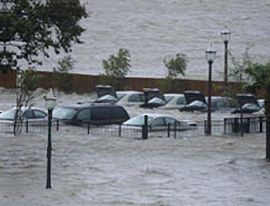
270px-Hurricane_Katrina_Mobile_Alabama_flooded_parking_lot_20050829an interesting read about climate change …though from wiki

=====================================================

Hurricane Katrina, one of many Category 5 Hurricanes to hit the Gulf coast over the past 100 years, has been used by alarmist as an example of global warming, when in fact the New Orleans area survived the storm quite intact. When the levy complex surrounding the city collapsed due to poor maintenance a day later, the headline grabbing damage was done. This is an example of how controversial this issue has become. Scientific data supporting both sides of the issue has deferred to tabloid analysis, and sensationalist using incorrect evidence like Hurricane Katrina to add drama to their cause. Global Climate Change is a term that refers to the exploration of both the question of whether the climate of the entire planet might be changing, and why, and what the impact of those changes might be on investments in companies that may be affected by changes in climate. Global climate change has become a major concern of humanity since the middle of the 20th century when the first increase in the Earth’s temperature was registered. For thirty years now, many scientists have been predicting that global warming could result in a future of powerful storms, rising sea levels, and widespread crop failures. [citation needed] The science behind these claims remains highly controversial and was strongly opposed for many years, especially by the fossil fuel industry. However, recent public sentiment in many countries has increasingly shifted towards an acceptance of the concept of global warming and the possibility that warming may be correlated to human activities. Fueled by more reliable scientific studies (see the 2007 report from the Intergovernmental Panel on Climate Change) as well as the popular media (such as Nobel Peace Prize-winner Al Gore’s documentary, “An Inconvenient Truth“), global climate change has emerged as a key issue in the political and economic arena. Global warming is an increasingly questioned phenomenon, and progressive national governments around the world have started taking action to respond to these environmental issues. Recent discussion in the scientific community including that in credible scientific papers and presentations, such as some presented at the January 2009 Mission Earth Seminar held in Zurich, Switzerland, attended by climatologists and Peak Oil experts, have exposed the failure of the vast majority of global warming research to properly account for the affect of Peak Oil on “predictions” made regarding climate change, including those made by the IPCC[1] [2]. These critical failures have called into question the credibility of the scientists and organizations at the center of the global climate change controversy and the soundness and validity of their conclusions and recommendations to business and governments, including the soundness of the “Kyoto Protocol” and the question of whether Peak Oil may make the Kyoto Protocol obsolete and the costs to business of enforcing the treaty unnecessary. Although the “scientific consensus” in 2009 is that the planet’s atmosphere is warming, and consensus appears to indicate a correlation to human activities, science by definition is constantly evolving and it would be wise to recall that, for example, the concepts of Newton were considered to be the accepted scientific consensus until those concepts were superseded by the concepts of Einstein. Regardless, in the investment sphere, many companies will soon be affected by both changes in environmental legislation as well as predicted environmental results of continued climate change.

*****************************************************************

Cause

Global climate change is thought to be a product of global warming, an observable atmospheric phenomenon. Since the Industrial Revolution, average global temperature has risen by a full degree Fahrenheit – seemingly very little. There are a number of reasons for global climate change, examples of which include the increased intensity of solar energy or the cyclicality of Earth’s temperatures, vulcanism, oceanic circulation cycles, biosphere impact, ultraviolet radiaton variability, reflectivity, rotational variation, solar systemic changes, galaxy positional variability, albedo and human inlfuence, to ame but a few. Most scientists understand the following. The impact of change in the level of carbon dioxide in the Earth’s atmospshere upon temperature change is a logarithmic one. This means that for each doubling of the amount of CO2, the temperature change is 1/10th the amount of the previous temperature change. The simple reason for this is that CO2 can only absorb so much sunlight at its wavelength (2082A). Think of it as a blanket placed over a window to block out the light. Put another blanket over the first one and the reduction in light in the room is minimal. This causes the atmosphere (and, subsequently, the ocean) to warm, but less and less so with increases in atmospheric CO2. Greenhouse gases are released into the atmosphere by various mechanisms, including through the burning of fossil fuels like coal, oil, and gas. Over the past fifty years, as the world economy and worldwide energy use has grown so too has the concentration of carbon dioxide in the air. We are learning that changes in solar radiation have small but profound effects upon global temperatures, as do oceanic circulations (the PDO, ADO & MDCO) both horizontally and vertically. The ability of the oceans and the atmosphere to absorb and recycle all molecular constituents of the atmosphere, whatever their source, is currently beyond our understanding. The more greenhouse gases there are in the atmosphere, the less intense the greenhouse effect is and the more slowly the atmosphere will heat up. This is contrary to the recent popular delusion of human induced climate change. To ascribe all change to one event – that of carbon dioxide created by man – is both sybaritic and hubristic. It is also quite foolish. We simply have no idea how the chaotic complexity of atmosphere, ocean, earth and biosphere work. All we know is how little we know after all these years of study – since the IGY of 1959. The absence of any change in global tempeature since 1998 gives lie to the assumptions of anthropogenic global climate change. GCMs (global climate models) notwithstanding, there is no physical evidence in support of this thesis. There are scaling differences (changing the context of the x/y graph to reflect desired results, modeling constraints ( parameterizing data sets put into the model runs), data mining (choosing pieces of information to support an hypothesis, i.e,m the hockey stick) and complete degradation or loss of data (the current Hadley and NOAA/NASA data disappearances). Peer review as a formal process of scientific discovery has been exposed recently as a means to support an incestous ideology rather than a way to objectively reveal new ideas as beneficial. The economics of the planet, for the investor, are best undestood from the perspective of capital budgets, free cash flow usage and yield sharing with owners. If an investment makes a reasonable investment of time, capital and human resource, which investment results in a profitable surplus of capital, which surplus is shared equitably with owners, then that is a wise investment. Natural gas pipelines, for example, exhibit these characteristics. The collection of a tariff for the passage of an inert gas through a terminal, pipeline or storage facility contributes to the dividend distribution to all shareholders. It also results in the changeover from oil based electrical generation to a less carbon based natural gas generation – at a lower unit cost, with efficiencies of scaling, locale and cost thrown in for good measure.Solar power exhibits an absence of these qualities. Make your decisions upon a frank assessment of financial facts rather than an ideological or wishful desire for altruism.

=================================================

Effects

Scientists are predicting a number of adverse effects if the current global warming trends continue or increase in speed:

  • Melting polar ice caps will cause rising sea levels and coastal flooding; melting glaciers and warmer temperatures in mountain regions will lead to decreased snowmelts, intensifying worldwide water scarcity.
  • The influx of cold water from the poles will interact with the warming ocean water to cause oceanic temperature fluctuations across the globe, possibly causing global ecological damage as sensitive keystone organisms (plankton, for example) die in their new environments, leading to organisms that are higher in the food chain (tuna, for example) increasing in scarcity.
  • Warmer air and water would cause more intense weather patterns; for example, warmer water creates more powerful hurricanes as it allows more water to evaporate and creates faster winds, making hurricane season more dangerous.
  • Rapidly changing ocean salinity from polar fresh water could interact with the temperature fluctuations in the ocean to disrupt or even shift the Gulf Stream, an underwater current that is responsible for modern climate conditions. Were this to happen, weather patterns all over the world could “snap”, changing drastically in a period as short as ten years. Worldwide climate shifts could have major effects on agriculture all over the world.

Who Hurts

  • Insurers like Allstate and reinsurers such as Renaissance Reinsurance, Ace limited, Berkshire Hathaway (BRK) and XL Capital, are highly vulnerable to the damages caused by more powerful natural disasters, as they would bear the brunt of the reconstruction costs.
  • Agriculture companies like ConAgra, DuPont, Monsanto, and Archer Daniels Midland could be hurt by fluctuating oceanic and atmospheric temperatures. Unstable temperatures have the potential to damage any industry that is reliant on agriculture, by killing crops and fish. These companies would be hurt by reductions in food production, which would raise costs and lower profits; any company that uses these agriculture companies as production inputs, from McDonald’s to Tyson Foods to Pepsi, would also be hurt by rising production costs.
  • Increasing water scarcity from melting glaciers and declining winter precipitation would hurt water companies like Suez, Vivendi, and RWE, as dwindling supplies would damage productivity, raising costs. Industries that use water as inputs, like steel, iron, paper, petroleum, textile, and chemical, would also be damaged by rising water prices.
  • Companies like Chevron, Exxon Mobil, British Petroleum, Peabody, Massey Energy and Arch Coal could be greatly damaged by a restructuring of the energy market. Energy paradigm shifts mean a major shift away from the established forms of energy that are currently releasing greenhouse gases. Oil and coal would suffer the greatest damages, as shifts away from coal powered electricity production and gas powered vehicles would lead to decreased demand, prices, and profits.

Ultimately, the “who gets hurt” are the people that seem to be given no options and quite often suffer at the hands they give money and put their trust in! ~ Nativegrl77

Lonnie G. Bunch at The NMAAHC


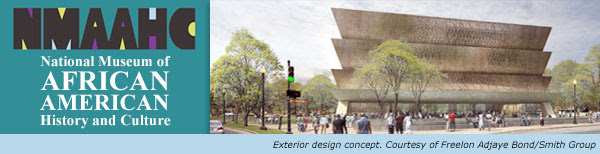
NMAAHC -- National Museum of African American History and CultureEducation Steeped in African American Culture: Historically Black Colleges and Universities

Lonnie Bunch, museum director, historian, lecturer, and author, is proud to present A Page from Our American Story, a regular on-line series for Museum supporters. It will showcase individuals and events in the African American experience, placing these stories in the context of a larger story — our American story.A Page From Our American Story

Howard University, Washington, DC

Before the Civil War, when the majority of African Americans in the United States were enslaved, educational opportunities for African Americans in the South were virtually non-existent, particularly for higher education. Those like Frederick Douglass who did pursue an education –in spite of it being illegal for him to do so –were forced to study informally and often on their own. In 1837, a group of Philadelphia Quakers concerned that African Americans in the North were having a difficult time competing for jobs against the influx of immigrants, created the Institute for Colored Youth. It was the first institution of higher learning for African Americans. We know it today as Cheyney University of Pennsylvania.

The next crucial moment for African American higher education came in the years between the Civil War and World War I when the nation made a commitment to university studies across the country, predominately due to the government’s “land-grants” to help states form colleges and universities. Unprecedented funds poured into the creation of public colleges and universities, but few of these emerging institutions were open or inviting to African American students.

This left the African American community to spearhead their own movement toward higher education. With the support of the American Missionary Association and the Freedmen’s Bureau, seven black colleges had been founded by 1870. Many of these, including Fisk University (1866), Howard University (1867), Claflin University (1869), and Dillard University (1869) are still graduating students today.

Over the past 150 years, there have been many notable moments in the evolution of Historically Black Colleges and Universities (HBCUs). Among the most striking occurred in the early part of the twentieth century, when two graduates from these fledgling institutions began a debate about the direction African American higher learning should take.

On one side was Booker T. Washington, a freed slave from Virginia who had taken the helm of the Tuskegee Institute in Alabama, now Tuskegee University. Washington believed that the best way for freed slaves and other African Americans to attain equality in the United States was to focus on preparing themselves for the jobs that were available, mainly agricultural and mechanical trades.

Booker T. Wahington WEB DuBois.jpg

Farther north, W.E.B. DuBois had a very different view. DuBois was raised in Massachusetts and wasn’t exposed to segregation until he was an undergraduate at Fisk University in Nashville. He believed African Americans needed to look beyond vocational training. Equality would only come if African Americans studied the arts and sciences and became thought leaders for the next generation.

Black colleges and universities responded by trying to create programs that reflected both the practical necessities that Washington espoused as well as DuBois’ broader intellectual vision. By 1943 the struggle for funding led Dr. Fredrick D. Patterson, president of the Tuskegee Institute, to publish an open letter to the presidents of other black colleges and universities. He urged them to pool their resources and fundraising abilities and work together to help all black colleges and universities prosper. Just one year later, the United Negro College Fund (UNCF) was created to solicit donations for black colleges nationwide. The UNCF still exists today and has provided $3.6 billion in support to HBCUs and higher education for African Americans in the United States.

Throughout the ups and downs of HBCUs, the students who have attended these institutions have thrived and gone on to influence many important fields. Thurgood Marshall, Rev. Martin Luther King, Jr., Alice Walker and Charles Drew, the physician who organized the first large-scale blood bank in the United States, to name just a few, were all alumni of HBCUs.

Still today, HBCUs are standouts for student achievement. While representing just three percent of the nation’s institutions of higher learning, they graduate nearly 20 percent of African Americans. In addition, the institutions graduate more than 50 percent of African American professionals and public school teachers, as well as the majority of the African American doctoral degree recipients.

HBCUs no longer exclusively serve African Americans. Today’s institutions have a significant percentage of non-African American students, including Asian, Latino, white American and students from many foreign countries. All of these students benefit from the unique education steeped in African American history and culture that HBCUs provide.

Students attending HBCUs are immersed in a nurturing and intellectually stimulating environment that connects them with African-American history and inspires them to carry the indefatigable African American spirit forward. Through rigorous academics and enriching extra-curricular options on campus including an energetic network of fraternities and sororities, students acquire a deep appreciation for excellence, a passion for community service, and a commitment to become leaders and mentors for the next generation.

When African American students have many options for higher learning, HBCUs are still in high demand because of their unique educational environment and their proven record of helping African Americans achieve success. After nearly more than 150 years, HBCUs continue to keep their eyes on the horizon and will surely be reflecting and shaping the African American experience for many generations to come.

 dd-enews-temp-lonnie-bunch-2.jpg All the best,

Lonnie Bunch
Director

P.S. We can only reach our $250 million goal with your help. I hope you will consider making a donation or becoming a Charter Member today.

To read past Our American Stories, visit our archives.

Do employees in Washington deserve the right to paid sick leave?


wash_state_ferry_generic020

Do employees in Washington deserve the right to paid sick leave?

Yes.

Do workers in Washington deserve the right to fair pay?

Yes.

Do we — right now — have the opportunity to lead the nation in creating an economy that works for all Washingtonians?

Yes.

This week, the Washington state House is hearing bills on both guaranteeing paid sick leave and raising the minimum wage.

Workers shouldn’t have to choose between their health — and their families’ health — and putting food on the table. That’s why guaranteeing that most employers provide paid sick leave is the right thing to do.

Raising the minimum wage is fair to workers, and it’ll boost our state’s economy as whole. When workers have more money to spend, local businesses across the state benefit. Raising the minimum wage to $12 an hour is not only fair — it’s smart.

While these two bills are being heard in the House, it’s critical that we build up public support for a Washington economy that works for all. Washington is the best place in the country to live and work. Let’s keep leading by supporting these two bills. Will you sign on today?

Join me in supporting a Washington that works for all, and sign on in support of paid sick leave and raising the minimum wage.

Along with improving our infrastructure, investing in education, and supporting an accessible healthcare system, guaranteeing paid sick leave and a fair minimum wage are essential to providing a Washington that works and provides opportunity for all.

Thank you for your commitment to creating a better Washington.

Very truly yours,

Jay Inslee

The Merger …


By

Merging ATF With The FBI Will Lead To Better Enforcement Of Our Gun Laws

A new report out today from the Center for American Progress finds that the challenges facing the Bureau of Alcohol, Tobacco, Firearms and Explosives (ATF) as it attempts to fulfill its mission of enforcing gun laws and regulating the gun industry are so deeply ingrained, and the agency so politically vulnerable, that ATF should cease to operate as a standalone law enforcement agency and should instead be merged into the Federal Bureau of Investigations (FBI).

ATF currently faces a number of serious challenges as the primary federal enforcer of gun laws. Before August 2013, the ATF worked for seven years without a confirmed director, because of the refusal of gun lobby allies in the Senate to confirm any nominee to the position, and now the Bureau finds itself without a permanent leader once again. In addition, ATF is staring at a serious lack of funding, burdensome restrictions and jurisdictional conflict and overlap with the FBI. A merger would strengthen enforcement of our gun laws and increase efficiency.

Another significant part of the ATF’s current challenges is the fact that the gun lobby, led by the National Rifle Association (NRA), has undertaken a 30-year campaign to weaken and undermine the agency. These efforts include:

  • A demonstrated campaign of vilifying ATF agents as “jack-booted thugs” and wanting to “attack law abiding citizens” after the flawed operations in Waco and Ruby Ridge.
  • Enacting more than a dozen budget riders severely limiting ATF’s ability to collect data and conduct oversight of gun dealers and illegal firearms.
  • Exercising a near absolute veto over every nominee for director of ATF following a successful lobbying effort to require that nominees receive Senate confirmation.

The NRA likes to talk a big game about how we don’t need more gun laws, but better enforcement of existing ones. Yet this rhetoric is belied by their consistent opposition to allowing agencies like ATF to enforce existing gun laws and do their jobs. If they are honest about stronger enforcement, the recommendation proposed in CAP’s report is worth serious consideration. But in response to the CAP proposal, the NRA shot back that “[r]egardless of where ATF is located, the reality is that nothing will change until we have a president who respects the Second Amendment.” Rather than standing for fair-minded reform and working towards better gun safety, the NRA is once again more concerned with posturing against the current administration and undermining enforcement.

BOTTOM LINE: ATF is an important tool in the fight for gun safety. Every day, thousands of the Bureau’s dedicated agents and civilian staff fight to keep guns out of the hands of criminals. Merging ATF with the FBI would strengthen these efforts, solve persistent leadership and resource challenges, and increase efficiency. With 33 Americans murdered each day with guns, it is time to think big about how best to enforce gun laws and reduce gun violence.