1797 1st US senator (William Blount of Tennessee) expelled by impeachment


William Blount (March 26, 1749 – March 21, 1800) was an American statesman and land speculator who signed the United States Constitution. He was a member of the North Carolina delegation at the Constitutional Convention of 1787 and led the efforts for North Carolina to ratify the Constitution in 1789 at Fayetteville.

He then served as the only governor of the Southwest Territory and played a leading role in helping the territory gain admission to the Union as the State of Tennessee.

He was selected as one of Tennessee’s initial United States Senators in 1796. Born to a prominent North Carolina family, Blount served as a paymaster during the American Revolutionary War. He was elected to the North Carolina legislature in 1781, where he remained in one role or another for most of the decade, except for two terms in the Continental Congress in 1782 and 1786.

Blount pushed efforts in the legislature to open the lands west of the Appalachians to settlement.

As governor of the Southwest Territory, he negotiated the Treaty of Holston in 1791, bringing thousands of acres of Indian lands under U.S. control. An aggressive land speculator, Blount gradually acquired millions of acres in Tennessee and the Trans-Appalachian West. His risky land investments left him in debt, and in the 1790s, he conspired with Great Britain to seize the Spanish-controlled Louisiana in the hope of boosting western land prices.

When the conspiracy was uncovered in 1797, he was expelled from the Senate and became the first federal official to face impeachment. However, Blount remained popular in Tennessee and served in the state senate during the last years of his life.

Source: wiki

if you see an error please comment

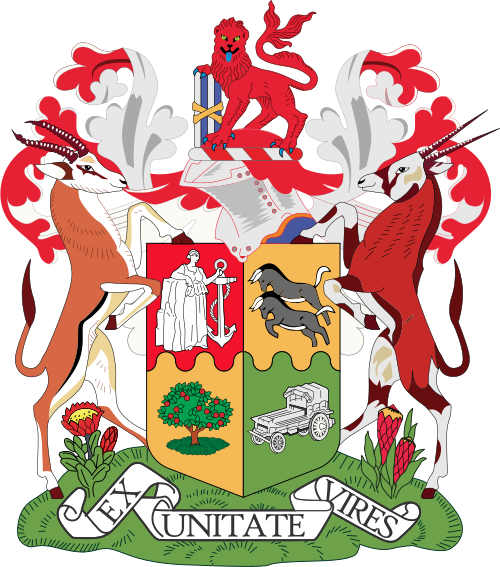
1949 South Africa’s Prohibition of Mixed Marriages Act commences, prohibiting marriage or a sexual relationship between White people and people of other races


See the source image
image from wiki

On this day in history, the South African government passed the Prohibition of Mixed Marriages Act (to go into effect as of July 8, 1949), making marriages between whites and non-whites illegal. Even though between 1946 and the enactment of this law, only 75 mixed marriages had been recorded, compared with some 28,000 white marriages, the government felt the possibility was a sufficient threat and affront to legislate against it. In 1950 the law was amended to ban even sexual relations between white and black South Africans.

To facilitate enforcement, the Population Registration Act of 1950 required South Africans to register as members of one of four racial groups as set out in the Population Registration Act of 1950. The four groups were White, Coloured, Indian and Black. Subsequent to the passing of this legislation, a number of people were arrested and charged for breaking its provisions.

The law also nullified interracial marriages of South Africans that occurred outside of the country.  

For the complete article and Source:

legallegacy.wordpress.com

1797 – First Impeachment of a U.S. Senator


For the first time in U.S. history, the House of Representatives exercises its constitutional power of impeachment and votes to charge Senator William Blount of Tennessee with “a high misdemeanor, entirely inconsistent with his public duty and trust as a Senator.”

In 1790, President George Washington appointed Blount, who had fought in the American Revolution, as governor of the “Territory South of the River Ohio,” now known as Tennessee. Although he was a successful territorial governor, personal financial problems led him to enter into a conspiracy with British officers to enlist frontiersmen and Cherokee Indians to assist the British in conquering parts of Spanish Florida and Louisiana. Before the conspiracy was uncovered, Blount presided over the Tennessee Constitutional Convention and in 1796 became the state’s first U.S. senator.

The plot was revealed in 1797, and on July 7 the House of Representatives voted to impeach Senator Blount. The next day, the Senate voted by a two-thirds majority to expel him from its ranks. On December 17, 1798, the Senate exercised its “sole power to try all impeachments,” as granted by the Constitution, and initiated a Senate trial against Blount.

Source: for the complete article history.com

1981 – Sandra Day O’Connor


President Ronald Reagan nominates Sandra Day O’Connor, an Arizona court of appeals judge, to be the first woman Supreme Court justice in U.S. history. On September 21, the Senate unanimously approved her appointment to the nation’s highest court, and on September 25 she was sworn in by Chief Justice Warren Burger.

Sandra Day was born in El Paso, Texas, in 1930. She grew up on her family’s cattle ranch in southeastern Arizona and attended Stanford University, where she studied economics. A legal dispute over her family’s ranch stirred her interest in law, and in 1950 she enrolled in Stanford Law School. She took just two years to receive her law degree and was ranked near the top of her class. Upon graduation, she married John Jay O’Connor III, a classmate.

Source: history.com article

Advocates ~ The DOJ Still Uses the VRA and What Advocates Can Leverage


Even after Shelby County v. Holder (2013) dismantled Section 5 preclearance, the Voting Rights Act of 1965 (VRA) remains a powerful federal tool for challenging discriminatory voting practices — and the DOJ still uses it, though its reach is narrower.

Why the DOJ Can Still Use the VRA

  • Section 2 remains in force: Section 2 prohibits voting practices or procedures (including redistricting plans and voter registration systems) that discriminate on the basis of race, color, or language minority status, whether intentionally or as a result of discriminatory effect 
  • Nationwide application: Unlike Section 5, Section 2 applies everywhere, so the DOJ can litigate in any state or territory 
  • Enforcement tools: The DOJ can bring federal lawsuits, seek injunctions, and work with federal courts to block or alter laws that dilute minority voting power 
  • Recent DOJ actions: The DOJ has won cases like United States v. State of Alabama, where a preliminary injunction halted a voter removal program after a Section 2 challenge 

What Part of the Weakened VRA Still Allows Federal Intervention

  • Section 2 litigation: This is the core remaining federal enforcement mechanism. It can be used to block laws or maps that show racial vote dilution or discriminatory intent 
  • Federal court injunctions: Courts can issue temporary or permanent injunctions under Section 2, stopping harmful laws from taking effect while litigation proceeds 
  • DOJ as lead plaintiff: In some cases, the DOJ is the only entity allowed to sue under Section 2, giving it significant leverage 

How Advocates and Lawyers Can Use These Tools

  1. File Section 2 lawsuits: Even without preclearance, plaintiffs can challenge laws or maps that have a discriminatory effect or intent. This is the most direct way to block restrictive measures.
  2. Seek injunctions: Use federal courts to get immediate relief before elections or before laws take effect.
  3. Target high-impact jurisdictions: Focus on states or counties with histories of discrimination, where Section 2 claims are more likely to succeed.
  4. Coalition litigation: Partner with civil rights groups to pool resources and expertise.
  5. Monitor DOJ enforcement: Track DOJ actions to identify patterns and opportunities for coordinated legal challenges.
  6. Leverage recent DOJ wins: Use cases like Alabama to build legal arguments and public support.

Bottom line: The DOJ can still use the VRA because Section 2 remains a live, nationwide prohibition on discriminatory voting practices. Advocates can use this by litigating under Section 2, seeking injunctions, and focusing on jurisdictions where the law’s reach is strongest — even if the Act’s preventive preclearance power is gone.

 U.S. Department of Justice

Source: govfacts.org, peopleslawreview.com, factually.co ,

politics,pollution,petitions,pop culture & purses