
By Rachel DePompa
Published: Apr. 28, 2020 at 11:01 AM PDT
https://www.whsv.com/content/news/On-this-day-Sir-John-Harvey-is-thrust-out-of-office-570013051.html

https://www.whsv.com/content/news/On-this-day-Sir-John-Harvey-is-thrust-out-of-office-570013051.html

0357 – Constantius II visited Rome for the first time.
1282 – Villagers in Palermo led a revolt against French rule in Sicily.
1635 – Virginia Governor John Harvey was accused of treason and removed from office.
1686 – The first volume of Isaac Newton’s “Principia Mathamatic” was published.
1788 – Maryland became the seventh state to ratify the U.S. constitution.
1789 – A mutiny on the British ship Bounty took place when a rebel crew took the ship and set sail to Pitcairn Island. The mutineers left Captain W. Bligh and 18 sailors adrift.
1818 – U.S. President James Monroe proclaimed naval disarmament on the Great Lakes and Lake Champlain.
1896 – The Addressograph was patented by J.S. Duncan.
1902 – A revolution broke out in the Dominican Republic.
1910 – First night air flight was performed by Claude Grahame-White in England.
1914 – W.H. Carrier patented the design of his air conditioner.
1916 – The British declared martial law throughout Ireland.
1920 – Azerbaijan joined the USSR.
1923 – The British Empire Exhibition Stadium (or Empire Stadium) opened to the public.
1930 – The first organized night baseball game was played in Independence, Kansas.
1932 – The yellow fever vaccine for humans was announced.
1937 – The first animated-cartoon electric sign was displayed on a building on Broadway in New York City. It was created by Douglas Leight.
1945 – Benito Mussolini and his mistress Clara Petacci were executed by Italian partisans as they attempted to flee the country.
1946 – The Allies indicted Tojo with 55 counts of war crimes.
1947 – Norwegian anthropologist Thor Heyerdahl and five others set out in a balsa wood craft known as Kon Tiki to prove that Peruvian Indians could have settled in Polynesia. The trip began in Peru and took 101 days to complete the crossing of the Pacific Ocean.
1952 – The U.S. occupation of Japan officially ended when a treaty with the U.S. and 47 other countries went into effect.
1953 – French troops evacuated northern Laos.
1957 – Mike Wallace was seen on TV for the first time. He was the host of “Mike Wallace Interviews.”
1959 – Arthur Godfrey was seen for the last time in the final broadcast of “Arthur Godfrey and His Friends” on CBS-TV.
1962 – In the Sahara Desert of Algeria, a team led by Red Adair used explosives to put out the well fire known as the Devil’s Cigarette Lighter. The fire was caused by a pipe rupture on November 6, 1961.
1965 – The U.S. Army and Marines invaded the Dominican Republic to evacuate Americans.
1967 – Muhammad Ali refused induction into the U.S. Army and was stripped of boxing title. He cited religious grounds for his refusal.
1969 – Charles de Gaulle resigned as president of France.
1969 – In Santa Rosa, CA, Charles M. Schulz’s Redwood Empire Ice Arena opened.
1985 – The largest sand castle in the world was completed near St. Petersburg, FL. It was four stories tall.
1988 – In Maui, HI, one flight attendant was killed when the fuselage of a Boeing 737 ripped open in mid-flight.
1989 – Mobil announced that they were divesting from South Africa because congressional restrictions were too costly.
1992 – The U.S. Agriculture Department unveiled a pyramid-shaped recommended-diet chart.
1994 – Former CIA official Aldrich Ames, who had given U.S. secrets to the Soviet Union and then Russia, pled guilty to espionage and tax evasion. He was sentenced to life in prison without parole.
1996 – U.S. President Clinton gave a 4 1/2 hour videotaped testimony as a defense witness in the criminal trial of his former Whitewater business partners.
1997 – A worldwide treaty to ban chemical weapons took effect. Russia and other countries such as Iraq and North Korea did not sign.
1999 – The U.S. House of Representatives rejected (on a tie vote of 213-213) a measure expressing support for NATO’s five-week-old air campaign in Yugoslavia. The House also voted to limit the president’s authority to use ground forces in Yugoslavia.
2000 – Jay Leno received a star on the Hollywood Walk of Fame.
2001 – A Russian rocket launched from Central Asia with the first space tourist aboard. The crew consisted of California businessman Dennis Tito and two cosmonauts. The destination was the international space station.
2008 – India set a world record when it sent 10 satellites into orbit from a single launch.
on-this-day.com
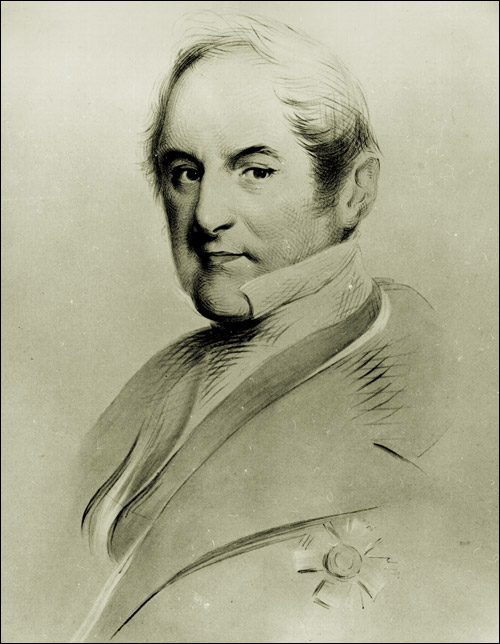
Sir John Harvey was a royal governor of Virginia who was ousted from office by a powerful faction in the governor’s Council.
Charles I appointed Harvey, a ship owner and councilor, in 1628. While he oversaw a dramatic increase in population and production, conflicts between himself and the Council defined his regime. The largest in a series of disputes involved the nature of Virginia’s government, which had been brought under royal authority. Harvey understood that his instructions gave him full control over the colony with the Council acting as an advisory body, while the councilors felt he could not act without their consent. His aggressive manner further alienated its members. In the spring of 1635 an official protest against a planned tobacco monopoly brought their tensions into direct conflict.
On April 28 both Harvey and the Council attempted to arrest each other on charges of treason. The councilors, backed by musketeers, prevailed. Charles I reappointed him as a means of asserting royal power, but Harvey’s opponents eventually engineered a second removal in favor of former Governor Sir Francis Wyatt. Harvey remained in Virginia for several more years, but was in debt and had much of his property seized. He died in England sometime before July 16, 1650. MORE…
https://www.encyclopediavirginia.org/
on-this-day.com
 1296 – The Scots were defeated by Edward I at the Battle of Dunbar.
1509 – Pope Julius II excommunicated the Italian state of Venice.
1521 – Portuguese explorer Ferdinand Magellan was killed by natives in the Philippines.
1565 – The first Spanish settlement in Philippines was established in Cebu City.
1805 – A force led by U.S. Marines captured the city of Derna, on the shores of Tripoli.
1813 – Americans under Gen. Pike capture York (present day Toronto) the seat of government in Ontario.
1861 – West Virginia seceded from Virginia after Virginia seceded from the Union during the American Civil War.
1861 – U.S. President Lincoln issued an order to General Winfield Scott that authorized him to suspend the writ of habeas corpus between Philadelphia and Washington at or near any military line.
1863 – The Army of the Potomac began marching on Chancellorsville.
1865 – In the U.S. the Sultana exploded while carrying 2,300 Union POWs. Between 1,400 – 2,000 were killed.
1880 – Francis Clarke and M.G. Foster patented the electrical hearing aid.
1897 – Grant’s Tomb was dedicated.
1899 – The Western Golf Association was founded in Chicago, IL.
1903 – Jamaica Race Track opened in Long Island, NY.
1909 – The sultan of Turkey, Abdul Hamid II, was overthrown.
1938 – Geraldine Apponyi married King Zog of Albania. She was the first American woman to become a queen.
1938 – A colored baseball was used for the first time in any baseball game. The ball was yellow and was used between Columbia and Fordham Universities in New York City.
1945 – The Second Republic was founded in Austria.
1946 – The SS African Star was placed in service. It was the first commercial ship to be equipped with radar.
1947 – “Babe Ruth Day” was celebrated at Yankee Stadium.
1950 – South Africa passed the Group Areas Act, which formally segregated races.
1953 – The U.S. offered $50,000 and political asylum to any Communist pilot that delivered a MIG jet.
1953 – Five people were killed and 60 injured when Mt. Aso erupted on the island of Kyushu.
1960 – The submarine Tullibee was launched from Groton, CT. It was the first sub to be equipped with closed-circuit television.
1961 – The United Kingdom granted Sierra Leone independence.
1965 – “Pampers” were patented by R.C. Duncan.
1967 – In Montreal, Prime Minister Lester Pearson lighted a flame to open Expo 67.
1975 – Saigon was encircled by North Vietnamese troops.
1978 – Pro-Soviet Marxists seized control of Afghanistan.
1982 – The trial of John W. Hinckley Jr. began in Washington. Hinckley was later acquitted by reason of insanity for the shooting of U.S. President Reagan and three others.
1982 – China proposed a new constitution that would radically alter the structure of the national government.
1983 – Nolan Ryan (Houston Astros) broke a 55-year-old major league baseball record when he struck out his 3,509th batter of his career.
1984 – In London, Libyan gunmen left the Libyan Embassy 11 days after killing a policewoman and wounding 10 others.
1986 – Captain Midnight (John R. MacDougall) interrupted HBO.
1989 – Student protestors took over Tiananmen Square in Beijing.
1987 – The U.S. Justice Department barred Austrian President Kurt Waldheim from entering the U.S. He claimed that he had aided in the deportation and execution of thousands of Jews and others as a German Army officer during World War II.
1992 – The Federal Republic of Yugoslavia was proclaimed in Belgrade by the Republic of Serbia and its ally Montenegro.
1992 – Russia and 12 other former Soviet republics won entry into the International Monetary Fund and the World Bank.
2005 – The A380, the world’s largest jetliner, completed its maiden flight. The passenger capability was 840.
2005 – Russian President Vladimir Putin became the first Kremlin leader to visit Israel.
2006 – In New York, NY, construction began on the 1,776-foot One World Trade Center on the site of former World Trade Center.
1478 – Pazzi conspirators attacked Lorenzo and killed Giuliano de’Medici.
1514 – Copernicus made his first observations of Saturn.
1607 – The British established an American colony at Cape Henry, Virginia. It was the first permanent English establishment in the Western Hemisphere.
1819 – The first Odd Fellows lodge in the U.S. was established in Baltimore, MD.
1865 – Joseph E. Johnston surrendered the Army of Tennessee to Sherman during the American Civil War.
1865 – John Wilkes Booth was killed by the U.S. Federal Cavalry.
1906 – In Hawaii, motion pictures were shown for the first time.
1921 – Weather broadcasts were heard for the first time on radio in St. Louis, MO.
1929 – First non-stop flight from England to India was completed.
1931 – New York Yankee Lou Gehrig hit a home run but was called out for passing a runner.
1931 – NBC premiered “Lum and Abner.” It was on the air for 24 years.
1937 – German planes attacked Guernica, Spain, during the Spanish Civil War for the Spanish nationalist government. This raid is considered one of the first to be attacks on a civilian population by a modern air force.
1937 – “LIFE” magazine was printed without the word “LIFE” on the cover.
1937 – “Lorenzo Jones” premiered on NBC radio.
1941 – An organ was played at a baseball stadium for the first time in Chicago, IL.
1945 – Marshal Henri Philippe Petain, the head of France’s Vichy government during World War II, was arrested.
1952 – Patty Berg set a new record for major women’s golf competition when she shot a 64 over 18 holes in a tournament in Richmond, CA.
1954 – Grace Kelly was on the cover of “LIFE” magazine.
1964 – The African nations of Tanganyika and Zanzibar merged to form Tanzania.
1964 – The Boston Celtics won their sixth consecutive NBA title. They won two more before the streak came to an end.
1968 – Students seized the administration building at Ohio State University.
1982 – The British announced that Argentina had surrendered on South Georgia.
1983 – Dow Jones Industrial Average broke 1,200 for first time.
1985 – In Argentina, a fire at a mental hospital killed 79 people and injured 247.
1986 – The world’s worst nuclear disaster to date occurred at Chernobyl, in Kiev. Thirty-one people died in the incident and thousands more were exposed to radioactive material.
1998 – Auxiliary Bishop Juan Gerardi Conedera was bludgeoned to death two days after a report he’d compiled on atrocities during Guatemala’s 36-year civil war was made public.
2000 – Charles Wang and Sanjay Kumar purchased the NHL‘s New York Islanders.
2002 – In Erfurt, Germany, an expelled student killed 17 people at his former school. The student then killed himself.


You must be logged in to post a comment.