Suffocating Refugees and Illegal Migrants Avalanche Heading Croatia’s Way


inavukic's avatarCroatia, the War, and the Future

Refugees and illegal migrants making their way from Greece to Macedonia to continue into EU Photo: AP Photos/ Sakis Mitrolidis Refugees and illegal migrants making their
way from Greece to Macedonia
to continue into EU
Photo: AP Photos/ Sakis Mitrolidis

Countless thousands of refugees and illegal migrants from war-torn Syria, Iraq and other Middle East territory, Africa… are reaching Europe via Greece and Italy as points of entry in particular. According to interviews published on all world’s media all those coming from Greece across Macedonia and Serbia and Hungary are intent on making it to Germany, Belgium, Sweden, Netherlands, United Kingdom… they know where they want to go and expect to succeed in it, trampling over and destabilising European countries they cross towards their desired destination.

Refugees and illegal migrants of today appear to have expectations that they will reach their desired destination and stay there. How very different from the refugees fleeing WWII Europe – most were happy to wait in refugee camps and go to a country offered…

View original post 1,276 more words

2015: Turning Promises into Action


Last year, we exposed the snack food industry’s dirty little secret – Conflict Palm Oil.

A groundswell of activism created a watershed moment, and made Snack Food 20 companies and the world’s largest agribusiness trading companies – including Cargill — “re-think” business-as-usual.

PALM oil action!

Our challenge now lies in transforming company commitments into real change for the forests and communities that depend on them and bringing laggards in the sector along with us.

This change won’t happen overnight, and it won’t be easy. One thing is certain, we must draw lines in the sand and we need you to stand strong with us.

Are you in?

  • We will counter the greenwash that is being rolled out by companies whose commitments on ending deforestation and social conflict fall short.
  • We will crank up the pressure on palm oil growers, traders and Snack Food 20 companies who have so far refused to strengthen their policies and practices.
  • We will stand with the community of Collingwood Bay in Papua New Guinea and stop companies like Kuala Lumpur Kepong (KLK) from threatening to destroy pristine rainforests and undermining the right of the Collingwood Bay people to say no to palm oil development on their lands.
  • We will stop bulldozers from destroying rainforests and peatlands in the Leuser Ecosystem – home to the Sumatran rhino, orangutan, elephant, tiger and sunbear.

The inspiring breakthroughs we achieved in 2014 are a testament to actions YOU have taken and the unrelenting work of local communities and NGOs over many years. These successes, almost unimaginable just a few years ago, provide a great example of how our movement can successfully take on seemingly insurmountable odds. We must now continue to build momentum as we drive the real change still needed on the ground.

We need you to stand with us in 2015 as we hold some of the world’s biggest corporations to account.

We have an exciting series of activities planned that will inspire you to take bold action in your community. Join our Palm Oil Action Team today and get your friends and family to do the same.

Sign up here to make lasting change in 2015!

In strength,

GemmaTillack_Headshot_crop.jpg

Gemma Tillack

Agribusiness Campaign Director

Lydia Cacho with Avaaz


Mexican photojournalist Rubén Espinosa was just found tortured and murdered. One of Latin America’s oldest democracies is now one of the most dangerous places on the planet to report the truth. Add your voice to a powerful open letter demanding an end to violence against journalists doing their jobs! When enough of us join Avaaz will publish it on the front page of key Mexican media:

SIgn now

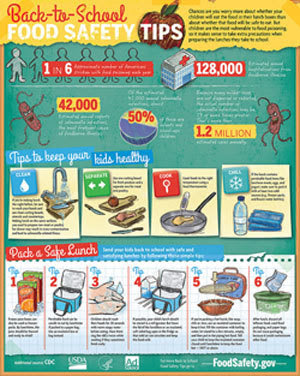
Back-to-School Food Safety Tips


FoodSafety.govBy Marianne Gravely, Food Safety Technical Information Specialist, Food Safety & Inspection Service, USDA

Back to school, back to the books, back in the saddle or back in the car for all the parents. The new school year means it’s back to packing lunches and after-school snacks for students, scouts, athletes, dancers, and all the other children who carry these items to and from home.

One ‘back’ you do not want to reacquaint children with, however, is Bacteria.

Read our latest blog for tips on how to keep bacteria from the cafeteria by safely packing and storing school lunches and snacks.


Infographic on School Food Safety Tips

More Like National Employee Suppression Week


By

During National Employee Freedom Week, Conservatives Promote The Ruse of Right To Work Laws

Today marks the last day of “National Employee Freedom Week,” a week created by conservatives to promote the benefits of right-to-work laws. Anti-union policy groups and lawmakers in states across the country are attacking an already weakened labor movement by advancing so-called “right-to-work” laws, which inhibit workers from collectively bargaining for better wages, benefits and protections, under the guise of ‘choice.’ These laws allow some workers to get the advantages of a union contract—such as higher wages, benefits, and protection against arbitrary discipline—without paying any fee associated with negotiating on these matters.

Proponents of right-to-work argue a multitude of benefits from enacting such laws such as, lower unemployment, higher wages, less workplace injuries, and that workers’ families and states’ economies fare better. But here are the facts:

  • The typical worker in a right-to-work state makes about $1,560 less per year than she would in a state without such a law.
  • The rate of employer-sponsored health insurance is 2.6 percentage points lower in right-to-work states.
  • The rate of employer-sponsored pensions is 4.8 percentage points lower in right-to-work states.
  • Even workplace safety is affected—the rate of worker fatalities in construction is 34 percent higher in right-to-work states than non-right-to-work states

Last spring, under the leadership of Governor and presidential candidate Scott Walker, Wisconsin became the latest state to adopt a right-to-work law and take its working families in the wrong direction. Estimates by Marquette University economist Abdur Chowdhury suggest that Wisconsin workers and families will lose between $3.89 and $4.82 billion in direct income annually due to effects of the law. Unsurprisingly, Walker is one of several GOP candidates speaking at the Americans for Prosperity confab in Columbus this weekend. Americans for Prosperity, the Koch brothers’ flagship organization, has been a staunch supporter of right-to-work laws and has had a hand in almost every right-to-work fight across the country.

Over the last several decades, the share of income going to middle-class Americans has fallen in conjunction with the falling rate of union membership. Analysis by CAP Action shows a strong correlation between the decline in national union membership and the declining share of total national income going to the middle class. Take Wisconsin for example—from 1977 to 2013, Wisconsin middle-class families have seen their share of income fall more than 12 percent as the rate of union membership in the state has decreased. Meanwhile, the share of income going to the top 20 percent of households increased by nearly 20 percent during this time period.

With wages stagnant, inequality at record levels, and union membership in serious decline, we should use this misguided “Employee Freedom Week” as an opportunity to set the record straight and focus on rebuilding the middle class by raising state laws above and beyond federal standards—not by racing to the bottom with right-to-work.

BOTTOM LINE: Workers, their families, and states’ economies fare worse in right-to-work states, which is why the majority of Americans support labor unions. Proponents of right-to-work argue they’re fighting for choice and the right of workers to decide on their representation, but it’s the workers whose rights are being trampled on by this political ruse. Wisconsin and fellow right-to-work states need policies to empower workers and boost their ability to bargain collectively, not strip away the few protections they have left.

 

politics,pollution,petitions,pop culture & purses