the other Washington … what happened to Metro


It’s now 2015 and a proposal for more buses has been put on the table by king county

WHAT?

Metro transit to add more buses, more trips this fall

The regional transportation agency will buy more buses and provide more trips beginning in the fall.

WHAT?

I get the feeling that the whole idea of light rail has been lost maybe the funding gone wrong and well, bertha hasn’t been cooperating with the workers. This makes me question where all this money is coming from and why shouldn’t those dollars go toward what we all have come to know as “Light Rail.” While most folks probably agree that we all need better parking, if king county is trying to reduce or redirect cars from coming into downtown they should keep have or offer a great alternative… right. I don’t know about you but that doesn’t necessarily include more buses. I hope there are more voters willing to demand answers spend the sudden influx of funds on light or any rail into place as we have all been waiting for.

 From 2010 through 2014 we were told among other things that Metro Service cuts are proposed …again?

a Re-post because taxpayers should know what happened to Metro between 2010 and 2014 ?

King_County_Metro_Gillig_PHANTOM_1122Metro must plan now for major service cuts in absence of funding

We’ve cut costs, raised fares, and created other efficiencies to preserve most service over the past five years. But temporary funding authority from the state expires in June, and unless action is taken on stable funding, Metro must plan now for drastic service reductions next year.

More than 80 percent of Metro’s bus and DART routes would be affected.

Riders and communities across King County would feel the impacts: fewer travel options, longer waits between buses, more transfers, more-crowded and less-reliable buses, and increased traffic congestion.

http://metro.kingcounty.gov/am/future/why-cut.html

==============================================================

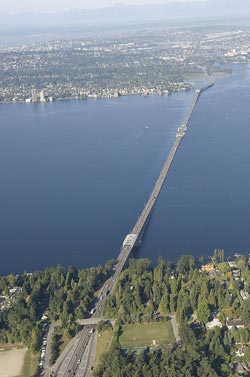
Washington transit system: Our roads got a grade of D , light rail reduced and now our bridges
Posted by Nativegrl77 on 11/12/2013
Quantcast520bridge
Dear Washingtonians

Below is a snippet of an article and petition you should sign from the Washington Chapter of the Sierra Club.Senator Curtis King, Co-Chair of the Senate Transportation Committee, is promoting a new transportation funding proposal that will set us back decades. This new budget proposal fails to fund over $900 million worth of projects that are necessary to operate our transit system, provide street improvements for bikes and pedestrians, and address polluted water runoff associated with roads.

Our bridges are literally crumbling around us. Workers can’t get to jobs because their bus service has been cut. The new road “mega-projects” being considered in the transportation funding proposal would dramatically increase climate changing pollution and increase sprawl. The Senate transportation funding proposal is simply unacceptable.

========================================================================

ride_free_area_update

Don’t Eliminate the “Ride Free Zone”

 Washingtonians need to ask … what did the savings of $2 million with the elimination of the “Free Zone” do for our transportation when our bus services might still be cut !!!

TO: Seattle City Council

I wrote about The “ride free zone” ending way before the September 29th deadline hoping they would rescind the order to end it. Today, the local media showed and interviewed the people who have suffered from the new change and not in a good way. The thing that struck me most aside from the obvious was the comment about “a one time set-aside for bus tickets,” of $250,000 in emergency money for homeless people to ride Metro.

Below is a video and article that is heartbreaking

Homeless hopes public helps with discounted Metro bus tickets … click on the link below for the video and article !

http://www.king5.com/news/cities/seattle/Homeless-council-member-ask-for–174292691.html

It was a nice surprise to hear that people are still protesting the elimination of the “Ride Free Zone”  giving full exposure to the real reasons why the Seattle King Council voted to eliminate the “Ride Free Zone.”  Yes, we all know about that 2million dollar savings but the mission to make the downtown and the transit look and smell beautiful by leaving the homeless, disabled and those needing services out in the cold, which btw are all located on or near the “Ride Free Zone.”

In 2011, king county hit its residents with a two-year vehicle license fee that was supposed to help keep metro alive. Now, Metro Bus Riders find out that a deal done with Republicans will eliminate the “Ride Free Zone,” a Merchant straight away and beautiful feature of the City of Seattle – free for over 35 years.

The facts are; that more than 10 million boarding’s are logged each year inside the Ride Free Area; another 9,000 rides are taken each day without fare. There are reports that without the compromise reductions in Metro would have affected 80% of all bus riders including the poor. Unfortunately, balancing budgets off the backs of the middle and poor has been a Republican mission since 2010. It is with great sadness to think and or believe all that King County Officials seemed to have forgotten or sacrificed for that 2 million “Ride Free Zone” cost savings per year. This includes tourists, people commuting home from across the water, downtown workers accustomed to hopping on the bus to grab a quick bite, or get some dry cleaning, pop into a store all within an hour and low-income folks who, if you ride in the zone now; know they use it to get around daily.

King County Officials say the “Ride Free Zone” will end after Sept. 29; tell them that making deals with Republicans to phase out an urban mainstay for so many, is bad for Seattle.

If, this new mega-projects monstrosity is real yet will create an environment for more pollution and increase sprawl …

We must say NO

challenge who was in charge of spending

demand accountability

==========================================================

Congratula​tions! You saved King County Metro!   …Julia Deak Sandler, Prevent Metro Transit Cuts in King County, WA Campaign

Posted on 08/17/2011

Quantcast

We did it! You and I, with our coalition partners and all the individuals we set in motion, have saved metro. The King County Councilenacted the $20 Congestion Reduction Charge last night, after some intelligent, bipartisan negotiation and compromise, and I am so proud of them. Jane Hague and Kathy Lambert, in particular, really rose to the occasion. They not only made those controversial “yes” votes that carried the day, but they improved the proposal by giving 8 free bus tickets to everyone who pays the $20 car tab fee and letting those who don’t want them donate that value to social service organizations. Doesn’t it feel great to see your democratic government working the way it’s supposed to?

The lesson we can learn from this success is that our participation matters. Without the outpouring of “overwhelming” support for transit, this deal never would have happened. When democracy works, it is because we push our elected officials to do the right thing. I know this success has inspired and energized me, and I hope it’s done the same for you.

If you feel a little giddy at this vision of what participating in your democracy can do, here are some ways to keep at it:

1. Join me in going past this temporary 2-year solution. We need to find permanent, progressive funding for transit, and convince the voters to vote for it. If you would like to work on this issue with me and our local organizational partners, please reply to this email. We’ll be starting the discussion with a free movie screening of the film Contested Streets (a transit documentary) on Fri. Aug. 26th at 7pm at Bethany UCC, corner of S. Beacon St. and Graham St. in Beacon Hill. Please join us for the screening and discussion. RSVP

2. If transit is not your pet issue, and you just like standing up for common sense, progressive causes and social justice, there are ways to do that, too. Since last November, I’ve been volunteering with my local MoveOn Council and have found it to be a great way to develop my skills and learn from more experienced and active citizens. Each council is a group of active individuals that works on national campaigns with the national MoveOn.org organization, but can also weigh in on local issues or help members get involved with local advocacy groups.

3. Last but not least, you can make your own petition on signon.org at any time! Any individual can start a petition about any issue, so consider it, and let me know if you have questions.

These are dire times in many ways. We are struggling economically, environmentally, and politically. But there are rays of hope, like this victory today. Just remember, there are more of us than there are of them, and all we need to do is stand up and make our voices heard. Please stand with me in the years to come and help make King County the kind of place we all want to live in.

Thank you and Peace be with you, Julia Deak Sandler

========================================================================

Final Vote on Bus Cuts on Mon. 8/15

Posted by Nativegrl77 on 08/11/2011

Quantcast

King County Metro 30' Gillig PHANTOM coach #11...
Image via Wikipedia

Your support for saving King County Metro has made a huge difference. More than 8,200 people signed our SignOn petition to save our buses, and more than 14,000 total signed letters or petitions. The testimony at the 7/26 hearing was fantastic, and we didn’t lose! But we also haven’t won yet…

We need six of nine councilmembers to vote in favor of the two-year stop-gap measure to save our buses. We have the support of 5 members, but the sixth has been elusive.

The King County Council was set to vote on the matter that day. Luckily, thanks to the thousands of people who voiced their support, the four remaining councilmembers – all Republicans – agreed to take three more weeks to seriously consider the the measure.

Now, we must double-down. This is our last chance to save our buses from devastating 17% cuts that will significantly hurt 4 out of 5 riders. Though I started this petition as an individual, I’ve learned that many professionals are working on this and related issues under the umbrella of the Transportation for Washington campaign. Here’s what they recommend:

First, please send your own personal letter to the King County Councilmembers. There are no more opportunities for public testimony, so calling or sending another letter is the best way to remind them of our arguments. Feel free to edit or add personal details.

Click here to send your letter.   http://org2.democracyinaction.org/o/5127/p/dia/action/public/?action_KEY=7814

Next, pack the meeting on Monday, August 15. Click here to RSVP.    http://org2.democracyinaction.org/o/5153/p/salsa/web/questionnaire/public/?questionnaire_KEY=608

Finally, we need volunteers to help petition, phonebank, write letters to newpaper editors, and enter data. Email Brock Howell, field director of Transportation 4 WA, at brock@futurewise.org to volunteer.

Thanks again for your support. Your dedication to the betterment of our society and planet warms my heart. Together we can save our buses. Stay strong & don’t give up!

Peace to all of you,

Julia Deak

========================================================================

Washington in the News …sensible Washington


sensiblewashingtonbadge

Support Senate Bill 6083 and House Bill 2196 to Legalize Cannabis Cultivation

I support medical use of cannabis, patients rights and #HouseBill1024 ~ Nativegrl77


A Meeting at Camp David


A Meeting at Camp David:The President meets with GCC leaders.President Barack Obama shakes hands with His Highness Sheikh Sabah Al-Ahmad Al-Jaber Al Sabah, Amir of the State of Kuwait, as Gulf Cooperation Council (GCC) leaders prepare to have a group photo with the President outside of the Laurel Cabin at the conclusion of a summit meeting at Camp David, Md., May 14, 2015. (Official White House Photo by Pete Souza)

See more from our “Photo of the Day” gallery here.

More from 1600 Penn
Must Watch: 5 of Our Favorite Obama Administration Commencement AddressesAs the President prepares to head to Connecticut to deliver the address to the United States Coast Guard Academy’s graduating class of 2015 next week, we decided to pull together a few of our favorite commencement addresses from Administration officials.READ MORE

3 Important Thoughts the President Shared on Poverty in America:

On Tuesday, President Obama traveled to Georgetown University to sit down with Harvard professor Robert Putnam and American Enterprise Institute president Arthur Brooks to share his views on poverty in America. The President also outlined what we can do to ensure every American — no matter who they are, where they come from, or where they live — has access to the opportunities they deserve.

READ MORE

What You Need to Know About the New Contraception Guidance:

This week, the Obama administration took important steps to eliminate any ambiguity around the reforms that the Affordable Care Act calls for. Under the law, most insurers must now cover at least one form of birth control with no out-of-pocket expenses in each identified category.

READ MORE


“You have impacted my family in ways that are priceless and I can not thank you enough.”

***********************************

Poverty and Opportunity in Your Community: What Are You Seeing?

This week, we asked you to talk about the pressing issues in your own community related to poverty and opportunity, and what steps you think we can take to expand opportunity for more people.

Here’s a look at what you told us:

“I live in a rural county in Central Texas. People here have little access to good jobs because of the lack of public transportation. There aren’t many jobs available in the small towns in our county, and most are very low wage jobs. We need a way for our people, particularly our young people, to get training for good blue-collar skilled jobs, and the transportation to get to the training centers, and then when they graduate, the jobs.”

— Rochelle from Franklin, TX

“There’s very little manufacturing in my community. By eliminating the shipment of jobs overseas, we would create more trainee jobs for young people and regain our manufacturing capability.”

— Roman from Surprise, AZ

“Our country needs to encourage companies that are looking to expand, to look at rural areas for locations to do so in…Our country needs to penalize those who moved to foreign countries and grow our manufacturing base back to old days. Every American should be able to have a job and be productive.”

— Richard from Emporia, VA


If you haven’t joined the conversation yet, it’s not too late. Tell us how these issues are playing out in your community, and how you think we can continue expanding opportunity for more Americans.

whitehouselogo

Update from the White House Council on Women and Girls


womens_day_2013GOOGLE

Happy belated Mother’s Day to all of our moms out there!

This week, to celebrate moms across the country, President Obama surprised three moms who had written letters to him over the course of this year with phone calls to wish them a happy Mother’s Day! The President also issued a Presidential Proclamation in celebration of Mother’s Day and in honor of the mothers who lift us up every day.

Additionally, Mother’s Day was the beginning of National Women’s Health Week! Thank you to all who participated. We hope you had an opportunity to learn about the steps you can take for better health and the great preventive health benefits the ACA provides.

On Monday, President Obama and the U.S. Department of Health and Human Services issued important guidance on the Affordable Care Act: Most insurers must cover, without cost-sharing, at least one form of contraception in each of the 18 methods for women that the FDA has identified. Learn more below about this new guidance and the steps the Obama administration took to eliminate any ambiguity around ACA reforms.

And last week, to celebrate Military Spouse Appreciation Day and an early Mother’s Day, the First Lady and Dr. Biden invited military-connected moms to the White House for their annual Mother’s Day Tea.

Read on for opportunities to engage, and don’t forget to follow the Chair of the White House Council on Women and Girls, Valerie Jarrett, on Twitter at @vj44. You can also email us at cwg@who.eop.gov. We look forward to continuing the conversation!

Latest News and Administration Highlights

A Recap of National Women’s Health Week: May 10-16

Thank you to all who participated and engaged with National Women’s Health Week on May 10-16! National Women’s Health Week is an observance led by the U.S. Department of Health and Human Services Office on Women’s Health. The goal is to empower women to make their health a priority. The week served as a time to help women understand what steps they can take to improve their health and the preventive care benefits afforded to women under the ACA.

While National Women’s Health Week may be over, every day is an opportunity to engage and learn what steps you can take for better health!

The White House Council on Women and Girls and Office on Women’s Health continues to encourage women across the country to:

  • Check out easy-to-use resources from the Office on Women’s Health.
  • Learn what steps you should take for good health based on your age.
  • Share National Women’s Health Week infocards with your friends, family, and coworkers.
  • Check out the Presidential Proclamation recognizing National Women’s Health Week, 2015.

What You Need to Know About the New Contraception Guidance:

It is crucial that insurance companies provide all the benefits that women deserve under the Affordable Care Act, at no cost or inconvenience. So this week, the Obama administration took steps to eliminate any ambiguity around the reforms the ACA calls for. Here is what the Administration’s guidance makes clear:

Learn more about the guidance here.

And here’s a quick recap on how the ACA has been giving women greater control of their own health care since 2010:

  • Providing tax credits for women who cannot afford quality health insurance
  • Prohibiting insurance companies from charging a woman more because of her health status or gender
  • Covering preventive services with no deductible or co-pay, such as cervical cancer screenings, contraception, and more

Read more about what this Administration is doing to protect important preventive services.

A Mother’s Day Surprise from President Obama

President Obama called three unsuspecting mothers who had written to him recently to wish them a happy Mother’s Day. The mothers, from Minnesota, Arizona and Florida, had all written the President letters over the course of the year.

Watch the great video of his conversation with these moms here!

Watch the President's conversation with moms.

The Faces of Health Care

Read about the incredible impact the Affordable Care Act is having on Americans across the country. This week, we are highlighting the stories of women who have benefited from the ACA:

The First Lady, Dr. Biden, and Ben Folds Celebrate Military-Connected Moms

On May 9, to celebrate Military Spouse Appreciation Day and an early Mother’s Day, the First Lady and Dr. Biden invited military-connected moms to the White House for their annual Mother’s Day Tea.

These mothers, grandmothers, and their guests enjoyed sandwiches, cupcakes, and shortbreads with a selection of teas and juices. Kids came too to make Mother’s Day gifts of petal potpourri, lace-topped cupcakes, and even potted-flower cakes. The First Lady and Dr. Biden greeted the spouses, thanked all military-connected moms, and recognized their service.

Watch the video of their remarks here:

Watch the video of their remarks.

Stay Connected

Did a friend forward this to you? Sign up for Council on Women and Girls updates here.

A Prom Divided ~ May 2009


Gillian Laub for The New York Times

Students from Montgomery County High School in Mount Vernon, Ga., before the prom.

Published: May 21, 2009


About now, high-school seniors everywhere slip into a glorious sort of limbo. Waiting out the final weeks of the school year, they begin rightfully to revel in the shared thrill of moving on. It is no different in south-central Georgia’s Montgomery County, made up of a few small towns set between fields of wire grass and sweet onion. The music is turned up. Homework languishes. The future looms large. But for the 54 students in the class of 2009 at Montgomery County High School, so, too, does the past. On May 1 — a balmy Friday evening — the white students held their senior prom. And the following night — a balmy Saturday — the black students had theirs.

Skip to next paragraph

Gillian Laub for The New York Times

The white students’ prom was held on May 1 at a community center in nearby Vidalia; the black students had theirs at the same place the following night.

Gillian Laub for The New York Times

Niesha Bell, a senior, was voted queen of the black prom. Niesha’s mother, Angela Bell, graduated from Montgomery County High School in 1978 and also attended a racially segregated prom. “I don’t see how things will ever change around here,” says Angela, a cashier. “It’s hard to see my girl in the same situation I was in 30 years ago.”

Gillian Laub for The New York Times

Friends and family come together to watch the white students parade into their prom.

Racially segregated proms have been held in Montgomery County — where about two-thirds of the population is white — almost every year since its schools were integrated in 1971. Such proms are, by many accounts, longstanding traditions in towns across the rural South, though in recent years a number of communities have successfully pushed for change. When the actor Morgan Freeman offered to pay for last year’s first-of-its-kind integrated prom at Charleston High School in Mississippi, his home state, the idea was quickly embraced by students — and rejected by a group of white parents, who held a competing “private” prom. (The effort is the subject of a documentary, “Prom Night in Mississippi,” which will be shown on HBO in July.) The senior proms held by Montgomery County High School students — referred to by many students as “the black-folks prom” and “the white-folks prom” — are organized outside school through student committees with the help of parents. All students are welcome at the black prom, though generally few if any white students show up. The white prom, students say, remains governed by a largely unspoken set of rules about who may come. Black members of the student council say they have asked school administrators about holding a single school-sponsored prom, but that, along with efforts to collaborate with white prom planners, has failed. According to Timothy Wiggs, the outgoing student council president and one of 21 black students graduating this year, “We just never get anywhere with it.” Principal Luke Smith says the school has no plans to sponsor a prom, noting that when it did so in 1995, attendance was poor.

Students of both races say that interracial friendships are common at Montgomery County High School. Black and white students also date one another, though often out of sight of judgmental parents. “Most of the students do want to have a prom together,” says Terra Fountain, a white 18-year-old who graduated from Montgomery County High School last year and is now living with her black boyfriend. “But it’s the white parents who say no. … They’re like, if you’re going with the black people, I’m not going to pay for it.”

“It’s awkward,” acknowledges JonPaul Edge, a senior who is white. “I have as many black friends as I do white friends. We do everything else together. We hang out. We play sports together. We go to class together. I don’t think anybody at our school is racist.” Trying to explain the continued existence of segregated proms, Edge falls back on the same reasoning offered by a number of white students and their parents. “It’s how it’s always been,” he says. “It’s just a tradition.”

Earlier this month, on the Friday night of the white prom, Kera Nobles, a senior who is black, and six of her black classmates drove over to the local community center where it was being held. Standing amid a crowd of about 80 parents, siblings and grandparents, they snapped pictures and whooped appreciatively as their white friends — blow-dried, boutonniered and glittering in a way that only high-school seniors can — did their “senior walk,” parading in elegant pairs into the prom. “We got stared at a little, being there,” said one black student, “but it wasn’t too bad.”

After the last couple were announced, after they watched the white people’s father-daughter dance and then, along with the other bystanders, were ushered by chaperones out the door, Kera and her friends piled into a nearby KFC to eat. Whatever elation they felt for their dressed-up classmates was quickly wearing off.

“My best friend is white,” said one senior girl, a little glumly. “She’s in there. She’s real cool, but I don’t understand. If they can be in there, why can’t everybody else?”

The seven teenagers — a mix of girls and boys — slowly worked their way through two buckets of fried chicken. They cracked jokes about the white people’s prom (“I feel bad for them! Their prom is lame!”). They puzzled merrily over white girls’ devotion both to tanning beds (“You don’t like black people, but you’re working your hardest to get as brown as I am!”) and also to the very boys who were excluded from the dance (“Half of those girls, when they get home, they’re gonna text a black boy”). They mused about whether white parents really believed that by keeping black people out of the prom, it would keep them out of their children’s lives (“You think there aren’t going to be black boys at college?”). And finally, more somberly, they questioned their white friends’ professed helplessness in the face of their parents’ prejudice (“You’re 18 years old! You’re old enough to smoke, drive, do whatever else you want to. Why aren’t you able to step up and say, ‘I want to have my senior prom with the people I’m graduating with?’ ”).

It was getting late now. KFC was closing. Another black teenager was mopping the floor nearby. A couple of the boys mentioned they had to wash their cars in the morning. Kera had an early hair appointment. The next night, they would dress up and dance raucously for four hours before tumbling back outside, one step closer to graduating. In the meantime, a girl named Angel checked her cellphone to see if any of the white kids had texted from inside their prom. They hadn’t. Angel shrugged. “I really don’t understand,” she said. “Because I’m thinking that these people love me and I love them, but I don’t know. Tonight’s a different story.”

politics,pollution,petitions,pop culture & purses