

Strengthening Our Children’s Futures
Principles To Guide The Reauthorization Of Federal Education Policy
In 1965, President Lyndon B. Johnson signed the Elementary and Secondary Education Act (ESEA) into law to ensure all kids, no matter their family’s income level, zip code, or background, receive an education that gives them an opportunity for success. Since then the legislation has gone through changes, but at its core it maintained a federal role in education that focuses on promoting equity and ensuring that disadvantaged students receive the resources needed for a quality education.
The latest version of the ESEA, more commonly known as No Child Left Behind, has been long overdue for reauthorization, and it looks like this year Congress may actually take action. There is no question that NCLB is outdated and broken, but it must be changed in a way that puts students first. In that light, the Center for American Progress has joined with the American Federation of Teachers (AFT) to highlight key principles that should be included in the new version of the law.
Far from outlining a complete set of recommendations for the reauthorization of this critical legislation, these share principles are rather a statement of what good education policy should be in some of the core — and controversial — areas of debate. They are intended to encourage Congress to work together on a bipartisan basis to improve the legislation. And the hope is that, with these shared principles in mind, new federal policy will ensure that all students — and especially those who have traditionally been the most disadvantaged — are prepared to compete in a global economy.
Below is a summary of the shared principles that CAP and AFT have released, and click here to check out the full statement.
- Address funding inequities to improve teaching and learning;
- Give parents and communities useful information about whether students are working at grade level or are struggling, and allow teachers to diagnose and help their students. This means maintaining the federal requirement for annual statewide testing in grades 3 through 8 and once in high school;
- Disaggregate assessment results by subgroups, including race and income level, and use these assessment results to identify where learning gaps exist;
- Provide a system of multiple measures for accountability and relieve some of the unintended pressure of tests on students;
- Design accountability systems intended to identify and target interventions for schools with large achievement gaps or large numbers of low-performing disadvantaged kids;
- Raise the bar for entry to and through the teacher pipeline including at least doubling the investments for states and districts to elevate the teaching profession and support educators.
BOTTOM LINE: The goal of federal education policy should be to prepare future generations for success and ensure that disadvantaged students have access to the resources they need. With the reauthorization of No Child Left Behind under consideration, now is a critical time to make necessary changes to strengthen our education system. These shared principles should serve as a guide to doing so — our children deserve no less.
Share this:

John Tye – Avaaz

The Syrian air force just dropped chlorine gas bombs on children. But President Obama is considering a No Fly Zone that could stop these chemical weapon murders. He needs urgent public support to save tens of thousands of lives. Every signature makes a safe zone more likely:
| SIGN NOW |
Share this:

Children’s Advil
 |
|||||||||||||||||
|


Share this:

the Senate ~~ CONGRESS 3/24 ~~ the House
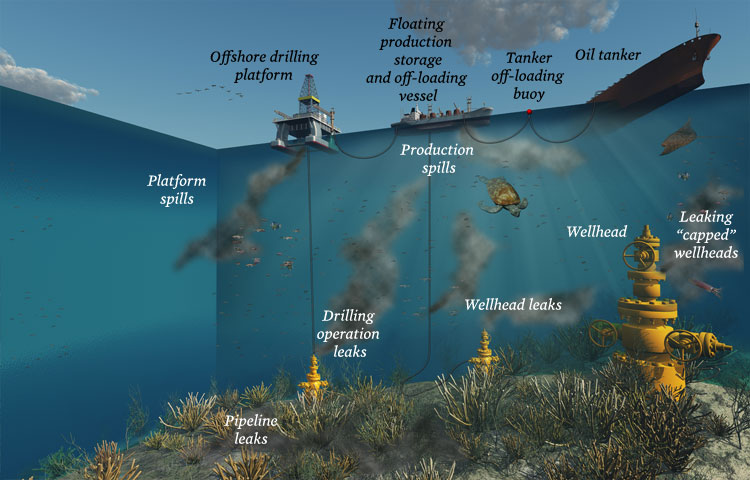 <- offshore drilling
The Senate stands adjourned until 10:00am on Tuesday, March 24, 2015.
Following any Leader remarks, the Senate will resume consideration of S.Con.Res.11, the budget resolution. When the Senate resumes consideration of S.Con.Res.11, there will be 38 hours of debate time remaining.
Senators should expect a roll call vote on the pending Sanders amendment #323 (infrastructure) around noon with at least one additional roll call vote in the stack before lunch (likely in relation to yet to be named side by side to Sanders).
The Senate will recess from 12:30 until 2:15pm to allow for the weekly caucus meetings.
Joint Meeting with the President of Afghanistan on Wednesday at 11:00am
As a reminder, on Wednesday, at 11:00 a.m., His Excellency Mohammad Ashraf Ghani, the President of the Islamic Republic of Afghanistan, will address a Joint Meeting of Congress in the Hall of the House of Representatives in the U.S. Capitol. Senators will gather in the chamber at 10:35am and depart as a body to the Hall of the House of Representatives at 10:40am. The Senate will be in recess for the joint meeting.
====================================================
Last Floor Action:3/24
10:00:39 A.M. – MORNING-HOUR DEBATE – The House proceeded with Morning-Hour Debate. At the conclusion of Morning-Hour, the House will recess until 12:00 p.m. for the start of legislative business.
| 9:00:50 A.M. | The House convened, starting a new legislative day. | |
| 9:01:05 A.M. | The Speaker designated the Honorable Virginia Foxx to act as Speaker pro tempore for today. | |
| 9:01:20 A.M. | The Speaker announced that the House do now recess. The next meeting is scheduled for 10:00 a.m. today. | |
| 10:00:11 A.M. | The House convened, returning from a recess continuing the legislative day of March 24. | |
| 10:00:39 A.M. | MORNING-HOUR DEBATE – The House proceeded with Morning-Hour Debate. At the conclusion of Morning-Hour, the House will recess until 12:00 p.m. for the start of legislative business. |
===================================


You must be logged in to post a comment.