Chase: Don’t foreclose on Helen Bailey – In Memory – Black History


                                                              JPMorgan Chase launched a new website associating the company with Martin Luther King. But it’s planning to foreclose on Helen Bailey, a civil rights hero, in just weeks. Tell Chase to stop the foreclosure immediately.

A new Chase website honors Dr. Martin Luther King Jr. and declares: “the values he espoused are the values that JPMorgan Chase also tries to stand for around the world.”

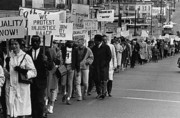
But as the bank wraps itself in the King brand, Chase planned to kick Helen Bailey (a 78-year-old grandmother who marched for civil rights and spent her life working with disabled children) out of her house on February 15th — right in the middle of Black History Month.

Occupy Nashville is fighting back. And they know that enough publicity on Chase’s hypocrisy will embarrass the bank into letting Ms. Bailey keep her home. Nearly 50,000 Change.org members have already spoken out, and Chase moved back Ms. Bailey’s foreclosure back one month in response — more people can speak out now and stop it completely.

Click here to sign the petition demanding that Chase stop foreclosing on civil rights activist Helen Bailey.

Helen and her attorney have struggled to find any solution that would stop Chase’s drive to foreclose. When Helen asked to modify her high-interest loan, Chase refused. When Helen found another lender who’d buy the home for just $9,000 less than what Chase said the home was worth, letting her live there for free, Chase refused. When Helen found someone else who’d buy her home and let Helen rent it, Chase refused again.

This isn’t an isolated incident. A former Chase banker — James Theckston — told Nick Kristof of the New York Times that his bank repeatedly pushed dangerous subprime mortgage loans on minority borrowers, then tried to cover up the racial disparity. Now, 25% of all minority borrowers are in foreclosure or deeply behind on payments. It’s a crisis.

But it’s one of our best opportunities to fight back. You can help Occupy Nashville keep Ms. Bailey in her home, and highlight the growing movement of communities standing up to foreclosures.

Click here to sign the petition.

Thanks for being a change-maker,

Jess and the Change.org team

P.S. Ms. Bailey isn’t alone in fighting for justice in a tough economy. Can you sign these other urgent petitions from Change.org members?

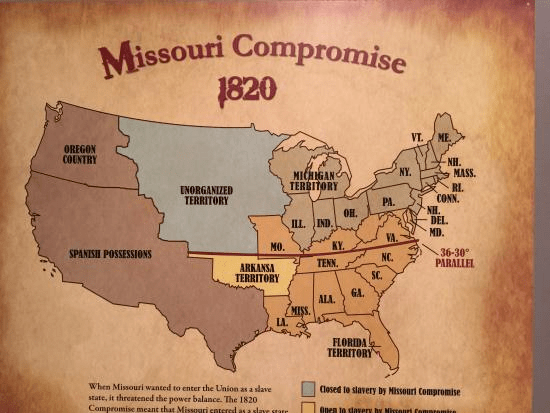
1820 – Senate passes Missouri Compromise – Black History


The Senate passes the Missouri Compromise, an attempt to deal with the dangerously divisive issue of extending slavery into the western territories. From colonial days to the Civil War, slavery and western expansion both played fundamental but inherently incompatible roles in the …read more

1983 – General Motors agreed to hire more women and minorities for five years as part of a settlement with the Equal Employment Opportunity Commission.


Today in labor history: General Motors agrees to end employment discrimination

On October 18, 1983, the General Motors Corporation, the largest automobile manufacturer in the U.S., agreed to hire more women and minorities as part of a settlement with the Equal Employment Opportunity Commission.

The turnaround came ten years after the commission had filed a complaint that African Americans, Latinos, other minorities, and women were being unfairly treated by the corporation. The commission filed a lawsuit against the company, and General Motors agreed to pay $42.5 million in what was at the time called the largest out-of-court settlement of an employment discrimination case.

The company simultaneously agreed to spend another $8.9 million developing a program for hiring, training, and promoting minority and female workers. General Motors also agreed to give those workers preference in the distribution of education assistance funds.

In addition, the company spent $3 million on training for African America, Latino, and female clerical employees; $2 million training them for highly technical positions; and another $2 million training them in mathematics and other areas that would qualify them for apprenticeship programs.

source: peoplesworld.org

A New African American Identity: The Harlem Renaissance – a repost- In memory


NMAAHC -- National Museum of African American History and Culture

Please keep donating!

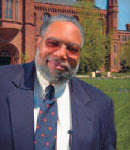
Lonnie Bunch, museum director, historian, lecturer, and author, is proud to present A Page from Our American Story, a regular on-line series for Museum supporters. It will showcase individuals and events in the African American experience, placing these stories in the context of a larger story — our American story.

A Page From Our American Story

NMAA-OAS-Aug15-V2.gif

With the end of the Civil War in 1865, hundreds of thousands of African Americans newly freed from the yoke of slavery in the South began to dream of fuller participation in American society, including political empowerment, equal economic opportunity, and economic and cultural self-determination.

Unfortunately, by the late 1870s, that dream was largely dead, as white supremacy was quickly restored to the Reconstruction South. White lawmakers on state and local levels passed strict racial segregation laws known as “Jim Crow laws” that made African Americans second-class citizens. While a small number of African Americans were able to become landowners, most were exploited as sharecroppers, a system designed to keep them poor and powerless. Hate groups like the Ku Klux Klan (KKK) perpetrated lynchings and conducted campaigns of terror and intimidation to keep African Americans from voting or exercising other fundamental rights.

With booming economies across the North and Midwest offering industrial jobs for workers of every race, many African Americans realized their hopes for a better standard of living—and a more racially tolerant environment—lay outside the South. By the turn of the 20th century, the Great Migration was underway as hundreds of thousands of African Americans relocated to cities like Chicago, Los Angeles, Detroit, Philadelphia, and New York. The Harlem section of Manhattan, which covers just three square miles, drew nearly 175,000 African Americans, giving the neighborhood the largest concentration of black people in the world. Harlem became a destination for African Americans of all backgrounds. From unskilled laborers to an educated middle-class, they shared common experiences of slavery, emancipation, and racial oppression, as well as a determination to forge a new identity as free people.

The Great Migration drew to Harlem some of the greatest minds and brightest talents of the day, an astonishing array of African American artists and scholars. Between the end of World War I and the mid-1930s, they produced one of the most significant eras of cultural expression in the nation’s history—the Harlem Renaissance. Yet this cultural explosion also occurred in Cleveland, Los Angeles and many cities shaped by the great migration. Alain Locke, a Harvard-educated writer, critic, and teacher who became known as the “dean” of the Harlem Renaissance, described it as a “spiritual coming of age” in which African Americans transformed “social disillusionment to race pride.”

NMAA-OAS-Aug15-V3.gif

The Harlem Renaissance encompassed poetry and prose, painting and sculpture, jazz and swing, opera and dance. What united these diverse art forms was their realistic presentation of what it meant to be black in America, what writer Langston Hughes called an “expression of our individual dark-skinned selves,” as well as a new militancy in asserting their civil and political rights.

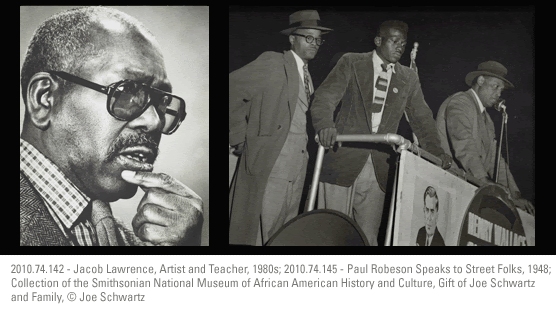
Among the Renaissance’s most significant contributors were intellectuals W.E.B. Du Bois, Marcus Garvey, Cyril Briggs, and Walter Francis White; electrifying performers Josephine Baker and Paul Robeson; writers and poets Zora Neale Hurston, Effie Lee Newsome, Countee Cullen, and James Baldwin; visual artists Jacob Lawrence and Aaron Douglas and Augusta Savage; and an extraordinary list of legendary musicians, including Ella Fitzgerald, Louis Armstrong, Count Bassie, Eubie Blake, Cab Calloway, Duke Ellington, Dizzy Gillespie, Billie Holliday, Ivie Anderson, Josephine Baker, Fats Waller, Jelly Roll Morton, and countless others.

At the height of the movement, Harlem was the epicenter of American culture. The neighborhood bustled with African American-owned and run publishing houses and newspapers, music companies, playhouses, nightclubs, and cabarets. The literature, music, and fashion they created defined culture and “cool” for blacks and white alike, in America and around the world.

As the 1920s came to a close, so did the Harlem Renaissance. Its heyday was cut short largely due to the Stock Market Crash of 1929 and resulting Great Depression, which hurt African American-owned businesses and publications and made less financial support for the arts available from patrons, foundations, and theatrical organizations.

However, the Harlem Renaissance’s impact on America was indelible. The movement brought notice to the great works of African American art, and inspired and influenced future generations of African American artists and intellectuals. The self-portrait of African American life, identity, and culture that emerged from Harlem was transmitted to the world at large, challenging the racist and disparaging stereotypes of the Jim Crow South. In doing so, it radically redefined how people of other races viewed African Americans and understood the African American experience.

Most importantly, the Harlem Renaissance instilled in African Americans across the country a new spirit of self-determination and pride, a new social consciousness, and a new commitment to political activism, all of which would provide a foundation for the Civil Rights Movement of the 1950s and 1960s. In doing so, it validated the beliefs of its founders and leaders like Alain Locke and Langston Hughes that art could be a vehicle to improve the lives of the African Americans.

 dd-enews-temp-lonnie-bunch-2.jpg All the best,

Lonnie Bunch
Director


To read past Our American Stories, visit our archives.

politics,pollution,petitions,pop culture & purses