
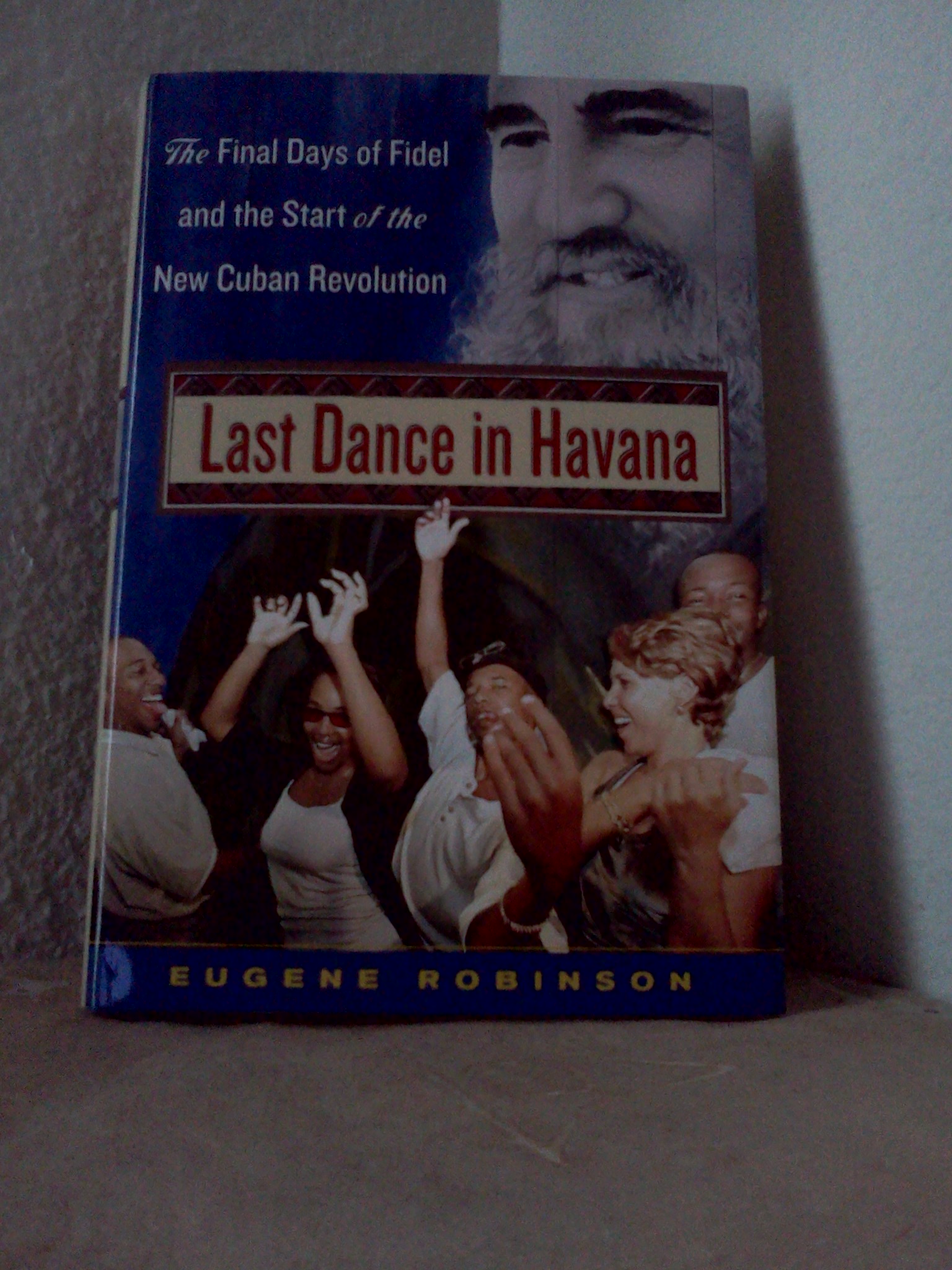
In power for forty-four years and counting, Fidel Castro has done everything possible to define Cuba to the world and to itself — yet not even he has been able to control the thoughts and dreams of his people. Those thoughts and dreams are the basis for what may become a post-Castro Cuba. To more fully understand the future of America’s near neighbor, veteran reporter Eug…moreIn power for forty-four years and counting, Fidel Castro has done everything possible to define Cuba to the world and to itself — yet not even he has been able to control the thoughts and dreams of his people. Those thoughts and dreams are the basis for what may become a post-Castro Cuba. To more fully understand the future of America’s near neighbor, veteran reporter Eugene Robinson knew exactly where to look — or rather, to listen. In this provocative work, Robinson takes us on a sweaty, pulsating, and lyrical tour of a country on the verge of revolution, using its musicians as a window into its present and future.
Music is the mother’s milk of Cuban culture. Cubans express their fondest hopes, their frustrations, even their political dissent, through music. Most Americans think only of salsa and the “Buena Vista Social Club” when they think of the music of Cuba, yet those styles are but a piece of a broad musical spectrum. Just as the West learned more about China after the Cultural Revolution by watching “From Mao to Mozart,” so will readers discover the real Cuba — the living, breathing, dying, yet striving Cuba.
Cuban music is both wildly exuberant and achingly melancholy. A thick stew of African and European elements, it is astoundingly rich and influential to have come from such a tiny island. From rap stars who defy the government in their lyrics to violinists and pianists who attend the world’s last Soviet-style conservatory to international pop stars who could make millions abroad yet choose to stay and work for peanuts, Robinson introduces us to unforgettable characters who happily bring him into their homes and backstage discussions.
Despite Castro’s attemptsto shut down nightclubs, obstruct artists, and subsidize only what he wants, the musicians and dancers of Cuba cannot stop, much less behave. Cubans move through their complicated lives the way they move on the dance floor, dashing and darting and spinning on a dime, seducing joy and fulfillment and next week’s supply of food out of a broken system. Then at night they take to the real dance floors and invent fantastic new steps. “Last Dance in Havana” is heartwrenching, yet ultimately as joyous and hopeful as a rocking club late on a Saturday night.






You must be logged in to post a comment.