
on this day … 6/9


1064 – Coimbra, Portugal fell to Ferdinand, the King of Castile.

1534 – Jacques Cartier became the first to sail into the river he named Saint Lawrence.

1790 – John Barry copyrighted “Philadelphia Spelling Book.” It was the first American book to be copyrighted.

1790 – Civil war broke out in Martinique.

1860 – The Ms. Ann Stevens book “Malaeska, the Indian Wife of the White Hunter” was offered for sale for a dime. It was the first published “dime novel.”

1861 – Mary Ann “Mother” Bickerdyke began working in Union hospitals.

1923 – Bulgaria’s government was overthrown by the military.

1931 – Robert H. Goddard patented a rocket-fueled aircraft design.

1934 – Donald Duck made his debut in the Silly Symphonies cartoon “The Wise Little Hen.”

1940 – Norway surrendered to the Nazis during World War II.

1943 – The withholding tax on payrolls was authorized by the U.S. Congress.

1945 – Japanese Premier Kantaro Suzuki declared that Japan would fight to the last rather than accept unconditional surrender.

1946 – Mel Ott (with the New York Giants) became the first manager to be ejected from a doubleheader (both games).

1959 – The first ballistic missile carrying submarine, the USS George Washington, was launched.

1965 – Michel Jazy ran the mile in 3 minutes, 53.6 seconds. He broke the record set by Peter Snell in 1964.

1978 – Leaders of the Church of Jesus Christ of Latter-day Saints struck down a 148-year-old policy of excluding black men from the Mormon priesthood.

1985 – Thomas Sutherland, an American educator, was kidnapped in Lebanon. He was not released until November 1991.

1986 – The Rogers Commission released a report on the Challenger disaster. The report explained that the spacecraft blew up as a result of a failure in a solid rocket booster joint.

1999 – NATO and Yugoslavia signed a peace agreement over Kosovo.

2000 – Canada and the United States signed a border security agreement. The agreement called for the establishment of a border-enforcement team.

2000 – The U.S. House of Representatives voted to repeal gift and estate taxes. The bill called for the taxes to be phased out over 10 years.

2001 – Patrick Roy (Colorado Avalanche) became the first National Hockey League (NHL) player to win three Conn Smythe Trophies. The award is given to the playoff’s Most Valuable Player.

2011 – The world’s first artificial organ transplant was performed. It was an artificial windpipe coated with stem cells.

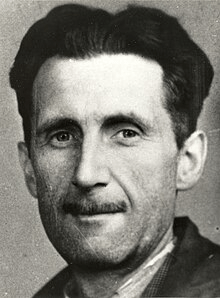
1949 – George Orwell’s “1984” is published


Orwell’s press card portrait, 1943, from wiki

George Orwell’s novel of a dystopian future, 1984, is published on June 8, 1949. The novel’s all-seeing leader, known as “Big Brother,” becomes a universal symbol for intrusive government and oppressive bureaucracy.

George Orwell was the nom de plume of Eric Blair, who was born in India. The son of a British civil servant, Orwell attended school in London and won a scholarship to the elite prep school Eton, where most students came from wealthy upper-class backgrounds, unlike Orwell. Rather than going to college like most of his classmates, Orwell joined the Indian Imperial Police and went to work in Burma in 1922. During his five years there, he developed a severe sense of class guilt; finally in 1927, he chose not to return to Burma while on holiday in England.

Orwell, choosing to immerse himself in the experiences of the urban poor, went to Paris, where he worked menial jobs, and later spent time in England as a tramp. He wrote Down and Out in Paris and London in 1933, based on his observation of the poorer classes, and in 1937 The Road to Wigan Pier, which documented the life of the unemployed in northern England. Meanwhile, he had published his first novel, Burmese Days, in 1934.

For the complete article

Source: history.com

Citation Information

Article TitleGeorge Orwell’s “1984” is publishedAuthorHistory.com EditorsWebsite NameHISTORYURLhttps://www.history.com/this-day-in-history/george-orwells-nineteen-eighty-four-is-publishedDate AccessedJune 8, 2023PublisherA&E Television NetworksLast UpdatedJune 5, 2020Original Published DateNovember 13, 2009

on this day … 6/8


0452 – Italy was invaded by Attila the Hun.

0793 – The Vikings raided the Northumbrian coast of England.

1786 – In New York City, commercially manufactured ice cream was advertised for the first time.

1790 – The first loan for the U.S. was repaid. The Temporary Loan of 1789 was negotiated and secured on September 18, 1789 by Alexander Hamilton.

1861 – Tennessee voted to secede from the Union and joined the Confederacy.

1866 – Prussia annexed the region of Holstein.

1869 – Ives W. McGaffey received a U.S. patent for the suction vacuum cleaner.

1872 – The penny postcard was authorized by the U.S. Congress.

1904 – U.S. Marines landed in Tangiers, Morocco, to protect U.S. citizens.

1915 – U.S. Secretary of State William Jennings Bryan resigned in a disagreement over U.S. handling of the sinking of the Lusitania.

1934 – The Cincinnati Reds became the first Major League team to use an airplane to travel from one city to another. They flew from Cincinnati to Chicago.

1947 – “Lassie Show” debuted on ABC radio. It was a 15-minute show.

1948 – Milton Berle hosted “Texaco Star Theater” NBC-TV. It was the show’s debut.

1953 – The U.S. Supreme Court outlawed segregated restaurants in Washington, DC.

1961 – The Milwaukee Braves set a major league baseball record when four consecutive home runs in the seventh inning.

1965 – U.S. troops in South Vietnam were given orders to begin fighting offensively.

1967 – Israeli airplanes attacked the USS Liberty in the Mediterranean during the 6-Day War between Israel and its Arab neighbors. 34 U.S. Navy crewmen were killed. Israel later called the incident a tragic mistake due to the mis-identification of the ship. The U.S. has never publicly investigated the incident.

1969 – The New York Yankees retired Mickey Mantle’s number (7).

1969 – It was announced that there would be a single schedule for both the NFL and AFL.

1969 – U.S. President Richard Nixon met with President Thieu of South Vietnam to tell him 25,000 U.S. troops would pull out by August.

1978 – A jury in Clark County, Nevada, ruled that the “Mormon will,” was a forgery. The work was supposedly written by Howard Hughes.

1982 – U.S. President Reagan became the first American chief executive to address a joint session of the British Parliament.

1986 – The Boston Celtics won their 16th NBA championship.

1987 – Fawn Hill began testifying in the Iran-Contra hearings. She said that she had helped to shred some documents.

1988 – The judge in the Iran-Contra conspiracy case ruled that Oliver North, John Poindexter, Richard Secord and Albert Hakim had to be tried separately.

1991 – A victory parade was held in Washington, DC, to honor veterans of the Persian Gulf War.

1994 – The warring factions in Bosnia agreed to a one-month cease-fire.

1995 – U.S. Air Force pilot Captain Scott O’Grady was rescued by U.S. Marines after surviving alone in Bosnia after his F-16 fighter was shot down on June 2.

1996 – China set off an underground nuclear test blast.

1998 – The National Rifle Association elected Charlton Heston to be its president.

1998 – In the U.S., the FTC brought an antitrust complaint against Intel Corp., alleging its policies punished other developers of microprocessor chips.

1998 – Honda agreed to pay $17.1 million for disconnecting anti-pollution devices in 1.6 million cars.

1998 – The space shuttle Discovery pulled away from Mir, ending America‘s three-year partnership with Russia.

2000 – The Dallas Stars and the New Jersey Devils played the NHL‘s longest scoreless game in Stanley Cup finals history. The fifth game of the series lasted 106 minutes and 21 seconds. The game ended with a goal by Mike Madano that allowed the Stars to play a game six back in Dallas.

2001 – Marc Chagall’s painting “Study for ‘Over Vitebsk” was stolen from the Jewish Museum in New York City. The 8×10 painting was valued at about $1 million. A group called the International Committee for Art and Peace later announced that they would return the painting after the Israelis and Palestinians made peace.

2004 – Nate Olive and Sarah Jones began the first known continuous hike of the 1,800-mile trail down the U.S. Pacific Coast. They completed the trek at the U.S.-Mexico border on September 28.

1949 George Orwell publishes Nineteen Eighty-Four


George Orwell

Orwell’s nightmarish description of a totalitarian society set in the year 1984 is one of the most significant works of English literature and one of the best-known novels of all time. The phrase, Big Brother is watching you, stems from this work.

to learn more … go to:

https://www.biography.com/writer/george-orwell?li_source=LI&li_medium=m2m-rcw-history

timeanddate.com

1866 – Chief Seattle dies near the city named for him


Thirteen years after American settlers founded the city named for him, Chief Seattle dies in a nearby village of his people.

Born sometime around 1790, Seattle (Seathl) was a chief of the Duwamish and Suquamish tribes who lived around the Pacific Coast bay that is today called Puget Sound. He was the son of a Suquamish father and a Duwamish mother, a lineage that allowed him to gain influence in both tribes.

By the early 1850s, small bands of Euro-Americans had begun establishing villages along the banks of Puget Sound. Chief Seattle apparently welcomed his new neighbors and seems to have treated them with kindness. In 1853, several settlers moved to a site on Elliott Bay to establish a permanent town—since Chief Seattle had proved so friendly and welcoming, the settlers named their tiny new settlement in his honor.

The Euro-American settlers picked the site because of the luxuriant forest on the bluff behind the new village. The Gold Rush in California had created a booming market for timber, and soon most of the villagers were at work cutting the trees and “skidding” them down a long chute to a newly constructed sawmill. The chute became known as “skid road,” and in time, it became the main street in Seattle, though it kept its original name. When the Seattle business district later moved north, the area became a haven for drunks and derelicts. Consequently, “skid road” or “skid row” became lingo for the dilapidated area of any town.

Not all the Puget Sound Indians, however, were as welcoming toward the white settlers as Chief Seattle. War broke out in 1855, and Indians from the White River Valley south of Seattle attacked the village. Although he believed the white settlers would eventually drive his people to extinction, Chief Seattle argued that resistance would merely anger the settlers and hasten the Indians’ demise. By 1856, many of the local Indians had concluded that Chief Seattle was right and made peace.

politics,pollution,petitions,pop culture & purses