Tag Archives: democrats

Soccer coach: Could artificial turf be causing cancer? 2yrs ago


By Gaard Swanson Published: May 19, 2014 at 10:54 PM PDT Last Updated: May 20, 2014 at 6:30 AM PDT

a repost

Soccer coach: Could artificial turf be causing cancer?

SEATTLE — A local soccer coach is raising serious questions about the material used tomakeartificialathleticfieldsCrumbrubberis made fromshreddedtiresandis used in soccer fields all over the country. The turf is especially popular in Seattle because the tires get recycled and the reliable surface can stand up to soggy weather.But one local coach sees a troubling connection between the turf and cancer among soccer players.Soccer runs in the blood of University of Washington assistant coach Amy Griffin. She started playing goalie as a child, and now helps UW goalies stay fit and improve their skills.Griffin’s always searching for new talent and keeps a list of top players. But one list of names isn’t about recruiting. On it are 13 players from Washington who have all been diagnosed with rare types of cancer.Of those 13, 11 come from an even smaller pool of players: Goal keepers.

“Everyone says it’s just a coincidence and kind of walks away, but the ratio of goal keepers to field players is 15 to 1, 16 to 2, and I know plenty of goal keepers that have cancers and I don’t know many field players,” Griffin said.

Griffin said she can’t walk away from what she’s discovered, and she’s not alone. Former professional goalie and reality TV star Ethan Zohn, who has twice beaten non-Hodgkins lymphoma, had been keeping his own list, which he has now handed over to Griffin.

Combined, the lists name 27 players with cancer, and 22 of them are goal keepers.

Griffin can’t say why goalies are getting cancer, but she wonders if it’s the field turf and the crumb rubber used to make it. She said goalies spend a lot of time on the ground diving for balls, blocking shots and sometimes ingesting the small rubber pellets.

“I lived in the stuff,” former UW goal keeper Jorden Alerding said of the turf. “Four to five times a week I was on it for hours — bleeding sweating, everything. Looking back now I wonder could that have been the cause.”

Griffin’s first brush with the unproven connection between cancer and the pellets came when she visited Alerding, who was being treated for cancer.

“She said, ‘I just think it’s something with the field turf. I don’t know what it is, but I think there’s something in those black dots,'” Griffin said.

The former Husky was diagnosed with non-Hodgkins lymphoma during her freshman year of college when doctors discovered a large, deadly tumor.

“It was about the size, a little bigger than a softball, right in the center of my chest,” Alerding said.

Alerding is now cancer free, but she still questions the health effects of crumb rubber and the lack of further research.

“If this can be prevented, I don’t know why there isn’t more effort being made to do the research and find out,” she said.

The pain is still fresh for June Leahy. Her daughter, Austen Everett, a star goalie for Seattle’s Blanchet High School and later the University of Miami, died a year and a half ago.

By the time Everett lost her second battle with non-Hodgkins lymphoma, Leahy was raising questions about the use of crumb rubber on soccer fields.

“I feel like there is a strong correlation with the turf,” she said.

This isn’t the first time people have raised concerns about the turf, either. In 2008, a goal keeper at Tacoma’s Stadium High School battled Hodgkins lymphoma. Back then, Luke Beardemphl and his family wondered if crumb rubber had played a part in his cancer.

“I’ll catch it. It’ll stop the ball but not the pellets. They’ll go into my face, go into my eyes, my mouth,” Beardemphl said in 2008.

Earlier that year, the US Consumer Product Safety Commission tested some blades of grass used in synthetic turf for lead. The commission found they did not contain enough of it to put children at risk.

The agency later stated that its “exposure assessment did not include chemical or other toxic metals, beyond lead.”

Tires do contain metals and chemicals that have been ruled too toxic to burn in Washington state. The average athletic field uses 27,000 of them.

So, can prolonged exposure to the fields make people sick? The Synthetic Turf Council says no.

The president of the trade organization was unavailable to talk about this story, but the group directed us to a statement on its website.

“For 40 years, under EPA oversight and OSHA- regulated manufacturing, not one person has ever reported ill effects related to any materials associated with synthetic turf,” the statement reads.

Those statements and tests cannot shake loose the feeling Griffin gets every time she learns the name of another goal keeper with cancer.

She also knows that feelings and suspicion do not equal evidence.

The team’s head physician, Dr. John O’Kane, says the concern is valid and has talked with Griffin about the need for scientific and medical research on the effects of crumb rubber.

He said Griffin’s list is only a starting point.

“The question you would need to ask is over that same time period, how many goalies are there that haven’t gotten cancer?” O’Kane said. “And until you understand that number, you really can’t interpret that there’s anything particularly dangerous about being a goalie when it comes to cancer.”

O’Kane said that kind of research could take years. Griffin hopes someone is willing to take on the work to provide her with an answer. She said any answer will do.

“I would love for it to be disproven or for someone to grab me by the throat and say,’These are the facts. This is why it could never be this. This is just happenstance.’ That would be great,” she said.

One former Husky — Alerding — is on Griffin’s list.

Keep Supporting Jonathan Deeds, Ph.D., ~is working to assure that U.S. seafood is both safe and accurately labeled


WordPressWhatFishIsThat
04/21/2014 01:00 PM EDT
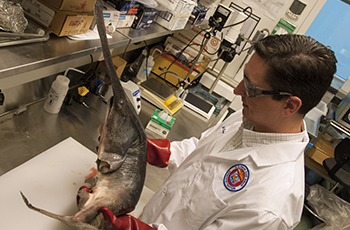
Using some of the technology used in mapping the human genome, FDA scientists are working to create DNA barcodes for fish.
The high-tech effort is aimed to preventing fraud, including the substitution of a cheap fish for an expensive one, and preventing illness.

FDA Logo

Meet Republican Tom Cotton … a repost &reminder


Yes, this man was given a seat in Congress … the man and his Republican crew in Congress seem more dangerous to our very democracy now …

U.S. Rep. Tom Cotton, you may remember, was a co-sponsor of the “Life at Conception Act,” a so-called personhood measure which would give full constitutional rights to each “preborn human person” at the “moment of fertilization. In addition to being a frontal assault on Roe v. Wade, the bill (likely unconstitutional) could ban certain forms of birth control such as IUDs or the morning-after pill. (It could also potentially force women into dangerous pregnancies and to deliver babies that can’t survive outside the womb, or force families in situations like this to keep a braindead woman on life support). Click the graphic for the complete article  COTTON: Co-sponsored bill that could ban certain forms of birth control.

I know no candidate is perfect but if they are running to represent you as a Public Servant there are certain mandatory things they should all live up to … like the oath they take, which is seemingly being tossed aside by Republicans

I am sure there must be more information about where Tom Cotton stands on the issues …. do your research

I have to say that having spent a few minutes looking for actual comments from Mr.Cotton about the issues facing our 21st Century lives is not readily available. I went to plenty of sites, but one that claims they are a factcheck site seemed somewhat biased against mark pryor though they did divulge that Rep tom cotton did have an association or worked with the insurance industry at one time stating, “Cotton’s insurance experience is limited to consulting work for a federal agency.” This seems significant to me, but I am no expert.  The article does not think his consulting work is important, but seems to use the potato paatato meme quite often in their fact checking when his constituents deserve to know what part he played as an insurance consultant. I have a problem with the bottom line! That Rep.Tom Cotton seems to back stripping seniors of Medicare, assuming women have no common sense, backing  any budget coming from Rep.Paul Ryan – Those are just a few of many issues that seems buried in a lot of the surface articles concerning Mr. Cotton. So, it would be in the best interest of the People in Arkansas to ask questions of Tom Cotton … Where do you stand in this 21st Century life? Climate Change, Reproductive Rights, Immigration, ACA and tell your constituents why the GOP has no viable replacement bills plans to replace anything they may want to repeal ? I think the lack of plans offered up proves just how unqualified the 113th Republican members of Congress are

So, there is more information …. of course and for the complete article ~ search for the2013 headline in huffingtonpost.com

Tom Cotton In 1997: Women’s ‘Greatest Fear’ Is Men Leaving Them

Posted: 08/09/2013 1:48 pm EDT  |  Updated: 08/13/2013

among other things …below

Cotton, a freshman congressman who is running for Senate in 2014, warned feminists in a 1997 article for the Harvard Crimson that no-fault divorce will backfire on them by enabling their husbands to leave them for trophy wives.

“Feminists say no fault divorce was a large hurdle on the path to female liberation,” Cotton wrote. “They apparently don’t consult the deepest hopes or greatest fears of young women.”

FISH … Wild or Farmed …do you know what to look for? reminder


How to

Identify

Sustainable Seafood

Know the label to look for when shopping for fish.

by Virginia Sole-Smith – 2010

This international nonprofit organization uses independent certifying agencies to make sure fisheries are catching their fish in the most environmentally friendly way possible. The label now appears on more than 180 frozen, fresh, and smoked-fish products sold in grocery stores across the country, including Whole Foods and Target,Wal-Mart has committed to buying all its store-brand fish products from MSC-certified fisheries within the next two to four years. For more information, visit  eng.msc.org  

Please ask your grocer if they buy and sell certified Sustainable fish … Nativegrl77

 facts about MSC

       Our vision is of the world’s oceans teeming with life, and seafood supplies safeguarded for this and future generations

Our mission is to use our ecolabel and fishery certification program to contribute to the health of the world’s oceans by recognising and rewarding sustainable fishing practises, influencing the choices people make when buying seafood, and working with our partners to transform the seafood market to a sustainable basis.
MSC vision and mission

  1. The MSC is a global program with fisheries participating from all the world’s oceans

    We have a staff of 100 spread across the HQ in London and regional offices in the Netherlands, USA, Australia, Baltic region, France, Germany, Japan, South Africa, and Spain, where our multilingual staff can be contacted to answer questions.
    MSC offices and staff

  2. The MSC program assesses wild capture fisheries only

    The MSC assessment program is used to certify wild capture freshwater and marine species. Our program does not assess fish farming (aquaculture), although some forms of enhanced fishery may be eligible for assessment.
    Why MSC doesn’t certify aquaculture fisheries

  3. We do not certify fisheries, we set standards

    To maintain impartiality, the MSC operates a ‘third-party’ certification program. This means that MSC itself does not assess fisheries or decide if they are sustainable. Instead certificates are issued by certifiers who are independently accredited to be able to perform assessments of fisheries and decide if they meet the MSC’s standards.
    Third party certification

  4. The market for certified sustainable seafood creates an incentive for fishery improvements

    Most fisheries say MSC certification helps them retain existing markets and gain access to new ones. For example the Germany North Sea saithe fishery used to rely entirely on fresh fish sales, but is now winning contracts for frozen fillets because its customers are requesting MSC certified products. This presents a powerful incentive for other fisheries to demonstrate their sustainability or to make improvements so that they can be eligible for certification too.
    Benefits of MSC certification (PDF, 8.2 mb)

  5. Fisheries in the MSC program can influence fishery policies

    An example from the South Africa hake fishery illustrates how fisheries in the MSC program can influence government policy. The fishery introduced tori lines (streamers flown from boats to keep birds away) in response to one MSC condition. These are now mandatory on all trawling vessels in South Africa.
    Net benefits report (PDF, 8.2 mb)

  6. The MSC program has delivered environmental improvements in fishery management

    For example the MSC assessment process for the Ekofish Group plaice fishery led to a voluntary agreement with NGOs to close certain sensitive areas for this bottom-trawl fishery, and to take part in scientific research on the impact fishing gear has on habitats and the seabed.
    Find out about other environmental benefits resulting from the MSC program

  7. The MSC program uses the best available science

    MSC certification is a robust scientific process, which draws on scientific expertise from marine scientists worldwide as well as contributing to improving scientific understanding through the fishery assessment process.
    MSC standards and methodologies

  8. Every MSC certified fishery has demonstrated that it maintains sustainable fish stocks, minimises environmental impacts and is effectively managed

    These are the three MSC environmental principles that every fishery in the program must prove it meets. Measurable environmental benefits that have occurred in MSC certified fisheries include the recovery of the New Zealand hoki fishery‘s historically low stock levels, due to a raft of management measures including a stock rebuilding plan.

  9. The MSC program is transparent

    Information from each step of the assessment process is available on the MSC website to make it easier for stakeholders to contribute. We also invite stakeholders to participate in key improvement projects and publish progress online.
    Consultations

  10. We work collaboratively with stakeholders around the world

    The input that stakeholders provide during a fishery’s assessment is key to ensuring a thorough assessment and a credible outcome. For this reason, certifiers are required to carefully consider all comments received, and justify and document their responses. The MSC also has an objections procedure which provides a mechanism for any disagreement with the assessment of the fishery to be reviewed and resolved. The MSC is continually improving its program, and stakeholders are invited to contribute to its development through regular meetings of the Stakeholder Council and public consultations.
    Have your say

  11. We work with fisheries in developing countries to ensure there is equal access to the benefits of certification

    The MSC program is open to all fisheries regardless of size, scale, location and intensity. To promote equal accessibility to its ecolabelling program, the MSC works with stakeholders and fisheries from all over the world. Through the MSC’s Developing World Program, the MSC seeks to promote increased participation of developing country fisheries in certification.
    Developing World Program

  12. We are a non-profit organisation

    The MSC is a registered charity and non-profit (501c3) and to a great extent relies on financial support from donors with an interest in protecting sustainable fishing. The majority of this income is received in the form of grants from private foundations, as well as some more limited support from governments, companies, other NGOs and individual supporters. Additional revenue is also generated from MSC International (the trading arm of the MSC) which administers a fee structure for use of the MSC eco-label, helping the MSC to become more financially independent and reduce its dependence on charitable donations.
    Make a donation

  13. We meet best practice for ecolabels and setting social and environmental standards

    The MSC has the only seafood ecolabel in the world that is consistent with the ISEAL Code of Good Practice for Setting Social and Environmental Standards and the United Nations Food and Agriculture Organisation’s guidelines for ecolabelling of fish products.
    How we meet best practice

  14. MSC certification helps to safeguard livelihoods and sustain communities

    Encouraging responsible fisheries management improves security for the livelihoods of communities who depend on them, especially for smaller scale artisanal fisheries. In the Net Benefits report there are many examples, such as in the American Albacore Fishing Association Pacific tuna fishery which in 2005 had unstable incomes and lack of resources to invest in repairing vessels. After certification, the fishery found new buyers in Switzerland, Germany, France and the United Kingdom – and, confident of a market, was able to set its own price for the first time in its history. Now fishing is a reliable industry for the future of the community.
    Net benefits report
    (PDF, 8.2 mb)

  15. Buying MSC labelled fish makes a difference

    To remain MSC certified, fisheries must continually meet requirements for maintaining fish populations, so your favourite fish can still be enjoyed in years to come.
    Where to buy sustainable seafood

  16. You can be sure that all fish with the MSC ecolabel can be traced back to a certified sustainable fishery

    MSC-labelled seafood is traceable through the whole supply chain. When a product is sold with the MSC ecolabel, each business in the chain must have a Chain of Custody certificate, proving they have demonstrated to independent auditors that MSC certified fish comes from a certified supplier and is kept separate from non MSC-certified fish.
    MSC chain of custody certification

  17. 23% of shoppers across markets around the world recognise the MSC ecolabel

    2010 research carried out in the USA, Canada, UK, Germany, France, and Japan shows that across these regions, 23% of the adult population is now aware of the MSC ecolabel – up from 9% in 2008.
    Find out more about the research

  18. Consumers respond positively to the promotion of certified sustainable seafood

    When promoted as part of a campaign called ‘Les Jours Bleus’ (Blue Days), the MSC ecolabel helped increase sales for MSC Partners. Findus increased their market share for breaded fish in Carrefour stores by 30% in volume. Sales of Connétable products were multiplied by 10 compared to their average annual sales throughout the year.
    Les Jours Bleus campaign

  19. Our ‘Fish & Kids’ project teaches the next generation why seafood matters

    By working with education caterers, schools and children, the MSC is bringing sustainable seafood to over 4000 (roughly 20%) of primary schools in the UK. The project teaches children about sustainable seafood issues and helps schools source MSC fish for school meals. In 2010 the project was also launched in 60 schools in Sweden.
    Fish & Kids website

  20. The MSC is widely recognised as the leader in the sustainable seafood labelling field

    Independent comparisons of seafood labelling programs routinely place the MSC at the top of the list and recognise the MSC as having the most robust and scientific standards of all seafood ecolabelling programs.
    MSC standards and methodologies

Visit certified sustainable fisheries on the map and find out more about them.

Fisheries on the map

Support our work

Financial support is critical to our success. Find out how you can help.

Donate now

Rep. Steve King in his own words ~This is a Public Servant? – a reminder


Information from CBS seems to infer that Rep. Steve King is going after President Obama’s Aunt .

Congressman Steve King, an Iowa Republican, today requested that President Obama’s aunt, Zeituni Onyango, testify before the House Subcommittee on Immigration, Citizenship, Refugees, Border Security and International Law in order to address “the public perception that favoritism played a role in the grant of asylum to Ms. Onyango.

We should all let Rep. Steve King know that Eric Holder stated that we are a nation that avoids talking about race and was in no way was Holders statement shaped or formed the way King stated in his interview