Tag Archives: gay

Mindful behavior / New Year Resolution … stop smoking


ciggtaxes_state_icon

Every once in a while i come across info that i have to pass along.   i for one believe that great information definitely makes us think…hopefully, it also starts up a conversation that is not only positive but initiates reaction and action that causes change …  as an ex-smoker having stopped (cold turkey) years ago.  So,

The information below is old,  but you have to wonder just what the numbers are now!

Orzechowski and Walker, economic consulting firm says …                

   $1,712 is the average amt a pack-a-day smoker in the US spends annually

What can $1,712 buy?

  • 170 mosquito nets from nothingbutnets.net and prevent malaria transmission to African families.
  • Provide 11,900 meals for the nation’s hungry through feedingamerica.org
  • Donate to local programs to give 10 kids fun and creative after-school options every day for a month. aferschoolalliance.org for tips on finding an organization near you.

resource: internet

Barbecue – History of Barbecue


Image result for Ellsworth B. A. Zwoyer of Pennsylvania patented a design for charcoal briquettes in 189 To barbecue means to slow-cook meat at a low temperature.

Zwoyer’s Design Patent #D27483 – charcoal briquette.


To barbecue means to slow-cook meat at a low temperature for a long time over wood or charcoal. In America, barbecue (or BBQ) originated in the late 1800’s during Western cattle drives. The cowboys were fed the less than perfect cuts of meat, often brisket, a tough and stringy piece of meat that required five to seven hours of cooking to tenderize. Other barbecue meats used were pork butt, pork ribs, beef ribs, venison and goat.

However, barbecue was not invented in America and no one knows who invented the barbecue. The word ‘Barbecue’ might come from the Taino Indian word ‘barbacoa’ meaning meat-smoking apparatus. ‘Barbecue’ could have also originated from the French word “Barbe a queue” which means “whiskers-to-tail.”

No one is sure of the correct origins of the word.

Who Invented the Charcoal Briquette?

Ellsworth B. A. Zwoyer of Pennsylvania patented a design for charcoal briquettes in 1897. (See the image to the right) After World War One, the Zwoyer Fuel Company built charcoal briquette manufacturing plants in the United States with plants in Buffalo, NY and Fall River, MA.

There are stories circulating that Henry Ford invented the very first briquette in 1920 with the help of Thomas Edison. However, the 1897 patent obviously predates this and Ford and Edison both knew Zwoyer.

Ford is the man who popularized the gas-powered car in America and invented the assembly line for automobile manufacturing. Ford created a briquette from the wood scraps and sawdust from his car factory.

E.G. Kingsford bought Ford’s briquette and placed it into commercial production.

Science.Howstuffworks.com – reminder 2010


A repost – it’s interesting and informative
10 Sustainable Buildings

10 Sustainable Buildings

Green building is no longer a thing of the future. Find out how architects and builders use solar panels, plastic bottles and straw bale insulation for ten environmentally friendly structures.

See more »

10 Things You Can Do to Help Save the Earth

10 Things You Can Do to Help Save the Earth

It’s a lot easier than you think to “go green” — many of these suggestions require little effort, yet can make a big difference for the environmental. Watch a video and read more about saving the earth.

See more »

5 Amazing Green Cities

5 Amazing Green Cities

Sure, the Emerald City looked green, but you won’t need green-tinted glasses to see how environmentally friendly the cities on this list are. What makes a city amazingly green?

See more »

5 Green Cities of the Future

5 Green Cities of the Future

Sustainable urbanism is no longer a futuristic dream. Welcome to five cities around the world that will be turning a radical shade of green in the coming decades.

See more »

5 Myths About Renewable Energy

5 Myths About Renewable Energy

We’re currently suspended between two ages: a time dependent on fossil fuels and a future dominated by renewable energy sources. Yet not everyone is sold on this vision, so a number of myths about renewable energy persist.

See more »

5 Wacky Forms of Alternative Energy

5 Wacky Forms of Alternative Energy

For those who reduce, reuse and recycle to the beat of their own drum, here are some of the wackier ways to help better the environment and lessen your carbon footprint.

See more »

5 Walkable Cities

5 Walkable Cities

What makes a city walkable? It’s not just sidewalks. You have to be able to access jobs, stores and places of entertainment while feeling comfortable and safe. What are five cities in the United States that have risen to the challenge?

See more »

Are climate skeptics right?

Are climate skeptics right?

It’s evident the debate over climate change is a heated one. Are skeptics clouding the public judgment for money? Are climate-change believers merely alarmists who risk the present for the future?

See more »

Are my bath habits destroying marine ecology?

Are my bath habits destroying marine ecology?

After sloughing off your dead skin, what happens to those plastic microbeads that wash down the drain? Some make it all the way to the ocean and linger until they become a very unhealthy supper.

See more »

Are personal watercraft destroying the planet?

Are personal watercraft destroying the planet?

They may seem like a fun water sport or a noisy nuisance, but whatever your stance on personal watercraft, there’s no denying they pollute. So how bad are they?

See more »

Can air pollution affect heart health?

Can air pollution affect heart health?

Everyone knows air pollution isn’t good for your lungs, but it turns out that it’s not doing your heart any favors either. Why do the particulates in the air we breathe interfere with our heart’s basic job: to keep things ticking?

See more »

Can baking soda save the environment?

Can baking soda save the environment?

One company’s SkyMine technology aims to capture industrial carbon dioxide emissions and turn them into an endlessly useful product: Baking soda. But how do pollutants become a household staple?

See more »

Can house music solve the energy crisis?

Can house music solve the energy crisis?

Electrifying dance moves might impress your friends, but they usually don’t help power the club you’re dancing in. What’s piezoelectricity, and how could it help twist the future of energy generation?

See more »

Can humans start an earthquake?

Can humans start an earthquake?

Earthquakes are “natural” disasters, right? Yes, but that doesn’t mean the shifting plates that cause them can’t be aggravated by human industry.

See more »

Can I travel without expanding my carbon footprint?

Can I travel without expanding my carbon footprint?

You’ve booked a safari with the environment in mind. There’s just one problem: Trans-Atlantic flights aren’t very green. Can green tags make your gas-guzzling trip carbon neutral?

See more »

Can my body generate power after I die?

Can my body generate power after I die?

Haunted by ideas of your body polluting the Earth after you’re gone? Microbial fuel cell technology could allow you to harness the energy of your own decomposition to power batteries.

See more »

Can we bury our CO2 problem in the ocean?

Can we bury our CO2 problem in the ocean?

Carbon dioxide released from burning fossil fuels is a prime suspect in global warming. Could we mitigate the problem by burying the CO2 deep within the ocean?

See more »

Can we harness energy from outer space?

Can we harness energy from outer space?

As alternative energy sources sputter to take off on Earth, scientists are turning an eye toward space. What are the most promising celestial options, and when could they be in use?

See more »

Can we plug the hole in the ozone layer?

Can we plug the hole in the ozone layer?

The ozone layer prevents much of the sun’s ultraviolet light from reaching the Earth. But there’s a problem: a gaping hole the size of Antarctica. What can we do about it?

See more »

The Truth About Coconut Water


 By
WebMD Expert Column

Low in calories, naturally fat- and cholesterol free, more potassium than four bananas, and super hydrating – these are just a few of the many benefits ascribed to America’s latest health craze: coconut water.

Dubbed “Mother Nature’s sports drink” by marketers, the demand is skyrocketing, propelled by celebrity and athlete endorsements and promises to hydrate the body and help with a whole host of conditions, from hangovers to cancer and kidney stones.

But is coconut water capable of delivering on all the promises or is it hype?

What Is Coconut Water?

Naturally refreshing, coconut water has a sweet, nutty taste. It contains easily digested carbohydrate in the form of sugar and electrolytes. Not to be confused with high-fat coconut milk or oil, coconut water is a clear liquid in the fruit’s center that is tapped from young, green coconuts.

It has fewer calories, less sodium, and more potassium than a sports drink. Ounce per ounce, most unflavored coconut water contains 5.45 calories, 1.3 grams sugar, 61 milligrams (mg) of potassium, and 5.45 mg of sodium compared to Gatorade, which has 6.25 calories, 1.75 grams of sugar, 3.75 mg of potassium, and 13.75 mg of sodium.

 
Better Than Some Sugary Drinks

Coconut water has less sugar than many sports drinks and much less sugar than sodas and some fruit juices. Plain coconut water could be a better choice for adults and kids looking for a beverage that is less sweet. But don’t overdo it, says Lillian Cheung, DSc, RD, of Harvard School of Public Health. “One 11-ounce container has 60 calories and if you drink several in one day, the calories can add up quickly,” Cheung says.

Cheung, co-author of Savor Mindful Eating, Mindful Life, suggests being mindful about beverage choices and reading labels to choose plain coconut water and avoid those with added sugar or juices, which are no different from other sugary beverages.

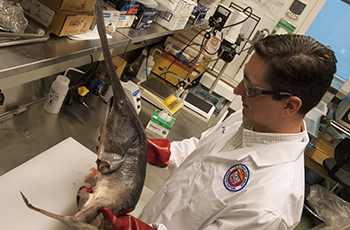
Keep Supporting Jonathan Deeds, Ph.D., ~is working to assure that U.S. seafood is both safe and accurately labeled


WordPressWhatFishIsThat
04/21/2014 01:00 PM EDT
Using some of the technology used in mapping the human genome, FDA scientists are working to create DNA barcodes for fish.
The high-tech effort is aimed to preventing fraud, including the substitution of a cheap fish for an expensive one, and preventing illness.

FDA Logo