Tag Archives: United States

The 2009 Racial Justice Act … reminder


The North Carolina Racial Justice Act of 2009

Prohibited seeking or imposing the death penalty on the basis of race. The act identified types of evidence that might be considered by the court when considering whether race was a basis for seeking or imposing the death penalty and established a process by which relevant evidence might be used to establish that race was a significant factor in seeking or imposing the death penalty. The defendant had the burden of proving that race was a significant factor in seeking or imposing the death penalty, and the state was allowed to offer evidence to rebut the claims or evidence of the defendant. If race was found to be a significant factor in the imposition of the death penalty, the death sentence would automatically be commuted to life imprisonment without the possibility of parole.[1]

North Carolina General Assembly Repeal Attempts [edit]

Under pressure from a group of 43 district attorneys, who expressed opposition to the act citing the clog of the court system in the state, the North Carolina Senate passed a bill by a 27-14 vote on November 28, 2011, that would have effectively repealed the Racial Justice Act.[2]

However, on December 14, Governor Bev Perdue, a Democrat, vetoed the bill, saying that while she supports the death penalty, she felt it was “simply unacceptable for racial prejudice to play a role in the imposition of the death penalty in North Carolina.”[3] The state legislature did not have enough votes to override Perdue’s veto.

Major revision (2012)[edit]

The North Carolina General Assembly passed a major revision of the law in 2012 authored by Rep. Paul Stam (R-Wake). The rewrite “severely restricts the use of statistics to only the county or judicial district where the crime occurred, instead of the entire state or region. It also says statistics alone are insufficient to prove bias, and that the race of the victim cannot be taken into account.” The bill was vetoed by Gov. Perdue, but this time, the legislature overrode the governor’s veto.[4]

Repeal[edit]

The North Carolina General Assembly voted to effectively repeal the entire law in 2013 and Gov. Pat McCrory, a Republican, signed the repeal into law.[5]

Appeals under act[edit]

On April 20, 2012, in the first case appealed under the Racial Justice Act, the then-Senior Resident Superior Court Judge in Cumberland County (Fayetteville), Judge Greg Weeks, threw out the death sentence of Marcus Raymond Robinson, automatically commuting his sentence to life without parole. Robinson contended that when he was sentenced to death in 1994, prosecutors deliberately kept blacks off the jury. Robinson’s lawyers cited a study from Michigan State University College of Law indicating that prosecutors across North Carolina improperly used their peremptory challenges to systemically exclude qualified black jurors from jury service.[6][7][8]

References[edit]

  1. Jump up ^ Senate Bill 461, General Assembly of North Carolina, Session 2009
  2. Jump up ^ Bufkin, Sarah. “North Carolina General Assembly Votes To Repeal Landmark Racial Justice Law”. Think Progress: Justice. Retrieved 8 December 2011. 
  3. Jump up ^ Jarvis, Greg (2012-12-15). “Perdue veto saves death-row appeal law”. The News & Observer. 
  4. Jump up ^ News & Observer
  5. Jump up ^ Charlotte Observer
  6. Jump up ^ “Judge: Racism played role in Cumberland County trial, death sentence converted in N.C.’s first Racial Justice Act case”. The Fayetteville Observer. April 20, 2012. Retrieved April 21, 2012. 
  7. Jump up ^ “Racial bias saves death row man”. BBC News (BBC). April 20, 2012. Retrieved April 21, 2012. 
  8. Jump up ^ Zucchino, David (April 20, 2012). “Death penalty vacated under North Carolina’s racial justice law”. Los Angeles Times. Retrieved April 21, 2012.

Resource …wiki

so, I do not know how accurate this is

Demand US Airways apologize – Black History


Should sagging pants get you kicked off a flight? Arrested? Jailed?

This is what 20 year-old University of New Mexico student Deshon Marman faced when he was taken off of a US Airways flight, arrested, shackled, and jailed after airline staff confronted him about his sagging pants. Marman, a San Francisco resident, had returned to California to attend his best friend’s funeral.1

However you feel about sagging pants, it’s clear that US Airways’ response to Marman’s clothing was inappropriate and discriminatory. Prosecutors have decided not to file charges against Marman — but leadership at US Airways is still defending the way their employees treated him.2

If US Airways gets away with this, it sets a dangerous precedent — we can’t let it become acceptable for corporations to target and criminalize young Black men because of their appearance. Please join us in demanding that US Airways apologize to Deshon and his family and explain steps the company will take to ensure that nothing like this happens again. Just click the link below:

http://act.colorofchange.org/sign/usairways

When Marman was asked to pull up his pants by a US Airways ticket agent, he said he would comply once he reached his seat. Instead of that being the end of the discussion, the US Airways captain had him arrested and taken to jail.3

After Marman was in his seat (and had pulled up his pants), he was confronted by the pilot and police officers.  Marman said, “I’m just like everybody else on this plane,” to which the US Airways pilot responded, “No, you’re not.”4 Then, Marman was asked to leave the plane.  He initially refused, but agreed to leave after being told that his ticket would be refunded.

Marman says that he wasn’t told he was under arrest, and that no one read him his rights, but while he was on his way off the plane, officers grabbed his arms and handcuffed him. Marman was arrested on suspicion of a felony count of battery of a police officer and misdemeanor counts of resisting arrest and trespassing — charges that were not pursued, because the local District Attorney’s office determined that criminal charges weren’t warranted.5

A clear double-standard

Sagging is a cultural trend that many have strong feelings about both inside and outside of Black circles. But we should all be able to agree that the way US Airways treated Marman was unacceptable.

US Airways admittedly does not have a dress code for their passengers and has frequently allowed an older white male passenger to fly in women’s underwear — without outer garments — as recently as a week prior to Deshon’s arrest.6

The double standard faced by Deshon is connected to a larger problem Black youth face with a legal system that punishes and criminalizes them at higher rates, even when there is no difference in behavior.7 We cannot allow businesses like US Airways to follow the trend. We must hold them to a standard of conduct that does not discriminate, condone double standards or violate anyone’s civil rights.

Unfortunately, US Airways has refused to respond to the charges of discrimination from Deshon’s family and the San Francisco NAACP, who have asked for an apology.8 The company still has not refunded Marman’s ticket, and they are standing by the behavior of their staff, calling it “professional.”9

Please join us in demanding that US Airways apologize and explain the steps they will take to ensure that what happened to Deshon will not happen again. When you do, please tell your friends and family to do the same.

http://act.colorofchange.org/sign/usairways

Thanks and Peace,

— Rashad, James, Gabriel, William, Dani, Matt, Natasha, and the rest of the ColorOfchange.org team
   July 18th, 2011

Help support our work. ColorOfChange.org is powered by YOU — your energy and dollars. We take no money from lobbyists or large corporations that don’t share our values, and our tiny staff ensures your contributions go a long way. You can contribute here:

http://www.colorofchange.org/donate

References:

1. “Exclusive: Student talks about saggy pants arrest,” KGO-TV, 06-18-11
http://act.colorofchange.org/go/897?akid=2066.1174326.XeJDIG&t=7

2. “Prosecutors won’t file charges against man arrested with saggy pants at San Francisco airport,” Washington Post, 07-13-11
http://act.colorofchange.org/go/904?akid=2066.1174326.XeJDIG&t=9

3. See reference 1.

4. “Deshon Marman on US Airways flight 488,” Youtube via SF Chronicle, 06-17-11
http://act.colorofchange.org/go/898?akid=2066.1174326.XeJDIG&t=11

5. See reference 2.

6. “Man flies US Airways in women’s underwear,” SF Gate, 06-21-11
http://act.colorofchange.org/go/899?akid=2066.1174326.XeJDIG&t=13

7. “Marijuana Arrests in NYC,” Drug Policy Alliance, 4-1-11

http://act.colorofchange.org/go/841?akid=2066.1174326.XeJDIG&t=15

8. “NAACP leader sees racism in sagging-pants saga,” SF Gate, 06-25-11
http://act.colorofchange.org/go/900?akid=2066.1174326.XeJDIG&t=17

9. Deshon Marman to sue US Airways after saggy pants arrest,” The Examiner, 07-13-11
http://act.colorofchange.org/go/905?akid=2066.1174326.XeJDIG&t=19

Selling Artifacts – In Memory


Talk about poppin’ tags.

Goodwill offers up African artifacts for sale

Posted on November 19, 2013 | By
Goodwill African artifacts
antique-african-art
Some of the artifacts for sale

Goodwill in Tacoma is beginning to sell African artifacts valued at more than $11,000.

The 55 artifacts, from the mid-19th to mid-20th century, were used in tribal life and for tribal ceremonies. An anonymous donor left the 55 artifacts at the Port Townsend Goodwill store last month.

The items will be sold online at Shopgoodwill.com, a site used to produce the highest prices for items. The site uses competitive bidding to sell high-end fashion, jewelry, art and other items.

Go to the search portion of the site, pick Tacoma in the drop-down menu of sellers, then search for the items.

Goodwill wants the public to know about the online sales. Officials figure if people know valuable goods can fetch a good price, they might be more willing to donate.

“Many people hesitate to donate their high-end furniture, jewelry, clothing, art and collectibles because they assume their treasures will end up for $4 in our thrift stores,” said Dylan Lipert, manager of online sales, in a news release. “My job is to make sure that doesn’t happen.”

(The gallery above shows some of the artifacts, as well as other items that have or will be sold online.)

More than 140 Goodwill agencies provide items for sale online. In the past six years, Tacoma online operations have more than doubled in size and sales from $2.1 million in FY 2008 to $4.5 million in FY 2013.

**************************************************

Century-old Native American artifact dropped off at Goodwill

                  By                                        Published:  Jan 30, 2013 at 4:01 PM PST Last Updated: Apr 26, 2013 at 12:40 PM PST
Century-old Native American artifact dropped off at Goodwill
»Play Video          
SEATTLE — Someone recently donated an old vest

SEATTLE — Someone recently donated an old vest to Goodwill, and while that could happen everyday, this one was unusual.

By old, we mean a century old. It’s a beaded Native American vest that’s so valuable, Goodwill couldn’t bear to sell it.

Instead, the non-profit decided to make its own donation. Now, curators from the Burke Museum are analyzing the vest.

It’s an exquisitely detailed piece from the early 1900s. Everything from the color of the beads to the geometric designs to the velvet lining is a clue pointing to the vest’s history.

“Whoever gave it to Goodwill probably knew more about it. They probably knew their grandfather got it while on a train ride through Glacier. That’s the kind of information we’d love to have,” said Robin Wright, Curator of Native American Art.

The vest was inside a trunk, donated to Goodwill in 2006. Someone recognized its value, and instead of going up for sale, the vest went into storage.

Katherine Boury of Goodwill explained, “We have to make the decision, what’s the best use of the donation. In this case because it’s of cultural significance, it seems it would be best to be accessible to everyone.”

Assessors pinpointed it as Native American work from the northern plains.

“There’s been some discussion with various experts about which particular tribe and we’re not able to say precisely which tribe it might be,” said Wright.

It might have been regalia for a pow wow, but at some point, it seems it was sold to a tourist.

Written on the lining – a price tag of $18 – for a vest that probably took several months to make. There is no price on the vest now, and while there are still questions about where it came from, there’s no question where it’s going.

The museum will keep the vest in its collection for the public to see and treasure.

Do you think you have an artifact in your home? Take up to three objects to the annual Artifact ID Day at the Burke on Feb. 9.

********************************************************

Buyer Will Return Hopi

Face it, says auctioneer, not every mask is sacred

theage.com.au – 10 months ago
Seventy masks revered as sacred by an American Indian tribe have been auctioned in Paris, despite a court attempt to stop the sale.
 

Hopi masks snapped up after French court allows auction

msnbc.msn.com – 10 months ago
The Hopi tribe of northeastern Arizona and supporters including the U.S. ambassador to France and actor Robert Redford had urged the Paris auction house to suspend the sale due to the masks’ cultural
 

Hopi masks auctioned in Paris amid outrage and legal objections

latimes.com – 10 months ago
The gavel came down on 70 sacred Hopi Indian masks at the Drouot auction house in Paris on Friday, generating $1.2 million for the owners and auctioneers – and anger and emotional cries from

wonder if there are updates on any of these stories and hopefully progress on stopping this from happening… return them to their place of origin

Tell Randolph County school board to reverse its ban on “Invisible Man” a repost – Black History


Black literature is under attack.Invisible Man book coverDemand Randolph County reverse its ban on Invisible Man at tonight’s meeting.Join Us

It took just one letter from an angry parent to convince a North Carolina school district to remove Ralph Ellison‘s Invisible Man from school libraries in the county. A short board meeting prompted by a single letter — describing one of the most significant pieces of Black literature in American history as “filthy” — was all that five members of the Randolph County Board of Education needed to feel justified in voting to ban the novel last week.1 It’s just the kind of quiet injustice — and officially-sanctioned bias — that happens behind closed doors in towns across the country all of the time. But this time, we have an opportunity to push back.

Just days after Randolph’s decision made national headlines, the school board called an emergency special meeting for tonight regarding the ban.2 If a couple of bad press hits is enough to make Randolph reconsider, imagine how powerful thousands of our voices can be.

The Board is meeting TONIGHT. Will you join us in demanding that the school board reverse its decision and return Invisible Man to library shelves? It only takes a moment.

This isn’t the first time in recent months that books by Black authors depicting American racism have been attacked. Earlier this month, the president of the Ohio Board of Education called Toni Morrison‘s The Bluest Eye “pornographic.”3 And in July, a Detroit-area school district came under fire for dumping a collection of over 10,000 volumes of invaluable Black books and artifacts.4 Enough is enough.

Banning Black stories not only alienates Black students, it denies all students the opportunity to engage with and discuss important themes like racial enmity in society and the development of personal identity. For elected officials concerned with the education of our young people, it’s particularly perverse that Randolph’s school board failed to recognize the irony of banning a book that’s about silencing critical voices and the ways in which racist culture restricts individuals from reaching their full human potential.

Please join us in calling on the Randolph County school board to reverse its book ban at tonight’s meeting. Together we can send a message about the critical value of Black literature in our schools.

Thanks and Peace,

–Rashad, Arisha, Matt, Kim, Hannah, Johnny and the rest of the ColorOfChange team.
September 25th, 2013

Help support our work. ColorOfChange.org is powered by YOU—your energy and dollars. We take no money from lobbyists or large corporations that don’t share our values, and our tiny staff ensures your contributions go a long way

References

1. “Invisible Man Banned: Ralph Ellison’s Landmark Novel Banned From School Libraries,” Huffington Post, 09-19-13
http://act.colorofchange.org/go/2956?t=9&akid=3136.1174326.F-YN-i

2. “Board to reconsider its ‘Invisible Man’ ban,” Asheboro Courier-Tribune, 09-20-13
http://act.colorofchange.org/go/2957?t=11&akid=3136.1174326.F-YN-i

3. “ACLU to Ohio schools leader: Toni Morrison’s ‘The Bluest Eye’ not porn,” News Channel 5, 09-12-13
http://act.colorofchange.org/go/2958?t=13&akid=3136.1174326.F-YN-i

4. “Discarded Black history books incite protests in Detroit,” Amsterdam News, 08-10-13
http://act.colorofchange.org/go/2959?t=15&akid=3136.1174326.F-YN-i

Black History Month: The Need Remains … a repost


Lonnie Bunch, museum director, historian, lecturer, and author, is proud to present A Page from Our American Story, a regular on-line series for Museum supporters. It will showcase individuals and events in the African American experience, placing these stories in the context of a larger story — our American story.A Page From Our American StoryEditor’s Note: This edition of A Page from Our American Story was originally a speech made by Lonnie Bunch. It is reprinted here in its entirety.Knowing the Past Opens the Door to the Future
The Continuing Importance of Black History Month

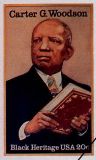
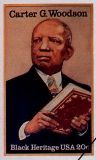
Carter Woodson,
father of Black
History Month,
was commemorated
by the United States
Postal Service with
a stamp in his
image on
February 1, 1984.

No one has played a greater role in helping all Americans know the black past than Carter G. Woodson, the individual who created Negro History Week in Washington, D.C., in February 1926.

Woodson was the second black American to receive a PhD in history from Harvard — following W.E.B. DuBois by a few years. To Woodson, the black experience was too important simply to be left to a small group of academics. Woodson believed that his role was to use black history and culture as a weapon in the struggle for racial uplift. By 1916, Woodson had moved to DC and established the “Association for the Study of Negro Life and Culture,” an organization whose goal was to make black history accessible to a wider audience. Woodson was a strange and driven man whose only passion was history, and he expected everyone to share his passion.

This impatience led Woodson to create Negro History Week in 1926, to ensure that school children be exposed to black history. Woodson chose the second week of February in order to celebrate the birthday of Lincoln and Frederick Douglass. It is important to realize that Negro History Week was not born in a vacuum. The 1920s saw the rise in interest in African American culture that was represented by the Harlem Renaissance where writers like Langston Hughes, Georgia Douglass Johnson, Claude McKay — wrote about the joys and sorrows of blackness, and musicians like Louie Armstrong, Duke Ellington, and Jimmy Lunceford captured the new rhythms of the cities created in part by the thousands of southern blacks who migrated to urban centers like Chicago. And artists like Aaron Douglass, Richard Barthe, and Lois Jones created images that celebrated blackness and provided more positive images of the African American experience.

Woodson hoped to build upon this creativity and further stimulate interest through Negro History Week. Woodson had two goals. One was to use history to prove to white America that blacks had played important roles in the creation of America and thereby deserve to be treated equally as citizens. In essence, Woodson — by celebrating heroic black figures — be they inventors, entertainers, or soldiers — hoped to prove our worth, and by proving our worth — he believed that equality would soon follow. His other goal was to increase the visibility of black life and history, at a time when few newspapers, books, and universities took notice of the black community, except to dwell upon the negative. Ultimately Woodson believed Negro History Week — which became Black History Month in 1976 — would be a vehicle for racial transformation forever.  Read the full speech now…

All the best,
Lonnie Bunch
Director