Tag Archives: United States

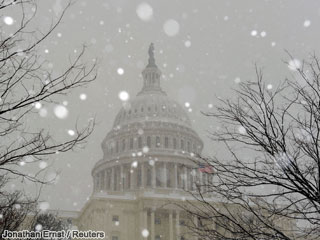
Congress… The Senate will be back in Session 1/31 -the Republican led House 2/8


The Senate Convenes: 2:00pmET

Following any Leader remarks, the Senate will proceed to a period of morning business with senators permitted to speak therein for up to 10 minutes each. There will be no roll call votes during Monday’s session of the Senate. However, the Majority Leader hopes to reach an agreement to begin consideration of S.223, the Federal Aviation Administration Act.

Fraudulent colleges ruin lives …


Shannon Croteau was 11 classes away from a degree from Kaplan University Online (a for-profit college owned by The Washington Post Company) when she learned she was out of financial aid, $30,000 in debt, and here’s the kicker – the degree she was working toward would be worthless in her state of New Hampshire.

She was billed for loans she never signed up for, enrolled in classes she didn’t choose and, when she complained, was given the runaround by a succession of fake “loan officers” who wouldn’t tell her the truth, let alone their last names. “They lied and cheated,” Shannon told us at  “It has ruined me.”

She’s just one of millions of students to have her financial life devastated by the fraudulent and predatory practices of for-profit colleges. Countless other Kaplan students have come forward, saying they’ve been charged for classes even after they’ve withdrawn, stalked by aggressive admissions officers or had their degrees held hostage if they don’t ante up “surprise” fees.

Shannon has started a petition on the Change website , demanding that the Washington Post Company stop preying on low-income students.

 add your name.

It’s important to understand that for-profit colleges stay in business by taking billions from the federal government: During the 2008-09 academic year alone, for-profit colleges siphoned off $4.3 billion of federal student aid.

And if the students can’t pay those loans back, who cares? Students who attend for-profit colleges account for only 12% of America‘s college students, but they represent nearly half of student loan defaults. Those students will be hounded by creditors for the rest of their lives. Our tax dollars cover their debts. And the for-profit colleges never have to give back a dime.

They don’t care whether the students they recruit can afford college, or even whether those students will be able to use their degrees if and when they graduate. For these businesses, each new recruit represents a profit. Nothing more, nothing less.

But Shannon Croteau and a group of former Kaplan students are fighting back – and Change.org members can help. By raising the profile of these appalling institutions, we can pressure the Washington Post Company to get out of the business of preying on people’s dreams of better educations and better careers.

Please take action today to tell Washington Post Company Chairman Donald Graham to either stop the fraudulent practices or shut down Kaplan University:

Thanks for taking action,

Judith and the Change.org team

Winning the Future …


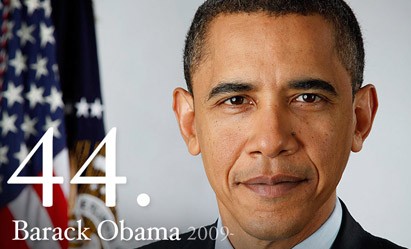
President Obama laid out his vision for “winning the future” in last night’s State of the Union address, focusing on four steps to build a more prosperous America: encouraging innovation, investing in education and clean energy, rebuilding the nation’s crumbling infrastructure, and reducing the national debt. The speech was a departure from past addresses in that it did not offer a laundry list of new proposals or initiatives, nor did it go to great lengths to highlight the accomplishments of the administration or defend its record. Rather, Obama offered more aspirational goals that could win bipartisan support in Congress and made overtures to the new Republican majority on such issues as instituting a domestic spending freeze, lowering the corporate tax rate, and addressing malpractice reform.

REDUCING SPENDING: Obama proposed freezing “annual domestic spending for the next five years” to “reduce the deficit by more than $400 billion over the next decade,” but warned that going after discretionary spending would not be enough. To significantly reduce spending, Congress will also have to target entitlements — reduce Medicare and Medicaid spending and find a “bipartisan solution to strengthen Social Security.” Obama did not endorse his deficit reduction commission’s proposal to “raise the retirement age, and otherwise reduce Social Securi ty benefits.” The President said that Congress must do more to control health care spending without undoing the new health law, endorsed the GOP proposal to fix the nation’s malpractice system, and called for greater simplification of the tax code, noting that many corporations “are hit with one of the highest corporate tax rates in the world.” Democrats and Republicans, Obama said, should “[g]et rid of the loopholes. Level the playing field. And use the savings to lower the corporate tax rate for the first time in 25 years — without adding to our deficit.” That line played well with Republicans, as did Obama’s pledge to veto legislation that contained earmarks.

INVESTING IN AMERICA: But the President also warned that the reductions in spending should not come at the expense of “our most vulnerable citizens” or “gutting our investments in innovation and education.” That, he said, “is like lightening an overloaded airplane by removing its engine. It may feel like you’re flying high at first, but it won’t take long before you’ll feel the impact.” Obama argued that this “is our generation’s Sputnik moment” and called on the nation to invest in the promise of renewable energy by eliminating “the billions in taxpayer dollars we currently give to oil companies” and channeling those dollars into the “clean energy breakthroughs” of tomorrow. “So tonight, I challenge you to join me in setting a new goal: by 2035, 80% of America’s electricity will come from clean energy sources,” Obama said. “Some folks want wind and solar. Others want nuclear, clean coal, and natural gas. To meet this goal, we will need them all — and I urge Democrats and Republicans to work togeth er to make it happen.” He argued that with more research and incentives, “we can break our dependence on oil with biofuels, and become the first country to have 1 million electric vehicles on the road by 2015.” This would “reduc[e] oil consumption by 785 million barrels by 2030,” he predicted. This stands in sharp contrast to the Republican Study Committee, whose plan undermines American competitiveness by chopping away at key programs designed to leverage private investment in clean energy solutions for tomorrow. Obama also called on Congress to invest in the nation’s crumbling infrastructure and estimated that through targeted investments, 80 percent of Americans will have access “to high-speed rail, which could allow you to go places in half the time it takes to travel by car.” Obama also stressed the need to improve America’s education system by strengthening his signature Race To The To p initiative, which rewards states that develop the “most innovative plans to improve teacher quality and student achievement.” “Here in America, it’s time we treated the people who educate our children with the same level of respect,” Obama said, before adding, “if you want to make a difference in the life of our nation; if you want to make a difference in the life of a child — become a teacher. Your country needs you.” Obama also called on Congress to pass the DREAM Act, which provides young undocumented immigrants who were brought to the U.S. by their parents a path to legalization, and urged members to develop a bipartisan immigration reform bill that would “enforce our laws and address the millions of undocumented workers who are now living in the shadows.”

FOREIGN POLICY: Obama devoted only a small portion of the address to fo reign policy, noting that 100,000 American troops have left Iraq, “combat patrols have ended; violence has come down; and a new government has been formed.” Looking to Afghanistan, Obama said that fewer Afghans are now “under the control of the insurgency,” reiterated that American troops will begin coming home this July, but warned that “the Afghan government will need to deliver better governance” to sustain the progress already made. Significantly, the President didn’t define what he meant by “transition” in Afghanistan or lay the groundwork for the American people if the administration wants to pursue a political settlement with the Taliban, as they recently indicated in their strategic review. Obama also didn’t articulate a clear set of expectations for the Karzai government and its international partners.

A SHARP CONTRAST: Still, the address proved far more substantive than the Republican rebuttal offered by Rep. Paul Ryan (WI). Ryan eschewed any discussion of foreign policy and instead focused on reducing the deficit and cutting spending. Ryan is known as the GOP’s numbers guy in the House, and last year laid out what he calls a “Roadmap” to fiscal health — almost the antithesis of what Obama is proposing. “We are at a moment, where if government’s growth is left unchecked and unchallenged, America’s best century will be considered our past century,” Ryan said, warning that “[t]his is a future in which we will transform our social safety net into a hammock, which lulls able-bodied people into lives of complacency and dependency.” But, Ryan’s so-called “new course” would cut Social Security benefits by roughly 16 percent for the average new retiree in 2050 and 28 percent in 2080 from price indexing alone. He would also “eliminate traditional Medicare, most of Medicaid, and all of the Children’s Health Insurance Program” by creating a private voucher system that wouldn’t keep up with the cost of health care. By 2080, under Ryan’s plan, the Medicare program w ould be reduced by nearly 80 percent below its projected size under current policies. During an appearance on Bloomberg’s Charlie Rose last night, CAPAF President and CEO John Podesta described the cuts as “slash and burn,” noting that we haven’t “seen that in the U.S. since Sherman’s march to the sea.” Finally, this “new course” would increase taxes on middle-class families earning between $50,000 and $75,000 a year by $900 on average (their average tax rate jump to 19.1 percent from 17.7 percent), while at the same time, “Millionaires would see their average tax rate drop to 12.8%, less than half of what they would pay relative to current policy.”

a message from President Obama …we do big things


I addressed the American people on the future we face together.

Though at times it may seem uncertain, it is a future that is ours to decide, ours to define, and ours to win.

I know we will.

Because, after the worst recession in decades, we see an economy growing again.

Because, after two years of job losses, we’ve added private-sector jobs for 12 straight months — more than 1 million in all.

Because, time after time, when our resolve has been tested, we, as a nation, have always prevailed.

Overcoming the challenges we face today requires a new vision for tomorrow. We will move forward together, or not at all — for the challenges we face are bigger than party, and bigger than politics.

Yet the story of America is this: We do big things.

Just as the progress of the past two years would not have been possible without your hard work, we will not realize the agenda I described tonight without you.

So as we continue this great mission together, and we set out the plans for how far we can go, I need to know that you are ready to work side by side with me once more.

Will you stand with me as we strive to win the future?

www.barackobama.com

The last two years have been marked by unprecedented reforms and historic progress.

But there is much more work to do.

Moving forward, America’s economic growth at home is inextricably connected to our competitiveness in the global community. The more products American companies can export, the more jobs we can create at home.

This vision for the future starts with innovation, tapping into the creativity and imagination of our people to create the jobs and industries of the future. Instead of subsidizing yesterday’s energy, let’s invest in tomorrow’s. It’s why I challenged Congress to join me in setting a new goal: By 2035, 80 percent of America’s electricity will come from clean energy sources.

It means leading the world in educating our kids, giving each of our children the best opportunity to succeed and preparing them for the jobs of tomorrow.

We must build a 21st century infrastructure for our country, putting millions of Americans to work rebuilding roads and bridges and expanding high-speed Internet and high-speed rail.

We must reform government, making it leaner, smarter, and more transparent.

And we must take responsibility for our shared debt, reining in our long-term deficit so we can afford the investments we need to move our country forward.

That is the vision I laid out tonight. That is how we win the future.

It is going to take a lot of work — but I have no doubt we are up to the task.

Half a century ago, when the Soviets beat us into space with the launch of a satellite called Sputnik, we had no idea how we’d beat them to the moon. The science wasn’t there yet. NASA didn’t even exist.

But after investing in better research and education, we didn’t just surpass the Soviets. We unleashed a wave of innovation that created new industries and millions of new jobs.

This is our generation’s Sputnik moment.

Please stand together with me:

It is because of each of you, who define the will of a people, that the state of our union is strong in the face of tough challenges. You are the reason our future is still bright in the face of deep uncertainty.

And you are the reason I believe that future is ours to win.

Thank you,

Barack

CARE was able to provide food assistance and poverty relief, empowerment and dignity to millions of people last year.


Thanks to our supporters, CARE was able to provide food assistance and poverty relief, empowerment and dignity to millions of people last year. This outpouring of support helped women and girls go to school, survive pregnancy and childbirth, build small businesses to increase their household income — and so much more.

When women get the tools, training and resources they need, they are empowered to improve their lives, their families and their communities. That’s why I’m grateful that so many people support CARE.

Families and communities have urgent needs that go far beyond the challenges of today, this week or this month. I’d like to ask if you will help provide the ongoing resources we need to carry out our work around the world by making a regular monthly donation of $15. It’s easy to sign up and you can change the amount of your gift at any time.

Yes, I can make a regular monthly gift of $15 to CARE’s work with poor women and girls around the world.

No, I can’t at this time.

With your monthly donation, you’ll become a Partner for Change, a special group of CARE supporters who help sustain our community-based efforts to create a better future for all. You truly become a partner in our work, as you provide the steady funding that’s needed to implement and expand CARE’s innovative and effective solutions.

Thank you for your support.

Sincerely,

Helene D. Gayle, MD, MPH

President and CEO, CARE