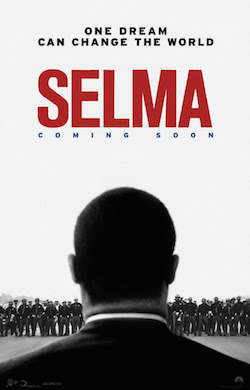
Selma~ After Half a Century of Fighting for Justice — we press on ~ In memory History and a man who earned his Presidential medal of freedom


After Half a Century of Fighting for Justice.

Thanks to alan grayson … we are reminded who is fighting for the People and needs our Support

Contribute to:  John Lewis and Alan Grayson

There is a general impression, on the part of many, that the Sixties was a decade-long haze of drugs and free love.  I can’t really say, since I was born in 1958.  I know one person, however, who certainly did not experience it that way.   That person is Congressman John Lewis.
John Lewis was one of the original 13 Freedom Riders, who challenged racial segregation on the buses in the South.  He also was the Chairman of the Student Non-Violent Coordinating Committee.
In 1961 and 1962, Lewis was arrested.  Twenty-four times.
In Anniston, Alabama, Klan members deflated the tires of a bus that Lewis and the other Freedom Riders had boarded.  Then they firebombed it.
In Birmingham, Lewis was beaten.  In Rock Hill, South Carolina, two white men punched Lewis in the face, and kicked him in the ribs.
In Montgomery, a mob met the bus, took Lewis off the bus, knocked him over the head with a wooden crate, and left him unconscious on the bus station floor.
On one day in 1965, a day known as “Bloody Sunday,” Alabama state troopers in Selma hit civil rights demonstrators with tear gas, charged into them, and beat them with clubs.  They broke John Lewis’s skull.
I’ve seen the scars on his head.
Somehow, all of that . . . pain . . . forged an outstanding Congressman.   A champion on universal healthcare.  A forceful proponent of gay rights.  An apostle of peace.
This month, for only the second time in his 26 years in Congress, John Lewis faces a primary challenge.  I don’t know who is running against him, and I don’t really care.  Whoever he is, he has not earned the job the way that John Lewis has, and he can’t do the job the way that John Lewis does it.
I’m just glad that there are people like John Lewis in Congress.

I’m asking you to help re-elect this great man, and this great leader.  You’ll feel good to help him, just as I feel good to know him.  Click here.
Courage,

Alan Grayson

Nixon v. Herndon (Texas) struck down a 1923 Texas law that prohibited blacks from voting in the Democratic Party primary


In 1902 the Texas legislature passed a requirement for a poll tax which suppressed voting by black and Mexican Americans. As voter participation by these groups declined, the Democratic Party became more dominant.[2]

Dr. Lawrence A. Nixon, a black physician in El Paso, Texas, and member of the Democratic Party, sought to vote in the Democratic Party primary of 1924 in El Paso.[3] The defendants were magistrates in charge of elections who prevented him from doing so on the basis of the 1923 Statute of Texas which provided that “in no event shall a negro be eligible to participate in a Democratic Party primary election held in the State of Texas”. Nixon sought an injunction against the statute in the federal district court. The district court dismissed the suit, and Nixon appealed to the United States Supreme Court.

Source: wiki

Constance Baker Motley – Black History


The pathbreaking lawyer and “Civil Rights Queen” was the first Black woman to argue before the U.S. Supreme Court

Tomiko Brown-Nagin

In the spring of 1963, Constance Baker Motley watched the protests in Birmingham, Alabama, with hope—and concern. The nation’s most segregated city, Birmingham had become the center of the struggle for Black equality. Previous demonstrations there led by the Rev. Dr. Martin Luther King Jr., whom she considered “an American hero,” had produced “no results,” Motley wrote in her memoir. Consequently, King and other leaders began planning more dramatic action, including the Children’s Crusade. “Civil disobedience was not working; massive resistance was,” she wrote. Indeed, the zeal of the protesters in April and May of that year led to a climactic legal battle. Motley’s heroic role in it would help lay the groundwork for the Civil Rights Act of 1964, as public outrage over the violent white response to peaceful protests spurred Congress to action. 

Source: smithsonianmag.com