Fact-checking GOP Senators on Crime


Photo of Kylie Murdock

Kylie Murdock

Executive Coordinator

@kyliemmurdock

Photo of Jim Kessler

Jim Kessler

Executive Vice President for Policy

@ThirdWayKessler

Takeaways

  • The rate of murders in the US has gone up at an alarming rate. But, despite a media narrative to the contrary, this is a problem that afflicts Republican-run cities and states as much or more than the Democratic bastions.
  • In 2020, per capita murder rates were 40% higher in states won by Donald Trump than those won by Joe Biden.
  •  8 of the 10 states with the highest murder rates in 2020 voted for the Republican presidential nominee in every election this century.

Every news outlet from FOX to CNN to The New York Times to local newspapers has a story with attention-grabbing headlines like “US cities hit all-time murder records.” Fox News and Republicans have jumped on this and framed it as a “Democrat” problem. They blame it on Democrat’s “soft-on-crime” approach and have even referred to a New York District Attorney’s approach as “hug-a-thug.” Many news stories outside of Fox have also purported that police reform is responsible for this rise in murder and have pointed to cities like New York and Los Angeles.

There is a measure of truth to these stories. The US saw an alarming 30% increase in murder in 2020. While 2021 data is not yet complete, murder was on the rise again this past year.  Some “blue” cities, like Chicago, Baltimore, and Philadelphia, have seen real and persistent increases in homicides. These cities—along with others like Los Angeles, New York, and Minneapolis—are also in places with wall-to-wall media coverage and national media interest.

But there is a large piece of the homicide story that is missing and calls into question the veracity of the right-wing obsession over homicides in Democratic cities: murder rates are far higher in Trump-voting red states than Biden-voting blue states. And sometimes, murder rates are highest in cities with Republican mayors.

For the complete article … go to the source listed below

Source: ThirdWay.org

Study: Republicans lead most States with high Murder Rates

hidden figures – Katherine Johnson wife,mom and NASA spaceflight Mathematician


Portrait of Katherine Johnson
Credits: NASA
When asked to name her greatest contribution to space exploration, Katherine Johnson talks about the calculations that helped synch Project Apollo’s Lunar Lander with the moon-orbiting Command and Service Module.

Date of Birth: August 26, 1918
Hometown: White Sulphur Springs, WV
Education: B.S., Mathematics and French, West Virginia State College, 1937
Hired by NACA: June 1953
Retired from NASA: 1986
Actress Playing Role in Hidden Figures: Taraji P. Henson

Being handpicked to be one of three black students to integrate West Virginia’s graduate schools is something that many people would consider one of their life’s most notable moments, but it’s just one of several breakthroughs that have marked Katherine Johnson’s long and remarkable life. Born in White Sulphur Springs, West Virginia in 1918, Katherine Johnson’s intense curiosity and brilliance with numbers vaulted her ahead several grades in school. By thirteen, she was attending the high school on the campus of historically black West Virginia State College. At eighteen, she enrolled in the college itself, where she made quick work of the school’s math curriculum and found a mentor in math professor W. W. Schieffelin Claytor, the third African American to earn a PhD in Mathematics. Katherine graduated with highest honors in 1937 and took a job teaching at a black public school in Virginia.

When West Virginia decided to quietly integrate its graduate schools in 1939, West Virginia State’s president Dr. John W. Davis selected Katherine and two male students as the first black students to be offered spots at the state’s flagship school, West Virginia University. Katherine left her teaching job, and enrolled in the graduate math program. At the end of the first session, however, she decided to leave school to start a family with her husband.  She returned to teaching when her three daughters got older, but it wasn’t until 1952 that a relative told her about open positions at the all-black West Area Computing section at the National Advisory Committee for Aeronautics’ (NACA’s) Langley laboratory, headed by fellow West Virginian Dorothy Vaughan. Katherine and her husband, James Goble, decided to move the family to Newport News to pursue the opportunity, and Katherine began work at Langley in the summer of 1953. Just two weeks into Katherine’s tenure in the office, Dorothy Vaughan assigned her to a project in the Maneuver Loads Branch of the Flight Research Division, and Katherine’s temporary position soon became permanent. She spent the next four years analyzing data from flight test, and worked on the investigation of a plane crash caused by wake turbulence. As she was wrapping up this work her husband died of cancer in December 1956.

The 1957 launch of the Soviet satellite Sputnik changed history—and Katherine Johnson’s life. In 1957, Katherine provided some of the math for the 1958 document Notes on Space Technology, a compendium of a series of 1958 lectures given by engineers in the Flight Research Division and the Pilotless Aircraft Research Division (PARD). Engineers from those groups formed the core of the Space Task Group, the NACA’s first official foray into space travel, and Katherine, who had worked with many of them since coming to Langley, “came along with the program” as the NACA became NASA later that year. She did trajectory analysis for Alan Shepard’s May 1961 mission Freedom 7, America’s first human spaceflight. In 1960, she and engineer Ted Skopinski coauthored Determination of Azimuth Angle at Burnout for Placing a Satellite Over a Selected Earth Position, a report laying out the equations describing an orbital spaceflight in which the landing position of the spacecraft is specified. It was the first time a woman in the Flight Research Division had received credit as an author of a research report.

In 1962, as NASA prepared for the orbital mission of John Glenn, Katherine Johnson was called upon to do the work that she would become most known for. The complexity of the orbital flight had required the construction of a worldwide communications network, linking tracking stations around the world to IBM computers in Washington, DC, Cape Canaveral, and Bermuda. The computers had been programmed with the orbital equations that would control the trajectory of the capsule in Glenn’s Friendship 7 mission, from blast off to splashdown, but the astronauts were wary of putting their lives in the care of the electronic calculating machines, which were prone to hiccups and blackouts. As a part of the preflight checklist, Glenn asked engineers to “get the girl”—Katherine Johnson—to run the same numbers through the same equations that had been programmed into the computer, but by hand, on her desktop mechanical calculating machine.  “If she says they’re good,’” Katherine Johnson remembers the astronaut saying, “then I’m ready to go.” Glenn’s flight was a success, and marked a turning point in the competition between the United States and the Soviet Union in space.

When asked to name her greatest contribution to space exploration, Katherine Johnson talks about the calculations that helped synch Project Apollo’s Lunar Lander with the moon-orbiting Command and Service Module. She also worked on the Space Shuttle and the Earth Resources Satellite, and authored or coauthored 26 research reports. She retired in 1986, after thirty-three years at Langley. “I loved going to work every single day,” she says. In 2015, at age 97, Katherine Johnson added another extraordinary achievement to her long list: President Obama awarded her the Presidential Medal of Freedom, America’s highest civilian honor.

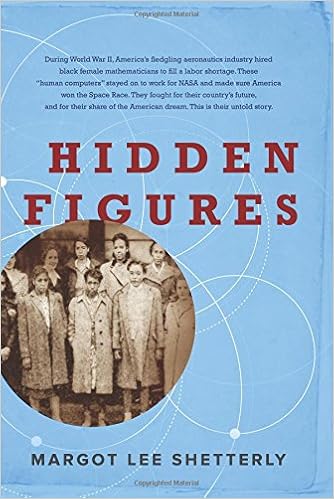
Biography by Margot Lee Shetterly

Thomas Jefferson’s Indian Removal Act of 1804


Map of Eastern Kansas - Page

Indian Removal Act of 1804

At the time of the Louisiana Purchase, President Thomas Jefferson believed that American Indians could be moved from the East to lands in the new territory. This would free up lands in demand by white settlers. The plan was voluntary and was considered a failure—some tribes participated, others refused. The plan also did not account for the fact that other tribes with nomadic lifestyles already occupied this land. Twenty years later, President Andrew Jackson decided to push for the Indian Removal Act. Passed in 1830, the act allowed the U.S. government to move Indian tribes in the East to lands west of the Mississippi.

Indian leaders were pressured to sign treaties that would give up ancestral lands in exchange for much smaller parcels in the West. The removal policy was eventually refined into the “reservation” system, with tribes being confined to specific areas of land. The area that became Kansas was considered prime space for these “emigrant” American Indians who were forced to move west. Between the years 1825 and 1850, treaties were made with more than 25 tribes to “remove” them to the region that ultimately became Kansas. These included the Chippewa, Delaware, Iowa, Kansa, Kaskaskia, Kickapoo, Miami, Ottawa, Peoria, Piankashaw, Potawatomi, Sac and Fox, Shawnee, Wea, and Wyandotte as well as several other tribes.

This map in Kansas Memory shows the location of most of the Indian Reservations for the tribes.[http://www.kansasmemory.org/item/213048]

The move to Kansas was not the first for many of the tribes. For example, the Delaware originally lived on the East Coast in the area of the state of Delaware. In 1829 the tribe signed a treaty for two million acres in Kansas with permission to hunt buffalo on the plains beyond the land. The Delaware people farmed their land in Kansas and adopted a constitution and a set of tribal laws. When Kansas Territory opened to white settlement, the Delawares were forced to move one more time to Indian Territory (Oklahoma).

Not all tribes moved as a unit. Indian Removal policy often led to divisions within tribes. In 1800 the Potawatomi claimed land in Michigan, Wisconsin, Indiana, and Illinois. However, between 1836 and 1841, the tribe was forced to sell these lands and to be removed beyond the Mississippi River. A large number of those living in Indiana refused to move and eventually fled to Canada to avoid military conflict. Some of the tribe stayed in Michigan and Wisconsin and only a portion of the Potawatomis settled on a reservation in Kansas by 1846. In 1868 a number of the Potawatomi were removed to Indian Territory, and became known as the Citizen Band. Other portions of the tribe remained on a small reservation in Kansas, which still exists today, and is known as the Prairie Band.

No matter the experiences, the various tribes were all moved into environments different than their traditional tribal lands. The peoples from woodlands and Great Lakes regions had maintained lifestyles based on hunting or fishing. The resources they found in Kansas were foreign to them.

To deal with Indian Removal, the U. S. government created the Indian Office under the War Department. By 1824 it had become the Bureau of Indian Affairs with superintendents of Indian affairs for various regions. The Department of Indian Affairs with a commissioner, clerks, agents, and subagents was created in 1832. The Department of Interior was established in 1849 and the Bureau of Indian Affairs was transferred to it, though the War Department still had the responsibility of negotiating treaties with the tribes.

Portions from The Kansas Journey. (http://www.kshs.org/kansapedia/indian-removal-act/16714)

Resource: usslave.blogspot.com  Youtube.com