
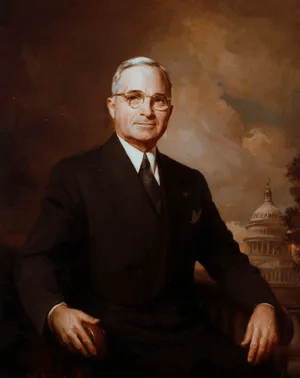
On July 18, 1947, President Harry S. Truman signed the Presidential Succession Act. This act revised an older succession act that was passed in 1792 during George Washington’s first term.
The original Succession Act designated the Senate president pro tempore as the first in line to succeed the president should he and the vice president die unexpectedly while in office. If he, for some reason, could not take over the duties, the Speaker of the House was placed next in the line of succession. In 1886, during Grover Cleveland’s administration, Congress removed both the Senate president and the Speaker of the House from the line of succession.
From that time until 1947, two cabinet officials (their order in line depended on the order in which the agencies were created) became the next in line to succeed a president should the vice president also become incapacitated or die. The decision was controversial. Many members of Congress felt that those in a position to succeed the president should be elected officials and not, as cabinet members were, political appointees, thereby giving both the Republican and Democratic parties a chance at controlling the White House.
history.com for the complete article
Image is from britannica.org


You must be logged in to post a comment.