Official Google blog


30 Terrific Twitter Facts And Figures

Twitter has always suffered an image problem and is not usually taken very seriously by the general public. Its name doesn’t help with some people even saying that ‘Twitter is for twits’. Despite this glamor and brand problem this has not held back its growth after its humble origins and launch in 2006.

Since then Twitter has gained popularity worldwide and is estimated to have 225 million users, generating 65 million tweets a day and handling over 800,000 search queries per day. It is sometimes described as the “SMS of the Internet” and its 140 character limit keeps the messages short and simple.

Its attraction as a social web media platform is maybe in its simplicity and real time messaging that enables breaking news and information to hit the web instantly without filters and censorship.

30 Terrific Twitter Facts and Figures

Twitter was created in March 2006 by Jack Dorsey and launched in July of that year.

Twitter’s origins lie in a “day long brainstorming session” that was held by board members of the podcasting company Odeo. While sitting in a park on a children’s slide and eating Mexican food, Dorsey introduced the idea of an individual using an SMS service to communicate with a small group.

The first Twitter prototype was used as an internal service for Odeo employees and the full version was introduced publicly on July 15, 2006

The original project code name for the service was ‘twttr‘, an idea that Williams later ascribed to Noah Glass, inspired by the name of the social media image website ‘Flickr’ and the five-character length of American SMS short codes.

The team finally settled on the name ‘twitter‘, which means ‘chirps from birds’ in essence ‘a short burst of inconsequential information’

The tipping point for Twitter’s popularity was the 2007 South by Southwest (SXSW) festival. During the event, Twitter usage increased from 20,000 tweets per day to 60,000.

It had 400,000 tweets posted per quarter in 2007

In 2008 there were only 3 million registered users

In 2008 there were only 1.25 million tweets per day

Jan 2008 there were only 8 employees

In 2009 or 2 years ago Twitter had 8 million registered users

In 2011 there are now over 400 employees

75% of Twitter traffic comes from third-party applications

60% of all tweets come from third-party apps

There are over 100,000 Twitter applications

A Forrester report revealed that “Twitterers are the connected of the connected, overindexing at all Social Media habits. For example, Twitterers are three times more likely to be Creators (people who create and share content via blog posts and YouTube) as the general US population” (source Forrester report “Who Flocks to Twitter”)

3 years, 2 months and 1 day…the time it took from the first tweet to the billionth tweet.

It now takes one week for users to send a billion Tweets.

In March 2010 the average number of tweets people sent per week was the the 350 million.

140 million is the average number of tweets people sent per day in February 2011

177 million tweets sent on March 11, 2011.

When Michael Jackson died on June 25, 2009 there were 456 tweets per second (TPS)…a record at that time.

The current TPS record is 6,939 tweets per second set 4 seconds after midnight in Japan on New Year’s Day

572,000 is the number of new accounts created in one day (March 12, 2011)

460,000 is the average number of new accounts per day created in February, 2011

182% is the increase in number of mobile users over the past year.

In March 2011 there are an estimated 225 million users

25 billion tweets sent on Twitter in 2010

100 million new accounts added on Twitter in 2010

The first unassisted off-Earth Twitter message was posted from the International Space Station by NASA astronaut T. J. Creamer on January 22, 2010

What other interesting Twitter facts and figures have you heard about?

Sources:

Wikipedia

Royal Pingdom

Twitter Blog

Twitter Reveals Its Latest Numbers

Image by topgold

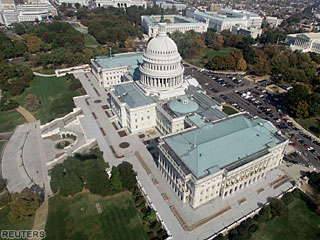
Congress: back in Session (2pmET) -the Republican led House -the Senate


The Senate Convenes at 2pmET May 2, 2011

 Following any leader remarks, the Senate will proceed to a period of morning business for debate only until 4:30pm with Senators permitted to speak therein for up to 10 minutes each.

Following morning business, the Senate will proceed to Executive Session to consider the following:

– Calendar #74 Roy Bale Dalton, of Florida, to be US District Judge for the Middle District of Florida and

– Calendar #76 Kevin Hunter Sharp, of Tennessee, to be US District Judge for the Middle District of Tennessee.

There will be one hour of debate equally divided and controlled between Senators Leahy and Grassley or their designees.

Upon the use or yielding back of time, at approximately 5:30pm, Calendar #74 will be confirmed by unanimous consent and the Senate will proceed to a roll call vote on confirmation of Calendar #76.

Senator Reid filed cloture on S.493, the Small Business Jobs bill, and on the nomination of John McConnell, of Rhode Island, to be United States District Judge for the District of Rhode Island.

 Votes:

62: Confirmation of Calendar #76, Kevin Hunter Sharp, of Tennessee, to be U.S. District Judge for the Middle District of Tennessee;

Confirmed: 89-0.

Unanimous Consent:

Confirmed Calendar #74, Roy Bale Dalton, of Florida, to be U.S. District Judge for the Middle District of Florida.

 ~~~~~~~~~~~~~~~~~~~~~

CURRENT HOUSE FLOOR PROCEEDINGS

LEGISLATIVE DAY OF MAY 2, 2011

112TH CONGRESS – FIRST SESSION

7:42 P.M. – The House adjourned. The next meeting is scheduled for 10:00 a.m. on May 3, 2011.

On motion to adjourn Agreed to by voice vote.

Mr. Burton (IN) moved that the House do now adjourn.

7:28 P.M. – SPECIAL ORDER SPEECHES – The House resumed with Special Order Speeches.

7:27 P.M. – Mr. Reed filed reports from the Committee on Rules, H. Res. 236 and H. Res. 237.

6:54 P.M. – ONE MINUTE SPEECHES – The House proceeded with further one minute speeches.

H.R. 1423: to designate the facility of the United States Postal Service located at 115 4th Avenue Southwest in Ardmore, Oklahoma, as the “Specialist Micheal E. Phillips Post Office”

6:52 P.M. – Motion to reconsider laid on the table Agreed to without objection.

On motion to suspend the rules and pass the bill Agreed to by the Yeas and Nays: (2/3 required): 399 – 0 (Roll no. 278).

6:28 P.M. – Considered as unfinished business.

6:27 P.M. – UNFINISHED BUSINESS – The Chair announced that the unfinished business was the question on adoption of a motion to suspend the rules which had been debated earlier and on which further proceedings had been postponed.

H.R. 362: to redesignate the Federal building and United States Courthouse located at 200 East Wall Street in Midland, Texas, as the “George H. W. Bush and George W. Bush United States Courthouse and George Mahon Federal Building”

6:26 P.M. – Motion to reconsider laid on the table Agreed to without objection.

On motion to suspend the rules and pass the bill Agreed to by voice vote.

6:15 P.M. – DEBATE – The House proceeded with forty minutes of debate on H.R. 362.

Considered under suspension of the rules.

Mr. Hultgren moved to suspend the rules and pass the bill.

H.R. 1423: to designate the facility of the United States Postal Service located at 115 4th Avenue Southwest in Ardmore, Oklahoma, as the “Specialist Micheal E. Phillips Post Office”

6:14 P.M. – At the conclusion of debate, the Yeas and Nays were demanded and ordered. Pursuant to the provisions of clause 8, rule XX, the Chair announced that further proceedings on the motion would be postponed.

6:02 P.M. – DEBATE – The House proceeded with forty minutes of debate on H.R. 1423.

Considered under suspension of the rules.

Mr. Lankford moved to suspend the rules and pass the bill.

6:01 P.M. – The Speaker announced that votes on suspensions, if ordered, will be postponed until 6:30 p.m. today.

6:00 P.M. – The House convened, returning from a recess continuing the legislative day of May 2.

2:13 P.M. – The Speaker announced that the House do now recess. The next meeting is subject to the call of the Chair.

2:03 P.M. – ONE MINUTE SPEECHES – The House proceeded with one minute speeches.

2:02 P.M. – PLEDGE OF ALLEGIANCE – The Chair designated Mrs. Miller of MI to lead the Members in reciting the Pledge of Allegiance to the Flag.

The Speaker announced approval of the Journal. Pursuant to clause 1, rule I, the Journal stands approved.

2:00 P.M. – Today’s prayer was offered by Reverend Andrew Walton, Capitol Hill Presbyterian Church, Washington, DC.

The Speaker designated the Honorable Ted Poe to act as Speaker pro tempore for today.

The House convened, starting a new legislative day.

RePoWEr America – Our Choice, reimagined​: Check out the app


Al Gore‘s groundbreaking book, Our Choice: A Plan to Solve the Climate Crisis, has educated countless people across the globe about the climate crisis.

Today, the graphs and images in his revolutionary book come to life with the launch of the brand-new Our Choice app for the iPad, iPhone and iPod touch.

The beautiful and intuitive design allows the user to view more than 250 stunning, full-screen images with an interactive map showing every photo’s location. A multi-touch interface allows you to explore everything you see in the book — including more than 30 interactive infographics and animations and more than an hour of documentary footage.

With original narration by Al Gore, the text and imagery of Our Choice are more vibrant than ever before — and the case for action is even more clear.

See for yourself:

http://www.ourchoiceapp.com

Thanks,

Maggie L. Fox

President and CEO

Alliance for Climate Protection

P.S. Don’t have an iPhone or iPad but want to read Our Choice? Buy the book here.

Economy:Bernanke Meets The Press


Federal Reserve Chairman Ben Bernanke held the first public press conference in the history of the Federal Reserve yesterday, in an attempt to bring more transparency to the central bank (which faced its first ever audit last year). “I’ve personally always been a believer in providing as much information as you can,” Bernanke told the gathered press. The conference wa s held just hours after the Federal Reserve Board announced that it will end its program of quantitative easing (QE2) — aimed at boosting the sluggish economy — on schedule in June, due to its assessment that “the economic recovery is proceeding at a moderate pace and overall conditions in the labor market are improving gradually.” However, at the same time, the Fed revised its projections for economic growth downward. Previously, the Fed had estimated that growth this year would be between 3.4 and 3.9 percent, but now it is only predicting growth at 3.1 to 3.3 percent, due to contractions in exports, construction spending and military spending. The Bureau of Economic Analysis announced today that first quarter growth registered at just 1.8 percent . And while most of the questions during the conference centered on Bernanke’s views on inflation, gas prices, and the nation’s deficit, little time was spent on arguably the most pressing problem facing the country: continued high unemployment.

‘VERY DEEP HOLE’: Bernanke acknowledged during the press conference that the nation faces a “very, very deep hole” when it comes to job creation, noting that we would have to create seven million jobs just to make up for those lost during the Great Recession. The unemployment rate currently stands at 8.8 percent, while the broader U-6 measure of underemployment is at 15.7 percent. The African-American unemployment rate is 15.5 percent, and the Hispanic unemployment rate is 11.3 percent. While the private sector has been slowly adding jobs, it would still take several years at the current pace in order to get back to full employment. In fact, at the rate of job growth that occurred in March, full employment would not be achieved until 2019. As The Wall Street Journal noted, “even adding 300,000 jobs a month would take almost five years to get back to full employment.” According to the Fed’s own estimates, the economy will not reach full employment for ano ther five years or six years, and the unemployment rate will still be between 6.8 and 7.2 percent in 2013. “The fact that we’re moving in the right direction, even though that’s encouraging, doesn’t mean that the labor market is in good shape. Obviously it’s not,” Bernanke said. To his credit, Bernanke also noted the problem with long-term unemployment, saying, “Long-term unemployment in the current economy is the worst, really the worst it’s been in the post-war period.” “We know the consequences of that can be very distressing, because people who are out of work for a long time, their skills tend to atrophy,” he added.

NO FURTHER ACTION: The Fed has a dual mandate to both ensure full employment and price stability (i.e. combat inflation). During the conference, The New York Times’ Binyamin Applebaum asked Bernanke, “Is it in the Fed’s power to reduce the rate of unemployment more quickly? How would you do that and why are you not doing it?” Bernanke replied, “While it is very, very important to help the economy create jobs and help to support the recovery, I think every central banker understands that keeping inflation low is absolutely essential to a successful economy.” Essentially, Bernanke’s response was that the Fed could do more but won’t due to worries about infla tion getting out of control. However, as many economists have noted, inflation at the moment is exceedingly low (the Fed isn’t meeting its own inflation targets, and its forecasts show inflation is contained for the foreseeable future ), while unemployment remains stubbornly high. In fact, as Nobel Prize-winning economist Paul Krugman noted, “there is no tradeoff: more expansionary monetary policy is good in terms of both unemployment and achieving the Fed’s inflation target.” And Bernanke, during his days in academia, actually chided Japan for failing to engage in more expansive monetary policy to get itself out out of its 1990’s slump. “The Bank of Japan could achieve a great deal if it were willing to abandon its excessive caution and its defensive response to criticism,” Bernanke wrote in 1999. So Krugman noted that “[Bernanke’s] own theories — and for that matter the doctrine endorsed by the Fed itself — says that the central bank should be doing much more quantitative easing, not stopping with the US still facing high unemployment.” As Center for American Progress Action Fund Fellow Matthew Yglesias wrote in the journal Democracy, “The idea that a time of unusually high unemployment and unusually low inflation would be a good moment for monetary policy-makers to start caring less about growth and more about price stability, especially when we already have price stability, is bizarre.” Bernanke did say, though, that if Congress enacts spending cuts in the short-term that will slow economic growth too much, the Fed will be forced to act, and the Fed Board also announced that it will be keeping interest rates at around zero for the time being.

POLITICAL GAMESMANSHIP: Thus far, the steps to boost the economy that the Fed has taken have been too small and have thus ushered in lackluster results. But as the New York Times noted this week, “a vocal group of critics…argues that the Fed has already done far too much.” These include several Republicans in Congress, who have been fearmongering about the effect of the Fed’s attempt to spur economic growth. Sen. Mark Kirk (R-IL) wrote in a letter to Bernanke that, “you should prepare the Board for an early end to quantitative easing, along with other monetary measures to protect Americans from rising inflation.” House Republicans spent two hearings e arlier this year peppering Bernanke with questions about the specter of inflation. Senate Republicans have also refused to confirm Nobel Prize-winning economist Peter Diamond, who President Obama has nominated to the Federal Reserve Board, saying that despite his stellar economic credentials, he is not qualified for the job; Diamond is known to be an inflation “dove.” Late last year, several Republicans also introduced legislation that would strip the Fed of its responsibility for promoting full employment, with Sen. Bob Corker (R-TN) calling the Fed’s full employment mandate “inappropriate.” By focusing more on inflation than full employment, even though inflation is low while unemployment is high, Bernanke and the Fed seem to be bowing to this Republican pressure.

politics,pollution,petitions,pop culture & purses