


The 7 Best Houseplants for Beginners
Plants You Can’t Kill
By Jon VanZile
These houseplants are the best place to start your collection. They are all easy to grow and can generally withstand erratic watering, uneven or bad light, and fluctuating temperatures. They’ll thrive in dorm rooms, offices and sometimes even dismal corners.
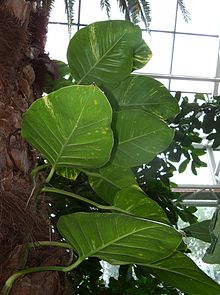 Golden pothos vine (Epipremnum pinnatum ‘aureum’)
There’s a reason this vine is one of the most popular hanging plants around. In its native habitat, golden pothos grows into a tree-swallowing monster with huge yellow and green leaves. As a houseplant, the plant will grow aggressively from pots or trailing baskets with minimal care. They will easily root in a simple glass of water. With better care, large, mottled, mature leaves may develop.
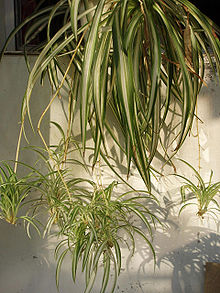 Spider plant (Chlorophytum)
A well-grown spider plant is a magnificent thing. The plant grows easily in baskets or atop columns, with arching leaves. The variegated variety is by far the most common. Over time, a mature plant will send out plantlets or offsets on long stems that form an impressive hanging display. These plantlets can be easily potted up to create new specimens. Spider plants are not picky about water, light or temperature.
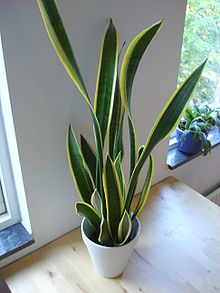 Snake plant and mother-in-law’s tongue (Sansevieria trifasciata and S. trifasciata laurentii)
Actually in the same family that includes dracaena and liriope, there are many varieties of sansevieria that are exceptionally tough. They like plenty of light, but they can handle less if necessary and they aren’t too particular about watering—providing there isn’t too much. When repotting is necessary, the main clump can be easily divided. These plants are striking additions to a collection. The snake plant features green on green bands on sword-like leaves, while the mother-in-law’s tongue has yellow leaf margins.
 Dracaena species
There are many varieties of dracaena suitable for home growth. The D. Draco and D. Marginata are wonderfully easy plants that tolerate a wide variety of conditions. These plants feature arching leaves from a woody stem. Dracaena leaves can be green, yellow and green, or even tri-colored. Also a member of the agave family, they like to be regularly watered in the summer and almost left dry throughout the winter. D. Fragrans is often used to make the popular Ti plants, or false palms.
 Succulents and Cacti
There are dozens of varieties of succulents and desert cacti flooding into garden centers and grocery stores. In general, succulents are desert plants with thick, fleshy leaves. Some of them have spines, and some none. Agave is an example of a popular succulent, along with aloe and popular echeveria rosettes. Cacti generally have spines and interesting leaf structures, including barrels, paddles and columns. As a class, succulents and cacti are slow growing and will withstand tremendous abuse. They do best with bright light, well-drained pots and little water. In the right placement, these are plants that truly thrive on neglect.
 Bromeliads
These plants have gained an unfair reputation, probably because of the difficulty required to coax a bloom from a bromeliad. It’s true that making these jungle plants bloom in the house is a tricky task. They require copious warmth and water, along with high humidity and filtered light, to produce their showy flower spikes. However, many species of bromeliads have beautiful leaves that are attractive by themselves. Bromeliads plants are usually watered by filling the central cup. They require little fertilizer, and when pups appear around the base of the plant, these can be potted up to increase your collection.
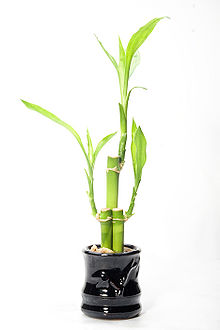 Lucky bamboo (Dracaena sanderiana)
Technically a dracaena species, lucky bamboo is the perennial office plant. Untold pots of these thrive in awful conditions, sporadically watered with bad lighting and poor air quality. Nevertheless, lucky bamboo lives on. These make wonderful gift plants, and many people believe they bring good luck and enhance the chi, or energy, of their surroundings.
Share this:

Atlanta Race Riot of 1906 begins
Atlanta Race Riot of 1906 begins
On the afternoon of September 22, 1906, Atlanta papers report four separate assaults on white women by Black men, none of which are ever substantiated by hard evidence. Inflamed by these fabrications, and resentful of the city’s growing African American population, white …read more
Citation Information
Article Title
Atlanta Race Riot of 1906 begins
AuthorHistory.com Editors
Website Name
HISTORY
URL
https://www.history.com/this-day-in-history/atlanta-race-riot-of-1906-begins
Access Date
September 22, 2022
Publisher
A&E Television Networks
Last Updated
September 22, 2021
Original Published Date
August 31, 2021
Share this:

1981 – The U.S. Senate confirmed Sandra Day O’Connor to be the first female justice on the U.S. Supreme Court.
President Ronald Reagan nominates Sandra Day O’Connor, an Arizona court of appeals judge, to be the first woman Supreme Court justice in U.S. history. The 1981 Senate confirms Sandra Day O’Conner to Supreme Court (99-0)
On September 21, the Senate unanimously approved her appointment to the nation’s highest court, and on September 25 she was sworn in by Chief Justice Warren Burger.
Sandra Day was born in El Paso, Texas, in 1930. She grew up on her family’s cattle ranch in southeastern Arizona and attended Stanford University, where she studied economics. A legal dispute over her family’s ranch stirred her interest in law, and in 1950 she enrolled in Stanford Law School. She took just two years to receive her law degree and was ranked near the top of her class. Upon graduation, she married John Jay O’Connor III, a classmate.
Because she was a woman, no law firm she applied to would hire her for a suitable position, so she turned to the public sector and found work as a deputy county attorney for San Mateo, California. In 1953, her husband was drafted into the U.S. Army as a judge, and the O’Connors lived for three years in West Germany, with Sandra working as a civilian lawyer for the army. In 1957, they returned to the United States and settled down in Phoenix, Arizona, where they had three children in the six years that followed. During this time, O’Connor started a private law firm with a partner and became involved in numerous volunteer activities.
history.com
Share this:

1881 – Chester Arthur becomes third president to serve in one year

Chester Arthur is inaugurated on September 20, 1881, becoming the third person to serve as president in that year. The year 1881 began with Republican Rutherford B. Hayes in office. Hayes served out his first and only term and officially turned over the reins of government to …read more
Did you know? Before he moved into the White House, Chester Arthur hired designer and stained-glass artist Louis Comfort Tiffany (1848-1933) to redecorate the state rooms. During the process, more than 20 wagonloads of furnishings from previous presidential administrations were cleared out and auctioned off.

 Be a Seed for Change
You must be logged in to post a comment.