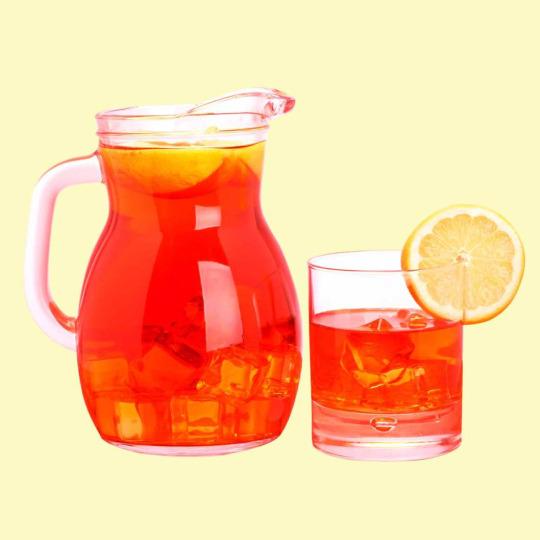
What Happens When You Drink 16 Glasses Of Iced Tea A Day


What Happens When You Drink 16 Glasses Of Iced Tea A DayPhoto: Rafa Irusta/Getty Images

When a 56-year-old Arkansas man went to the hospital last May complaining of weakness, fatigue, and body aches, at first his doctors couldn’t figure out what was wrong with him. Tests revealed he was in kidney failure, and yet he had no history of kidney problems, nor did anyone in his family. After some prodding, the man finally admitted he was in the habit of consuming sixteen eight-ounce glasses of iced tea, every day. The case was described this week in a letter to the editor in The New England Journal of Medicine.

Related: How Many Energy Drinks Per Day Can Teens Safely Drink?

Black tea, which was this man’s preferred variety, is high in oxalate, a chemical compound that can contribute to kidney problems. This is likely what caused this man’s health problems, as he was consuming between 3 and 10 times more oxalate than the average American does daily.

By all means, drink tea — black tea, in particular, has been linked to a decreased risk of cancer and heart disease, to name just a couple of its health benefits. But maybe don’t down a gallon a day, as this man’s kidney issues were, according to the authors of the letter, “almost certainly due to excessive consumption of iced tea.”

By Melissa Dahl

THE Plastic Bag Ban STORY … a repost from 2018…. have things changed?


SeattleWAthumbpix

It is now 2022 and though the effort to deal with plastic is more evident, you can still tell …if you’re the one shopping, you know that plastic bags are NOT gone! They come and go, get replaced by paper for about a month still, and the next thing you know plastic bags are the only option

first posted – Nov.2011

What’s the Problem?

Washingtonians use more than 2 billion single-use plastic bags each year, and Seattle alone uses approximately 292  million plastic bags annually and only 13% are recycled.  Too many plastic bags end up in Puget Sound, where they do not biodegrade.  Plastic bags break down into smaller and smaller pieces that remain hazardous as they are consumed by filter-feeders,  shellfish, fish, turtles, marine mammals,  and birds. PCB levels in Chinook salmon from Puget Sound are 3- to  5-times higher than any other West Coast population.

In 2010, a  beached gray whale was found to have 20 plastic bags in its stomach!

Data source: Keeping Plastics Out of Puget Sound,  Environment Washington Report, November 2011

more and more wildlife are being found filled with plastic!

How would the plastic bag ban work?

By Mike O’Brien

It’s simple – retailers are prohibited from offering plastic carryout bags to customers.  Paper bags may still be provided to customers for a minimum of five cents – stores keep the nickel to help cover the cost of providing bags.  Everyone is encouraged to use reusable bags.

What bags?

  • Banned Bags Include plastic bags provided at the checkout of all retail stores (bags less than 2.25 ml thick and made from nonrenewable sources).
  • Exclusions: bags used by shoppers in a store to package bulk foods, meat, flowers, bakery goods or prescriptions; newspaper, door hanger bags, and dry cleaning bags.

What stores?

  • Where the policy applies: all retail stores including but not limited to grocery stores, corner and convenience stores, pharmacies,  department stores, farmers markets, restaurants, and catering trucks.
  • Where it’s not applicable: for takeout food where there is a public health risk if a bag is not provided.

What about paper?

  • Retailers may provide paper bags made of at least 40% recycled paper for a minimum 5 cent pass-through cost that retailers keep, offsetting the cost of providing bags.
  • Low-income customers who qualify for food assistance programs shall be provided paper bags at no charge.

Joining cities on the West Coast and around the world

Seattle would join cities along the West Coast, hundreds of cities across the country and twenty nations worldwide that have already taken action to reduce the use of single-use plastic bags.

  • San Francisco, CA – Banned plastic bags in 2007.
  • Los Angeles County – Banned Plastic bags, November 2010; includes a 10-cent fee on paper bags.
  • Portland, OR – Banned plastic bags in the summer 2011.
  • Edmonds, WA – Banned Plastic Bags in 2009; the law was implemented in August 2010.
  • Bellingham, WA – Banned plastic bags in 2011, in the model outlined in this document;  legislation to be implemented in summer 2012.
  • Washington, DC – Implemented a 5-cent fee on paper and plastic bags in 2009; reduced disposable bag use by 80% citywide in the first year.

Background -Seattle

   In 2008, the City Council passed an ordinance that would have placed a 20-cent fee on disposable plastic and paper bags at grocery, drug, and convenience stores in an effort to reduce waste.   The ordinance passed the Council in a 6-1 vote and then opposing parties collected enough signatures to refer the ordinance to the ballot, where it was overturned by the voters (53%-47%)  in the  November 2009 primary election.   The American Chemistry Council spent over $1.4 million opposing the law during the ballot measure campaign.

My take ~ As the ban on plastic bags is implemented and or enforced, most checkers are asking if you would like to buy a cotton bag because there was no flimsy plastic available. Now, after finally getting those flimsy bags out of some stores, others such as the Dollar store and Safeway came up with or possibly the plastic industry came up with a heavy-duty plastic supposedly reusable bag. I was at a Safeway and needed another bag. I honestly did not want to spend $5 and while I was looking around, I spotted a heavy-duty plastic Safeway logo on the bag with pretty colors.  I don’t know about you, but this was a disappointing find on so many environmental official statewide ban levels though I admit it can be reused, it is quite large and was only .25, but they tear easily. Not only that, but I bought one to see how it would hold up, and it lasted about 2 hours

… so, the next question for King County, is if they actually have folks checking in on stores selling heavy-duty reusable plastic bags

and the stores say, What plastic bags?   Ugh

.beaseedforchangestickersGREEN

5 Foods Americans Eat that Are Banned Around the World- a repost from 2016-


by The Daily Meal |

The United States government has set several rules and guidelines in place to protect us from eating potentially harmful foods. Several dishes considered real delicacies in other parts of the world, like haggis in Scotland or fugu (puffer fish) in Japan, are banned from the U.S. food market because of potential health risks. But looking at the issue from a reversed angle, there are actually several common foods eaten in America that are banned in other parts of the world.

RELATED: 11 Banned Ingredients We Eat In the U.S.

The shocking truth is that many of our favorite foods, like boxed mac and cheese and yogurt, include ingredients that other countries have established as potentially harmful for health, and therefore are banned. Clearly, mac and cheese on its own isn’t poisonous in any way, but the yellow food colorings #5 and #6 have been shown to cause hypersensitivity in children, and are therefore banned in countries including Norway, Finland, and Australia. For yogurt and other milk products, it is the rBGH and rBST that some countries are concerned with – these growth hormones are banned in several regions including the European Union, Canada, and Japan because of their potentially dangerous impacts on the health of both humans and cows.

RELATED: 10 Foods and Drinks Banned in America

Though the studies and investigations showing the possible dangers of these ingredients are not to be taken lightly, food manufactures in America surely are not trying to poison the American people. Different countries have different policies and politics when it comes to food, and the U.S. Food and Drug Administration (USFDA) assures that it is monitoring the safety of all ingredients available for American consumers. The varying food-safety laws around the world are good reminders for all of us to be aware of what ingredients are in our foods, and not to panic, but to use common sense and mild precaution when choosing what foods we eat.

RELATED: 150 Foods Worth Traveling For

1. Olestra (aka Olean)

Olestra is a zero-calorie fat substitute created to make healthier snacks such as fat-free potato chips. But olestra has been shown to cause side effects in the form of gastrointestinal problems, as well as weight gain – instead of weight loss – on lab rats. The U.K. and Canada are two places that have banned this fat substitute from their food markets.

2. Brominated Vegetable Oil

Brominated vegetable oil (BVO), is vegetable oil, derived from corn or soy, bonded with the element bromine. It’s added to many sodas and sports drinks prevent the flavoring from separating and floating to the surface. But bromine has also been shown to alter the central nervous and endocrine systems, causing skin rashes, acne, loss of appetite, fatigue, and cardiac arrhythmia. The chemical is banned both in Europe and Japan.

RELATED: 101 Best Hotel Restaurants Around the World 2013


3. Synthetic Hormones rBGH & rBST

These two growth hormones can be found in dairy products such as yogurt and milk. The controversy with cows injected with these hormones is that several studies cite rBGH as a cause of cancer. Due to these reports, many consumers in the U.S. choose to buy organic milk and dairy products, as well as those labeled “rBGH free,” and the hormone is totally banned at milk and dairy farms and in dairy products in the European Union, Australia, Canada, Israel, and New Zeeland.

RELATED: 13 Breakfast Plates Around the World

4. Azodicarbonamide

This chemical azodicarbonamide can be found in boxed pasta mixes, breads, frozen dinners, and packaged baked goods, and is added as an instant bleaching agent for flour. In Singapore, Australia, and most European countries, this chemical is banned due to reports of it causing asthma. Azodicarbonamide is also a chemical used in foamed plastics, like yoga mats.

5. BHA and BHT

Found in cereals, nut mixes, chewing gum, butter spreads, and many other foods in need of preservation, BHA (butylated hydroxyanisole) and BHT (butylated hydroxytoluene) are commonly used preservatives. The National Toxicology Program’s 2011 report on carcinogens states that BHA can trigger allergic reactions and hyperactivity and “is reasonably anticipated to be a human hazard.” The preservatives are both banned in parts of the European Union and Japan, and the U.K. doesn’t allow BHA in infant foods.

Click here to see more Foods Americans Eat That Are Banned Around the World


This article is from 2016. I am not sure if things have changed or the list updated… please let me know

politics,pollution,petitions,pop culture & purses