Tag Archives: democrats

reminder of What most People Do NOT want … Why Black folks Should Be Outraged at Arizona’s Immigration Law ~ remember 5/2010 ?


If you’re black and think that state’s new immigration law has nothing to do with you, think again.
By: Joel Dreyfuss

A law that makes people suspects on the basis of their looks should outrage African Americans, even if they are worried about illegal immigration.

The immigration law passed in Arizona last week is the kind of reckless act that keeps us minorities paranoid in America. The new law compels local law enforcers to verify immigration status based on “reasonable suspicion”–whatever that is–and has created the potential for cops to stop brown people in the streets and demand to see their papers. Even the sheriff of Pima County, Ariz., (which borders Mexico) says the law is “stupid,” “racist,” and would force his officers to racially profile people. The scope of the law was narrowed after its passage in order to assure Hispanics, who make up 30 percent of the state’s population, that they would not be the victims of racial profiling.

But those assurances that people won’t be suspects because of the way they look have little credibility when the experience of black and brown people in America has been so contrary to those promises. Being stopped for Driving While Black (or Brown) is such a common phenomenon that comedians make jokes about it. And a city like New York, which operates a massive stop-and-frisk policy that probably violates a dozen constitutional principles, keeps trying to explain why black and brown citizens make up 80 to 90 percent of those questioned by police. The latest rationale: They fit the description of suspected perps when 98 percent of those stopped and questioned are innocent of any crime.

The reason people of color get worked up about such policies is America’s nasty habit of making everything racial in a panic. We have a long history of lynchings and runaway convictions that were triggered by fears that black people were getting out of hand in some fashion, whether it was interracial sex or talking back to massa. The roundup of Japanese Americans during World War II will forever stain this country’s history.

After 9/11, looking Arab or simply wearing a turban, whether you are Muslim or not, turned out to be a grave danger in some parts of the country and a constant annoyance in others. No Muslim American believes that the frequent “random” checks they endured at airports in the months after the tragedy were really a matter of chance. And last week, the front page of the Boston Herald illustrated a cover story about the crackdown on benefits for illegal immigrants with a photo of black, Hispanic and Asian models, their foreheads stamped with the following: “No Tuition, No Welfare, No Medicaid.” Ironically, the headline at above the newspaper’s logo announced a “workplace diversity job fair.”

Of course, the concept of white or blonde illegal aliens is apparently beyond the capacity of the people passing the laws or the editors at the Herald. But nearly 600,000 of those in the United States illegally were estimated to come from Europe or Canada in 2005; and while I knew many Irish, English and other Europeans who had overstayed their visas when I was growing up in New York, I never heard of a raid of an Irish bar, except when ATF or the FBI were trying to trap Irish Republican Army gun runners during the “troubles.”

Now Arizona, better known for resorts, retirees in golf carts, and college basketball teams whose players never graduate, is suddenly at the center of a debate that could shape U.S. politics for the next 10 years. The only surprise is that it took so long. All the great economies have been struggling with the immigration issue for years. Just last week, France was in tizzy about the burqa, the full-length outfit with only an eye-slit that conservative Muslim women wear. Nicolas Sarkozy’s government has considered banning the burqa on security grounds (you can’t identify the person), but the real reason behind this initiative, Arizona’s or any of the dozen being considered in other states or countries is fear of change.

No doubt, the Great Recession of the last three years has heightened American insecurity. Although the downturn has hit blue-collar workers the hardest, many people who thought they were solidly in the middle class have seen their savings, their safety net, even their homes evaporate in the financial collapse. The next step for many of them would be to step “down” into the blue-collar workforce. Suddenly, the Mexican, Salvadorian and African immigrants they hardly noticed during boom times are now potential competitors.

African Americans, who lost more than their fair share of blue-collar jobs in the downturn, have long been ambiguous about illegal immigration. As Cord Jefferson noted here a few months ago, a growing number of experts believe that blacks and Hispanic immigrants battle for unskilled jobs at the bottom of the labor pool. Black Americans have not turned out in large numbers at immigration rallies, despite the fact that many African-American politicians talk of the need for coalitions with Hispanics.

But a law that puts you in jeopardy for being has special resonance with black Americans. We already know the peril of living in a state where you are presumed guilty by the color of your skin. A law that makes a suspect of anyone who might look illegal should make us vigorously resist this encroachment.

Joel Dreyfuss is managing editor of The Root. Follow him on Twitter

first posted in 5/2010 …

Mindful behavior / New Year Resolution … stop smoking


ciggtaxes_state_icon

Every once in a while i come across info that i have to pass along.   i for one believe that great information definitely makes us think…hopefully, it also starts up a conversation that is not only positive but initiates reaction and action that causes change …  as an ex-smoker having stopped (cold turkey) years ago.  So,

The information below is old,  but you have to wonder just what the numbers are now!

Orzechowski and Walker, economic consulting firm says …                

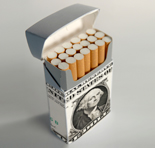
   $1,712 is the average amt a pack-a-day smoker in the US spends annually

What can $1,712 buy?

  • 170 mosquito nets from nothingbutnets.net and prevent malaria transmission to African families.
  • Provide 11,900 meals for the nation’s hungry through feedingamerica.org
  • Donate to local programs to give 10 kids fun and creative after-school options every day for a month. aferschoolalliance.org for tips on finding an organization near you.

resource: internet

Science.Howstuffworks.com – reminder 2010


A repost – it’s interesting and informative
10 Sustainable Buildings

10 Sustainable Buildings

Green building is no longer a thing of the future. Find out how architects and builders use solar panels, plastic bottles and straw bale insulation for ten environmentally friendly structures.

See more »

10 Things You Can Do to Help Save the Earth

10 Things You Can Do to Help Save the Earth

It’s a lot easier than you think to “go green” — many of these suggestions require little effort, yet can make a big difference for the environmental. Watch a video and read more about saving the earth.

See more »

5 Amazing Green Cities

5 Amazing Green Cities

Sure, the Emerald City looked green, but you won’t need green-tinted glasses to see how environmentally friendly the cities on this list are. What makes a city amazingly green?

See more »

5 Green Cities of the Future

5 Green Cities of the Future

Sustainable urbanism is no longer a futuristic dream. Welcome to five cities around the world that will be turning a radical shade of green in the coming decades.

See more »

5 Myths About Renewable Energy

5 Myths About Renewable Energy

We’re currently suspended between two ages: a time dependent on fossil fuels and a future dominated by renewable energy sources. Yet not everyone is sold on this vision, so a number of myths about renewable energy persist.

See more »

5 Wacky Forms of Alternative Energy

5 Wacky Forms of Alternative Energy

For those who reduce, reuse and recycle to the beat of their own drum, here are some of the wackier ways to help better the environment and lessen your carbon footprint.

See more »

5 Walkable Cities

5 Walkable Cities

What makes a city walkable? It’s not just sidewalks. You have to be able to access jobs, stores and places of entertainment while feeling comfortable and safe. What are five cities in the United States that have risen to the challenge?

See more »

Are climate skeptics right?

Are climate skeptics right?

It’s evident the debate over climate change is a heated one. Are skeptics clouding the public judgment for money? Are climate-change believers merely alarmists who risk the present for the future?

See more »

Are my bath habits destroying marine ecology?

Are my bath habits destroying marine ecology?

After sloughing off your dead skin, what happens to those plastic microbeads that wash down the drain? Some make it all the way to the ocean and linger until they become a very unhealthy supper.

See more »

Are personal watercraft destroying the planet?

Are personal watercraft destroying the planet?

They may seem like a fun water sport or a noisy nuisance, but whatever your stance on personal watercraft, there’s no denying they pollute. So how bad are they?

See more »

Can air pollution affect heart health?

Can air pollution affect heart health?

Everyone knows air pollution isn’t good for your lungs, but it turns out that it’s not doing your heart any favors either. Why do the particulates in the air we breathe interfere with our heart’s basic job: to keep things ticking?

See more »

Can baking soda save the environment?

Can baking soda save the environment?

One company’s SkyMine technology aims to capture industrial carbon dioxide emissions and turn them into an endlessly useful product: Baking soda. But how do pollutants become a household staple?

See more »

Can house music solve the energy crisis?

Can house music solve the energy crisis?

Electrifying dance moves might impress your friends, but they usually don’t help power the club you’re dancing in. What’s piezoelectricity, and how could it help twist the future of energy generation?

See more »

Can humans start an earthquake?

Can humans start an earthquake?

Earthquakes are “natural” disasters, right? Yes, but that doesn’t mean the shifting plates that cause them can’t be aggravated by human industry.

See more »

Can I travel without expanding my carbon footprint?

Can I travel without expanding my carbon footprint?

You’ve booked a safari with the environment in mind. There’s just one problem: Trans-Atlantic flights aren’t very green. Can green tags make your gas-guzzling trip carbon neutral?

See more »

Can my body generate power after I die?

Can my body generate power after I die?

Haunted by ideas of your body polluting the Earth after you’re gone? Microbial fuel cell technology could allow you to harness the energy of your own decomposition to power batteries.

See more »

Can we bury our CO2 problem in the ocean?

Can we bury our CO2 problem in the ocean?

Carbon dioxide released from burning fossil fuels is a prime suspect in global warming. Could we mitigate the problem by burying the CO2 deep within the ocean?

See more »

Can we harness energy from outer space?

Can we harness energy from outer space?

As alternative energy sources sputter to take off on Earth, scientists are turning an eye toward space. What are the most promising celestial options, and when could they be in use?

See more »

Can we plug the hole in the ozone layer?

Can we plug the hole in the ozone layer?

The ozone layer prevents much of the sun’s ultraviolet light from reaching the Earth. But there’s a problem: a gaping hole the size of Antarctica. What can we do about it?

See more »

Soccer coach: Could artificial turf be causing cancer? 2yrs ago


By Gaard Swanson Published: May 19, 2014 at 10:54 PM PDT Last Updated: May 20, 2014 at 6:30 AM PDT

a repost

Soccer coach: Could artificial turf be causing cancer?

SEATTLE — A local soccer coach is raising serious questions about the material used tomakeartificialathleticfieldsCrumbrubberis made fromshreddedtiresandis used in soccer fields all over the country. The turf is especially popular in Seattle because the tires get recycled and the reliable surface can stand up to soggy weather.But one local coach sees a troubling connection between the turf and cancer among soccer players.Soccer runs in the blood of University of Washington assistant coach Amy Griffin. She started playing goalie as a child, and now helps UW goalies stay fit and improve their skills.Griffin’s always searching for new talent and keeps a list of top players. But one list of names isn’t about recruiting. On it are 13 players from Washington who have all been diagnosed with rare types of cancer.Of those 13, 11 come from an even smaller pool of players: Goal keepers.

“Everyone says it’s just a coincidence and kind of walks away, but the ratio of goal keepers to field players is 15 to 1, 16 to 2, and I know plenty of goal keepers that have cancers and I don’t know many field players,” Griffin said.

Griffin said she can’t walk away from what she’s discovered, and she’s not alone. Former professional goalie and reality TV star Ethan Zohn, who has twice beaten non-Hodgkins lymphoma, had been keeping his own list, which he has now handed over to Griffin.

Combined, the lists name 27 players with cancer, and 22 of them are goal keepers.

Griffin can’t say why goalies are getting cancer, but she wonders if it’s the field turf and the crumb rubber used to make it. She said goalies spend a lot of time on the ground diving for balls, blocking shots and sometimes ingesting the small rubber pellets.

“I lived in the stuff,” former UW goal keeper Jorden Alerding said of the turf. “Four to five times a week I was on it for hours — bleeding sweating, everything. Looking back now I wonder could that have been the cause.”

Griffin’s first brush with the unproven connection between cancer and the pellets came when she visited Alerding, who was being treated for cancer.

“She said, ‘I just think it’s something with the field turf. I don’t know what it is, but I think there’s something in those black dots,'” Griffin said.

The former Husky was diagnosed with non-Hodgkins lymphoma during her freshman year of college when doctors discovered a large, deadly tumor.

“It was about the size, a little bigger than a softball, right in the center of my chest,” Alerding said.

Alerding is now cancer free, but she still questions the health effects of crumb rubber and the lack of further research.

“If this can be prevented, I don’t know why there isn’t more effort being made to do the research and find out,” she said.

The pain is still fresh for June Leahy. Her daughter, Austen Everett, a star goalie for Seattle’s Blanchet High School and later the University of Miami, died a year and a half ago.

By the time Everett lost her second battle with non-Hodgkins lymphoma, Leahy was raising questions about the use of crumb rubber on soccer fields.

“I feel like there is a strong correlation with the turf,” she said.

This isn’t the first time people have raised concerns about the turf, either. In 2008, a goal keeper at Tacoma’s Stadium High School battled Hodgkins lymphoma. Back then, Luke Beardemphl and his family wondered if crumb rubber had played a part in his cancer.

“I’ll catch it. It’ll stop the ball but not the pellets. They’ll go into my face, go into my eyes, my mouth,” Beardemphl said in 2008.

Earlier that year, the US Consumer Product Safety Commission tested some blades of grass used in synthetic turf for lead. The commission found they did not contain enough of it to put children at risk.

The agency later stated that its “exposure assessment did not include chemical or other toxic metals, beyond lead.”

Tires do contain metals and chemicals that have been ruled too toxic to burn in Washington state. The average athletic field uses 27,000 of them.

So, can prolonged exposure to the fields make people sick? The Synthetic Turf Council says no.

The president of the trade organization was unavailable to talk about this story, but the group directed us to a statement on its website.

“For 40 years, under EPA oversight and OSHA- regulated manufacturing, not one person has ever reported ill effects related to any materials associated with synthetic turf,” the statement reads.

Those statements and tests cannot shake loose the feeling Griffin gets every time she learns the name of another goal keeper with cancer.

She also knows that feelings and suspicion do not equal evidence.

The team’s head physician, Dr. John O’Kane, says the concern is valid and has talked with Griffin about the need for scientific and medical research on the effects of crumb rubber.

He said Griffin’s list is only a starting point.

“The question you would need to ask is over that same time period, how many goalies are there that haven’t gotten cancer?” O’Kane said. “And until you understand that number, you really can’t interpret that there’s anything particularly dangerous about being a goalie when it comes to cancer.”

O’Kane said that kind of research could take years. Griffin hopes someone is willing to take on the work to provide her with an answer. She said any answer will do.

“I would love for it to be disproven or for someone to grab me by the throat and say,’These are the facts. This is why it could never be this. This is just happenstance.’ That would be great,” she said.

One former Husky — Alerding — is on Griffin’s list.

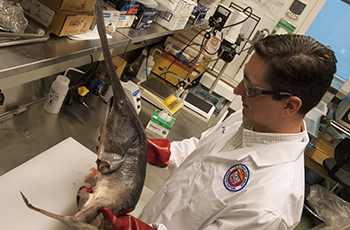
Keep Supporting Jonathan Deeds, Ph.D., ~is working to assure that U.S. seafood is both safe and accurately labeled


WordPressWhatFishIsThat
04/21/2014 01:00 PM EDT
Using some of the technology used in mapping the human genome, FDA scientists are working to create DNA barcodes for fish.
The high-tech effort is aimed to preventing fraud, including the substitution of a cheap fish for an expensive one, and preventing illness.

FDA Logo