

Tag Archives: United States

Law firm drops DOMA defense! but we’re not done yet! this from a Public Servant-who should Serve & Protect everyone-what about your oath?


The media is buzzing. King & Spalding, the law firm hired by House Republican leaders to defend the discriminatory Defense of Marriage Act (DOMA), decided to drop the case.

Last week, we ran a public campaign calling out K&S’s hypocrisy: the firm touted its efforts to recruit and retain lesbian, gay, bisexual and transgender (LGBT) lawyers, while choosing to argue against their equality in court.

As I wrote in today’s Washington Post, we just couldn’t stay silent while K&S advertised a high rating on HRC’s Corporate Equality Index, even as it sought to defend discrimination.

K&S made the right call in the end – and we thank them. But House Speaker John Boehner is still planning to spend more than half a million of our tax dollars on defending DOMA in court.

We need to build on the momentum of K&S’s decision – and make it clear to Speaker Boehner that he’s out of touch with the American people.

Add your name to our petition to Boehner: “Don’t waste my tax dollars defending discrimination. Repeal DOMA!”

Polls show that Americans overwhelmingly want Congress to focus on jobs and the economy, not hurting loving couples.1 Yet Speaker Boehner and House Republicans decided to hire an outside law firm (at great taxpayer expense) after President Obama announced that his Justice Department would no longer defend DOMA.

That’s where you came in. As the LA Times pointed out, “The decision came a week after the million-member Human Rights Campaign launched a publicity war to ‘shame’ King & Spalding…”

You reached out to K&S, and you spread the word on Facebook and Twitter. You enabled HRC to immediately spring into action, informing the firm’s clients as well as student groups at law schools where K&S competes to hire the top graduates.

Your voices joined with those clients and students to help K&S understand it had a stark choice: maintain a pro-equality reputation that attracts clients and new recruits, or stand on the wrong side of history. The firm made the right call. And it showed we’re at a tipping point in our culture. Most Americans now find anti-LGBT discrimination shameful.

Yet despite this setback, it’s clear that Boehner still plans to spend hundreds of thousands of our tax dollars to uphold this odious law.

We can’t back down. If tens of thousands of us speak up right now, we can show Speaker Boehner that attacking same-sex couples has left him out of step with the American people.

Click here to add your name now.

While Americans struggle to recover from a recession, we just want our government to do right by us. Instead of wasting time and money defending discrimination, Speaker Boehner should support the Respect for Marriage Act, legislation that would repeal DOMA and end our federal government’s policy of treating married gay and lesbian couples like second-class citizens.

Thank you for everything you do – and for joining us in this effort.

Sincerely,

Joe Solmonese

President

1A recent poll from HRC and Greenberg Quinlan Rosner Research shows 51 percent of Americans oppose DOMA while 34 percent favor it. 54 percent of Americans want Congress to focus on jobs and only 32 percent would prefer Congress spend time defending DOMA.

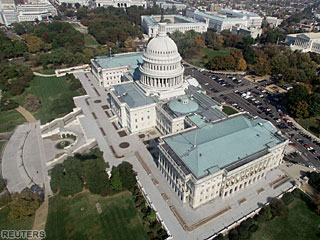
Congress: back in Session (2pmET) -the Republican led House -the Senate


The Senate Convenes at 2pmET May 2, 2011

 Following any leader remarks, the Senate will proceed to a period of morning business for debate only until 4:30pm with Senators permitted to speak therein for up to 10 minutes each.

Following morning business, the Senate will proceed to Executive Session to consider the following:

– Calendar #74 Roy Bale Dalton, of Florida, to be US District Judge for the Middle District of Florida and

– Calendar #76 Kevin Hunter Sharp, of Tennessee, to be US District Judge for the Middle District of Tennessee.

There will be one hour of debate equally divided and controlled between Senators Leahy and Grassley or their designees.

Upon the use or yielding back of time, at approximately 5:30pm, Calendar #74 will be confirmed by unanimous consent and the Senate will proceed to a roll call vote on confirmation of Calendar #76.

Senator Reid filed cloture on S.493, the Small Business Jobs bill, and on the nomination of John McConnell, of Rhode Island, to be United States District Judge for the District of Rhode Island.

 Votes:

62: Confirmation of Calendar #76, Kevin Hunter Sharp, of Tennessee, to be U.S. District Judge for the Middle District of Tennessee;

Confirmed: 89-0.

Unanimous Consent:

Confirmed Calendar #74, Roy Bale Dalton, of Florida, to be U.S. District Judge for the Middle District of Florida.

 ~~~~~~~~~~~~~~~~~~~~~

CURRENT HOUSE FLOOR PROCEEDINGS

LEGISLATIVE DAY OF MAY 2, 2011

112TH CONGRESS – FIRST SESSION

7:42 P.M. – The House adjourned. The next meeting is scheduled for 10:00 a.m. on May 3, 2011.

On motion to adjourn Agreed to by voice vote.

Mr. Burton (IN) moved that the House do now adjourn.

7:28 P.M. – SPECIAL ORDER SPEECHES – The House resumed with Special Order Speeches.

7:27 P.M. – Mr. Reed filed reports from the Committee on Rules, H. Res. 236 and H. Res. 237.

6:54 P.M. – ONE MINUTE SPEECHES – The House proceeded with further one minute speeches.

H.R. 1423: to designate the facility of the United States Postal Service located at 115 4th Avenue Southwest in Ardmore, Oklahoma, as the “Specialist Micheal E. Phillips Post Office”

6:52 P.M. – Motion to reconsider laid on the table Agreed to without objection.

On motion to suspend the rules and pass the bill Agreed to by the Yeas and Nays: (2/3 required): 399 – 0 (Roll no. 278).

6:28 P.M. – Considered as unfinished business.

6:27 P.M. – UNFINISHED BUSINESS – The Chair announced that the unfinished business was the question on adoption of a motion to suspend the rules which had been debated earlier and on which further proceedings had been postponed.

H.R. 362: to redesignate the Federal building and United States Courthouse located at 200 East Wall Street in Midland, Texas, as the “George H. W. Bush and George W. Bush United States Courthouse and George Mahon Federal Building”

6:26 P.M. – Motion to reconsider laid on the table Agreed to without objection.

On motion to suspend the rules and pass the bill Agreed to by voice vote.

6:15 P.M. – DEBATE – The House proceeded with forty minutes of debate on H.R. 362.

Considered under suspension of the rules.

Mr. Hultgren moved to suspend the rules and pass the bill.

H.R. 1423: to designate the facility of the United States Postal Service located at 115 4th Avenue Southwest in Ardmore, Oklahoma, as the “Specialist Micheal E. Phillips Post Office”

6:14 P.M. – At the conclusion of debate, the Yeas and Nays were demanded and ordered. Pursuant to the provisions of clause 8, rule XX, the Chair announced that further proceedings on the motion would be postponed.

6:02 P.M. – DEBATE – The House proceeded with forty minutes of debate on H.R. 1423.

Considered under suspension of the rules.

Mr. Lankford moved to suspend the rules and pass the bill.

6:01 P.M. – The Speaker announced that votes on suspensions, if ordered, will be postponed until 6:30 p.m. today.

6:00 P.M. – The House convened, returning from a recess continuing the legislative day of May 2.

2:13 P.M. – The Speaker announced that the House do now recess. The next meeting is subject to the call of the Chair.

2:03 P.M. – ONE MINUTE SPEECHES – The House proceeded with one minute speeches.

2:02 P.M. – PLEDGE OF ALLEGIANCE – The Chair designated Mrs. Miller of MI to lead the Members in reciting the Pledge of Allegiance to the Flag.

The Speaker announced approval of the Journal. Pursuant to clause 1, rule I, the Journal stands approved.

2:00 P.M. – Today’s prayer was offered by Reverend Andrew Walton, Capitol Hill Presbyterian Church, Washington, DC.

The Speaker designated the Honorable Ted Poe to act as Speaker pro tempore for today.

The House convened, starting a new legislative day.

Economy:Bernanke Meets The Press


Federal Reserve Chairman Ben Bernanke held the first public press conference in the history of the Federal Reserve yesterday, in an attempt to bring more transparency to the central bank (which faced its first ever audit last year). “I’ve personally always been a believer in providing as much information as you can,” Bernanke told the gathered press. The conference wa s held just hours after the Federal Reserve Board announced that it will end its program of quantitative easing (QE2) — aimed at boosting the sluggish economy — on schedule in June, due to its assessment that “the economic recovery is proceeding at a moderate pace and overall conditions in the labor market are improving gradually.” However, at the same time, the Fed revised its projections for economic growth downward. Previously, the Fed had estimated that growth this year would be between 3.4 and 3.9 percent, but now it is only predicting growth at 3.1 to 3.3 percent, due to contractions in exports, construction spending and military spending. The Bureau of Economic Analysis announced today that first quarter growth registered at just 1.8 percent . And while most of the questions during the conference centered on Bernanke’s views on inflation, gas prices, and the nation’s deficit, little time was spent on arguably the most pressing problem facing the country: continued high unemployment.

‘VERY DEEP HOLE’: Bernanke acknowledged during the press conference that the nation faces a “very, very deep hole” when it comes to job creation, noting that we would have to create seven million jobs just to make up for those lost during the Great Recession. The unemployment rate currently stands at 8.8 percent, while the broader U-6 measure of underemployment is at 15.7 percent. The African-American unemployment rate is 15.5 percent, and the Hispanic unemployment rate is 11.3 percent. While the private sector has been slowly adding jobs, it would still take several years at the current pace in order to get back to full employment. In fact, at the rate of job growth that occurred in March, full employment would not be achieved until 2019. As The Wall Street Journal noted, “even adding 300,000 jobs a month would take almost five years to get back to full employment.” According to the Fed’s own estimates, the economy will not reach full employment for ano ther five years or six years, and the unemployment rate will still be between 6.8 and 7.2 percent in 2013. “The fact that we’re moving in the right direction, even though that’s encouraging, doesn’t mean that the labor market is in good shape. Obviously it’s not,” Bernanke said. To his credit, Bernanke also noted the problem with long-term unemployment, saying, “Long-term unemployment in the current economy is the worst, really the worst it’s been in the post-war period.” “We know the consequences of that can be very distressing, because people who are out of work for a long time, their skills tend to atrophy,” he added.

NO FURTHER ACTION: The Fed has a dual mandate to both ensure full employment and price stability (i.e. combat inflation). During the conference, The New York Times’ Binyamin Applebaum asked Bernanke, “Is it in the Fed’s power to reduce the rate of unemployment more quickly? How would you do that and why are you not doing it?” Bernanke replied, “While it is very, very important to help the economy create jobs and help to support the recovery, I think every central banker understands that keeping inflation low is absolutely essential to a successful economy.” Essentially, Bernanke’s response was that the Fed could do more but won’t due to worries about infla tion getting out of control. However, as many economists have noted, inflation at the moment is exceedingly low (the Fed isn’t meeting its own inflation targets, and its forecasts show inflation is contained for the foreseeable future ), while unemployment remains stubbornly high. In fact, as Nobel Prize-winning economist Paul Krugman noted, “there is no tradeoff: more expansionary monetary policy is good in terms of both unemployment and achieving the Fed’s inflation target.” And Bernanke, during his days in academia, actually chided Japan for failing to engage in more expansive monetary policy to get itself out out of its 1990’s slump. “The Bank of Japan could achieve a great deal if it were willing to abandon its excessive caution and its defensive response to criticism,” Bernanke wrote in 1999. So Krugman noted that “[Bernanke’s] own theories — and for that matter the doctrine endorsed by the Fed itself — says that the central bank should be doing much more quantitative easing, not stopping with the US still facing high unemployment.” As Center for American Progress Action Fund Fellow Matthew Yglesias wrote in the journal Democracy, “The idea that a time of unusually high unemployment and unusually low inflation would be a good moment for monetary policy-makers to start caring less about growth and more about price stability, especially when we already have price stability, is bizarre.” Bernanke did say, though, that if Congress enacts spending cuts in the short-term that will slow economic growth too much, the Fed will be forced to act, and the Fed Board also announced that it will be keeping interest rates at around zero for the time being.

POLITICAL GAMESMANSHIP: Thus far, the steps to boost the economy that the Fed has taken have been too small and have thus ushered in lackluster results. But as the New York Times noted this week, “a vocal group of critics…argues that the Fed has already done far too much.” These include several Republicans in Congress, who have been fearmongering about the effect of the Fed’s attempt to spur economic growth. Sen. Mark Kirk (R-IL) wrote in a letter to Bernanke that, “you should prepare the Board for an early end to quantitative easing, along with other monetary measures to protect Americans from rising inflation.” House Republicans spent two hearings e arlier this year peppering Bernanke with questions about the specter of inflation. Senate Republicans have also refused to confirm Nobel Prize-winning economist Peter Diamond, who President Obama has nominated to the Federal Reserve Board, saying that despite his stellar economic credentials, he is not qualified for the job; Diamond is known to be an inflation “dove.” Late last year, several Republicans also introduced legislation that would strip the Fed of its responsibility for promoting full employment, with Sen. Bob Corker (R-TN) calling the Fed’s full employment mandate “inappropriate.” By focusing more on inflation than full employment, even though inflation is low while unemployment is high, Bernanke and the Fed seem to be bowing to this Republican pressure.

Twenty-five years ago today the Chernobyl nuclear power plant exploded


Twenty-five years ago today the Chernobyl nuclear power plant exploded — sending plumes of radiation around the planet and devastating the area surrounding the plant to this day. The world learned firsthand then about the dangers of nuclear energy. Unfortunately, as the recent events in Fukushima have showed us, we didn’t take the lesson to heart.

Greenpeace has been confronting nuclear dangers since we launched our first campaign protesting U.S. nuclear testing back in 1971. And we aren’t going to stop until we’ve realized our dream of a future free of nuclear disasters.

That’s why we are launching a new, ambitious campaign to fight dangerous nuclear power in this country. But we can’t do it without your support.

Please sign-up today to become a monthly Greenpeace donor and support our work here in the United States to make sure the next nuclear disaster never happens.

Together, we’ve already organized hundreds of vigils for Japan and sent 50,000 messages to Congress opposing nuclear giveaways in the budget. Meanwhile, our independent radiation monitoring crew continues their work in Japan and the Greenpeace ship Rainbow Warrior is on its way to conduct contamination tests on seawater and marine life in the area. In the U.S. we’re just getting started.

Many nuclear reactors in the U.S., some of which are the very same design as those that exploded and melted down in Japan, are seeking government approval to run for 20 more years. This is not a risk we need to take.

We want to make sure that many of these plants aren’t re-licensed. We’ll also oppose the construction of new nuclear reactors and urge members of Congress to cut the $36 billion in nuclear subsidies from President Obama’s proposed budget.

Just last year, we won a historic vote in the Vermont legislature to close down the aging Vermont Yankee reactor. We know our campaigns work. This isn’t going to be easy. But as the situation in Japan reminds us every day, the stakes couldn’t be higher.

Your monthly support is needed to make this new work possible. Please help us realize a clean energy future free of nuclear disasters and make a monthly gift to Greenpeace today. When we look back at Fukushima 25 years from now, let’s be able to say that we took the lesson to heart this time.

Thank you for your support,

Philip Radford

Executive Director, Greenpeace USA

P.S. A monthly gift is the best way to support Greenpeace. It allows us to plan into the future and run campaigns that win. Please support our work by becoming a monthly donor today.

288 reasons to fight


First they tried to shut down the government to defund women’s health.

Then two weeks ago they passed a budget that demolishes Medicare.

And all the while, GOP leaders in both houses are still pushing to give more huge tax cuts to big corporations that ship American jobs overseas — including handouts to Big Oil even before the first anniversary of BP’s Gulf Coast disaster.

There are reasons we need to keep fighting. In fact, 288 Republican members of the House and Senate mean we have 288 reasons. And if we aren’t strong enough or committed enough to stop their agenda, we will lose our country as we know it.

Your support is crucial as we challenge the Republican Party for the future of our nation. Help us fight their agenda by contributing $10, $20, $35, or more right now.

My biggest focus as I lead the Senate majority is helping families across the country weather this recession. There still are obstacles. College costs are rising faster than paychecks, too many Nevadans are still out of work, and not even our veterans are immune to falling on hard times — and just one homeless veteran is one too many.

These challenges tell us that we must do better. But we can’t reach the kind of success America is known for so long as Republicans in the House and Senate continue to line the pockets of their corporate buddies while letting their Tea Party wing lead an agenda of partisan wedge issues.

Our opposition is strong. There are 288 of them. They’re well-financed, and they have the resources to wreak havoc on our nation’s future if we don’t succeed in stopping them.

I know there’s still fight left in us. Chip in $10 today because there are 288 reasons we can’t stop standing up for what we know is important.

Thanks for everything,

Harry Reid