To Iceland’s Prime Minister, Fisheries Minister, and all members of the Icelandic government:


To Iceland’s Prime Minister, Fisheries Minister, and all members of the Icelandic government:
“As citizens from around the world, we are horrified by the continuing whale hunt in Iceland. We urge you to use this opportunity to end whale hunting permanently, and to champion greater protection for whales worldwide.”

More information:

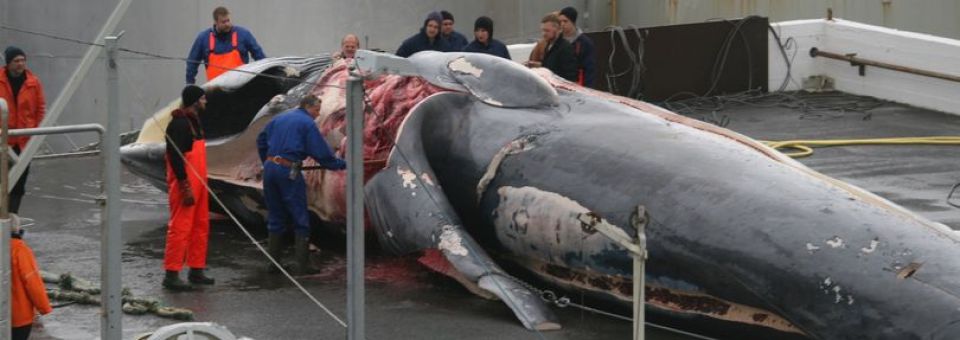
It’s sickening. They just shot her with an exploding harpoon, hacked the foetus out of her, and trashed it. She was just one of 125 endangered fin whales Icelandic millionaire Kristjan Loftsson killed this year.

Fin whales are awe-inspiring — capable of communicating through song, feeling love and deep emotional suffering. Loftsson is the last man on the planet still slaughtering these gentle giants for profit – often while they’re pregnant.

But finally we can stop him.

Right now, Iceland’s new government is considering ending whaling, but they could face a mountain of backlash from the tycoon and his whaling lobby. It’s up to us to show them the whole world supports a ban!

Sign now before a decision is made, and when we reach 1 million signatures, Avaaz will poll the rapidly shifting public opinion in Iceland and plaster the country with our call.

2001 – U.S. President George W. Bush announced he would support federal funding for limited medical research on embryonic stem cells.


National Center for Biotechnology InformationOn August 9, 2001, U.S. President George W. Bush introduced a ban on federal funding for research on newly created human embryonic stem (ES) cell lines. The policy was intended as a compromise and specified that research on lines created prior to that date would still be eligible for funding. Seventy-one lines from 14 laboratories [] across the globe met Bush’s eligibility criteria, and scientists who wished to investigate these lines could still receive grants through the National Institutes of Health (NIH). In practice, however, only 21 lines proved to be of any use to investigators [].

Consequences of the Bush Policy

A slew of negative ramifications followed for ES cell researchers. Now facing restrictions on the type of research conducted using federal funds, some scientists were forced to create a dichotomous research environment based on federal vs. private funding of staff, equipment, and lab space []. Collaboration and the sharing of knowledge between scientists also was hindered [,], and American researchers who previously spearheaded ES cell initiatives were no longer able to offer much of a contribution, stifling relationships with their international counterparts [].

Further aggravating the situation was the fact that the 21 existing lines were not genetically or ethnically diverse, meaning specific disease processes (such as Parkinson’s) could no longer be studied in ES cells. Similarly, any information gleaned from the existing lines was limited to certain ethnicities, leaving uncertainty with regard to cellular processes in minority groups. In terms of therapeutic application, all 21 lines were of decidedly poor utility as they were cultured under inferior conditions by today’s standards [].

During this time, however, there were several advances in the realm of stem cell research. The discovery of induced pluripotent stem (iPS) cells, whereby adult somatic cells are induced to display properties consistent with ES cells, were first generated in mice by researchers in Japan []. Following the discovery, the White House noted that by “supporting alternative approaches, President Bush is encouraging scientific advancement within ethical boundaries” []. Subsequent U.S. progress in iPS cell research may have well enjoyed unique encouragement under Bush’s policies.

President Barack Obama: Stem Cell Policy Changes Starting March 9, 2009

On March 9, 2009, President Barack Obama signed an Executive order revoking the previous orders initiated under his predecessor and giving the NIH 120 days to review the appropriate guidelines and issue new criteria for stem cell research. The new policy allows federally funded researchers to experiment on hundreds of viable ES cell lines restricted under Bush. The reception in the scientific community was largely positive and echoed around the world, with claims of “absolute excitement, enthusiasm, real hope for the future” from some proponents []. Clearly, the issue was a popular one, with one Washington Post-ABC News poll showing that almost 60 percent of Americans supported loosening restrictions on federal funding for ES cell research []. Obama was able to score major political points with the public and the media, but challenges and obstacles still remain for scientists.

Obama’s revocation of Bush’s policy does not reverse the Dickey-Wicker amendment, a law passed by Congress in 1996 that prohibits federally funded investigators from creating or causing harm to embryos. Dickey-Wicker is a congressional issue, and Obama has stated he intends it to remain that way []. So although ES cell resources have largely broadened for researchers, they are still unable to create their own lines using tax dollars — potentially problematic for those who wish to study stem cells with genetically specific or rare characteristics.

NIH Guidelines: Effective July 7, 2009

Scientists were concerned following the April 17 release of the NIH draft regulations that imposed stringent new ethical criteria involving the informed consent of donors. The point of contention was that existing lines created under previous ethical guidelines would not meet the technical specifications of the new criteria — rendering them ineligible for federal funding []. Such a scenario would have resulted in fewer ES cell line options than under the Bush administration. However, after receiving approximately 49,000 comments on the draft, the NIH released their finalized guidelines on July 6, also summarizing and addressing the major draft concerns. The final guidelines specified that the new ethical criteria only would be applied to lines derived on or after July 7, 2009, and research on pre-existing lines that do not comply with the new regulations would “undergo review by a Working Group of the Advisory Committee to the Director (ACD)” [] to determine funding eligibility. The NIH also announced the creation of a registry to document all ES cell lines approved for eligibility.

As in the draft, the final regulations only allow funding for research involving unused embryos from fertility clinics, excluding those embryos created specifically for research purposes or derived from other sources.

Conclusion

Stem cell research is a hotly debated issue on Capitol Hill and likely will remain so in the coming years. However, federalism and the presence of wealthy donors have allowed several states and major academic institutions to bypass the NIH entirely and function independently []. Nevertheless, as Obama made clear on March 9, “(m)edical miracles do not happen simply by accident. They result from painstaking and costly research … and from a government willing to support that work” [].

References

1945 – The United Nations Charter was signed by U.S. President Truman.


Image result for United Nations

President Harry S. Truman signs the United Nations Charter and the United States becomes the first nation to complete the ratification process and join the new international organization. Although hopes were high at the time that the United Nations would serve as an arbiter of international disputes, the organization also served as the scene for some memorable Cold War clashes.

August 8, 1945, was a busy day in the history of World War II. The United States dropped a second atomic bomb on Japan, devastating the city of Nagasaki. The Soviet Union, following through with an agreement made earlier in the war, declared war on Japan. All observers agreed that the combination of these two actions would bring a speedy end to Japanese resistance. At the same time, in Washington, D.C., President Truman took a step that many Americans hoped would mean continued peace in the post-World War II world. The president signed the United Nations Charter, thus completing American ratification of the document. Secretary of State James F. Byrnes also signed. In so doing, the United States became the first nation to complete the ratification process. The charter would come into full force when China, Russia, Great Britain, France, and a majority of the other nations that had constructed the document also completed ratification.

The signing was accomplished with little pomp and ceremony. Indeed, President Truman did not even use one of the ceremonial pens to sign, instead opting for a cheap 10-cent desk pen. Nonetheless, the event was marked by hope and optimism. Having gone through the horrors of two world wars in three decades, most Americans–and people around the world–were hopeful that the new international organization would serve as a forum for settling international disagreements and a means for maintaining global peace. Over the next decades, the United Nations did serve as the scene for some of the more notable events in the Cold War: the decision by the Security Council to send troops to Korea in 1950; Khrushchev pounding the table with his shoe during a U.N. debate; and continuous and divisive discussion over admission of communist China to membership in the UN. As for its role as a peacekeeping institution, the record of the U.N. was not one of great success during the Cold War. The Soviet veto in the Security Council stymied some efforts, while the U.S. desire to steer an independent course in terms of military involvement after the unpopular Korean War meant less and less recourse to the U.N. to solve world conflicts. In the years since the end of the Cold War, however, the United States and Russia have sometimes cooperated to send United Nations force

Citation Information
Article Title
President Truman signs United Nations Charter
Author
History.com Editors
Website Name
HISTORY
URL
https://www.history.com/this-day-in-history/truman-signs-united-nations-charter
Access Date
August 7, 2019
Publisher
A&E Television Networkss on peacekeeping missions, such as the effort in Bosnia.

Last Updated
August 6, 2019
Original Published Date
November 13, 2009

By History.com Editors