Gov’t offers $680 million for Indian farmers …as reported by AP – Reminder


By MARY CLARE JALONICK, AP

WASHINGTON — The government is offering American Indian farmers who say they were denied farm loans a $680 million settlement.

Unlike a second round of the black farmers suit that is now pending in Congress, the American Indian money would not need legislative action to be awarded.

The two sides agreed on the deal after more than 10 months of negotiations. The government and the Indian plaintiffs met in federal court Tuesday to present the settlement to U.S. District Judge Emmet Sullivan.

The agreement also includes $80 million in farm debt forgiveness for the Indian plaintiffs and a series of initiatives to try and alleviate racism against American Indians and other minorities in rural farm loan offices. Individuals who can prove discrimination could receive up to $250,000.

A hearing on preliminary approval of the deal is set for Oct. 29. Sullivan indicated he was pleased with the agreement, calling it historic and coming down off his bench to shake hands with lawyers from both sides.

Assistant Attorney General Tony West and Joseph Sellers, lead attorney for the plaintiffs, both said they were encouraged by the judge’s positive reaction.

“Based on the court’s comments, we’re optimistic,” West said after the hearing adjourned.

The lawsuit filed in 1999 contends Indian farmers and ranchers lost hundreds of millions of dollars over several decades because they were denied USDA loans that instead went to their white neighbors. The government settled a similar lawsuit filed by black farmers more than a decade ago.

“Today’s settlement can never undo wrongs that Native Americans may have experienced in past decades, but combined with the actions we at USDA are taking to address such wrongs, the settlement will provide some measure of relief to those who have been discriminated against,” Agriculture Secretary Tom Vilsack said in a statement.

Claryca Mandan of North Dakota’s Three Affiliated Tribes, a plaintiff in the case, stopped ranching after she and her husband were denied loans in the early 1980s. She said she was pleased with the settlement.

“This is a culmination of 30 years of struggle,” she said

And Republicans continue to interfere and hurt POC who own land

Politics | Funding for black farmers, Indians stalls again |blame Republicans


Repost

August 5, 2010

Funding for black farmers, Indians stalls again

Despite broad support, legislation to finalize $4.6 billion in settlements with black farmers and American Indians stalled in the Senate again Thursday amid partisan bickering.

By BEN EVANS

Associated Press Writer

Related

WASHINGTON —

Despite broad support, legislation to finalize $4.6 billion in settlements with black farmers and American Indians stalled in the Senate again Thursday amid partisan bickering.

Lawmakers from both parties say they support resolving the long-standing claims of discrimination and mistreatment by federal agencies. But the funding has been caught up for months in a fight over spending and deficits, with Republicans and Democrats arguing over how to pay for them. Read more …click on the link below

Politics | Funding for black farmers, Indians stalls again | Seattle Times Newspaper.

July 22, 2010

Senate rejects $3 billion Indian trust settlement

The U.S. Senate has rejected a $3.4 billion government settlement with American Indians that had been added to a much larger war-funding bill.

The Associated Press

Related

HELENA, Mont. —The U.S. Senate has rejected a $3.4 billion government settlement with American Indians that had been added to a much larger war-funding bill.

The Senate passed the almost $60 billion bill funding President Obama’s troop surge in Afghanistan late Wednesday – but not before stripping out the settlement and $20 billion in other domestic spending approved by the House.

The Senate’s approval would have given the Obama administration the authority to settle a class-action lawsuit filed in 1996 by Elouise Cobell of Browning, Mont. Between 300,000 and 500,000 Native Americans claim the Interior Department mismanaged billions of dollars held in trust by the government.

The House attached the settlement to the war-funding bill earlier this month.

Thursday’s vote marks the second time the settlement has failed to pass the Senate. It was originally included in the Democrats’ jobs-agenda bill that was caught in a filibuster last month.

June Solstice: Longest and Shortest Day of the Year


By Vigdis Hocken and Aparna Kher

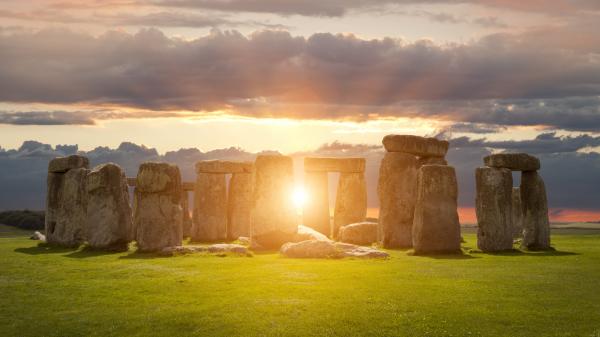
The June solstice is the summer solstice in the Northern Hemisphere and the winter solstice in the Southern Hemisphere.

Earth's position in relation to the Sun's rays at the June solstice.
Position of Earth in relation to the Sun during the June solstice (not to scale).© timeanddate.com

Different Dates

The date varies between June 20 and June 22, depending on the year, and the local time zone.

June Solstice in Seattle, Washington, USA is on
Sunday, June 20, 2021 at 8:32 pm PDT (Change city)

June Solstice in Universal Coordinated Time is on
Monday, June 21, 2021 at 03:32 UTC

Zenith Furthest Away from the Equator

A solstice happens when the sun’s zenith is at its furthest point from the equator. On the June solstice, it reaches its northernmost point and the Earth’s North Pole tilts directly towards the sun, at about 23.4 degrees.

It’s also known as the northern solstice because it occurs when the sun is directly over the Tropic of Cancer in the Northern Hemisphere.

Source: timeanddate.com

tea party, birthers and the misinformation re: voting


The struggle continues…

I don’t know about you but these days, the chaos before during and even after the era of trump, I continue to think Election2010 and how the Tea Party shoved our Govt into an express elevator that took us back in time, though we were warned no one seemed to take any of it very seriously.

I have always voted during midterms & national elections via mail so suppression here in Washington is less likely to happen though they did cut eight days from early voting once & voters screamed. Now, that the era of trump though only four years is over, unfortunately, this administration went into what appears to be White is more Right mode and made it possible for discrimination in all it’s forms to function as long as the right people are legislating it carefully and or blatantly enough … Those of us under “Protective Classes” are beginning to lose rights in several states…

The struggle continues and our voices are needed now more than ever.

Now, at least in Washington State they are trying to expand voting options.

#MidtermsMatters and #SpecialElections

Unfortunately, the NEW Jim Crow South ideology will always be tough, but our Youth can and must be part of the change we all need by voting in HUGE numbers, stay inline and mobilize around qualified democrats on the local &national elections.

We need to rise up against suppression … Women, POC, Students, Seniors, Gays and Immigrants and vote so students can finish school without the fear that Republicans love to engage in

~ Nativegrl77

1968 – 50,000 people marched on Washington, DC. to support the Poor People’s Campaign


Rev. Ralph Abernathy and demonstrators at the Poor People’s Campaign
The Poor People’s Campaign (PPC) was created on December 4, 1967, by the Southern Christian Leadership Conference (SCLC) to address the issues of unemployment, housing shortages for the poor, and the impact of poverty on the lives of millions of Americans. Unlike earlier efforts directed toward helping African Americans gain civil rights and voting rights, SCLC and its leader, Dr. Martin Luther King, Jr., now addressed issues that impacted all who were poor regardless of racial background. Their immediate aim was to secure Federal legislation ensuring full employment and promoting the construction of low-income housing to raise the quality of life of the nation’s impoverished citizens.
The SCLC planned a nationwide march on Washington on April 22, 1968, to focus the nation’s attention on this issue and particularly to pressure Congress to pass legislation to address the employment and housing issues. Unlike earlier marches, SCLC leaders planned the creation of Resurrection City, a giant tent city on the Mall in Washington, D.C., where demonstrators would remain until their demands were met. When Dr. King was assassinated in Memphis, Tennessee on April 4, 1968, movement leaders debated whether to go forward with the planned demonstration. They chose to continue the march with King’s lieutenant, Rev. Ralph Abernathy, as its new leader. The march date was postponed to May 12, 1968, though a few hundred people arrived in Washington on the original date. The first week, May 12-29, brought a wave of nearly 5,000 demonstrators. During the second week Resurrection City was completed.
The protestors, people from a wide range of racial, ethnic, and socioeconomic backgrounds—Native Americans from reservations, Latinos from the Southwest, impoverished whites from West Virginia, as well as rural and urban blacks—came together and spread the message of the campaign to various Federal agencies. They also disrupted life in Washington to try and force the government to respond. At its peak, the number of protestors reached nearly 7,000 but still far short of the expectation of 50,000 people.
The march was also marred by weather and leadership divisions. An unusual downpour of rain made the ground turn to mud causing the tents to weaken, and eventually forcing people to leave. Tension among the demonstrators themselves caused violent outbreaks and undermined the effectiveness of PPC leadership. The assassination of Senator Robert Kennedy, a presidential aspirant and one of the PPC’s principal supporters in Congress, on June 5, 1968, sealed the fate of the campaign. Resurrection City closed two weeks later on June 19, 1968.