

some rich guys don’t need another tax cut …


Shame on Google for restricting workers’ right to organize! demandprogress.org

Shame on Google for working to roll back workers’ rights!
Turns out that working for Google isn’t all foosball tables and espresso machines.
Recently Google is working behind the scenes to restrict workers’ rights to organize their workplace,1 including circulating petitions, planning walkouts, and even talking about forming a union. Tell Google “Shame on you” for restricting workers’ rights.
Google management has been more than a little concerned about their employees because year after year they’re getting more vocal about calling out the company on their wrongdoing.
From protesting Google’s Project Maven contract with the DoD, to an organized walkout over sexual harassment scandals, Google’s employees are using grassroots pressure and labor solidarity to make a difference.2 And Google is big mad about it!
That’s why Google is quietly working to overturn Obama-era workplace protections that allow workers to use email to organize amongst themselves. And they aren’t just talking about Google’s workers, but ALL workers who have a work email account.
Tell Google “Shame on you” for trying to limits workers’ rights.
Sources:
1. Wired, “Google Wanted To Prohibit Workers From Organzing By Email,” January 24, 2019.
2. Wired, “Google Walkout Is Just The Latest Sign Of Tech Worker Unrest,” November 1, 2018.
demandprogress.org
Share this:

New from CIA truth-teller Jeffrey Sterling – rootsaction.org

It has been a year since I walked out of a federal prison after two and a half years of incarceration. Though “free” of the prison, I remain a prisoner of the criminal justice system for a time longer — having been wrongfully tried, wrongfully convicted and wrongfully sentenced as a whistleblower. A big question for me has been, What has this all really been about?
I have not been really sure if I could be categorized as a whistleblower, at least in the sense of the current times. I had indeed blown the whistle on wrongs I witnessed and experienced while in the Central Intelligence Agency, but unlike what had been in the charges and the trial, I did so officially to both the House and Senate Intelligence Committees. And for those actions, I was sent to prison.
There have been so many moments during this ordeal — from the time when I decided to file a lawsuit against the CIA to being found guilty and sent to prison for a crime I did not commit — I have struggled mightily to find any meaning to it all. The search may be in vain, but I may have found at least some semblance of meaning to add to this ordeal through one of my saving graces while in prison, Shakespeare.
While in the hell of prison, I was hungry for the words of the Bard. I had always found a comfort in the tales told by Shakespeare and did my best to read any and everything of his I could get my hands on. I was so very fortunate that so many supporters sent me many analytical works to go along with my tattered, unabridged version.
That hunger has continued since leaving prison.
I recently finished reading Stephen Greenblatt’s excellent book Tyrant: Shakespeare on Politics and had my eyes opened to an interpretation of the whistleblower I had known for longer than I realized.
What has always attracted me to Shakespeare was his depiction of us and the drama of our lives. What is wonderful about Tyrant is that Greenblatt once again reminds us that the supposed uniqueness of today is nothing new, it was depicted over four hundred years ago. I was particularly struck by what Greenblatt wrote about King Lear. I had no idea when I first read King Lear so many years ago that Shakespeare had written about whistleblowers.
The very definition of the whistleblower is embodied in one of the most un-noted characters in Shakespeare, Cornwall’s servant from King Lear. I find that some of the most didactic characters in Shakespeare can come from so-called lesser knowns, the “knocking” porter in Macbeth, the asp-bearing clown in Antony and Cleopatra and the gravedigging clown in Hamlet. Greenblatt teaches of another unsung character with the servant’s first lines in King Lear, “Hold your hand, my lord…”
It is such a powerful first line as Greenblatt points out, “The words are not spoken by one of Gloucester’s sons, by a noble bystander, by a gentleman in disguise, or even by someone in Gloucester’s household. They are spoken by one of Cornwall’s own servants, someone long accustomed simply to doing his bidding. ‘I have served you ever since I was a child,’ he declares. ‘But better service have I never done you/Than now to bid you hold.’ … it stages unforgettably a moment when someone in the ruler’s service feels compelled to stop what he is witnessing.”
Greenblatt also is astute in noting how Shakespeare depicts how power does not react kindly to those who have the nerve to stand up to it; the punishment is swift and terrible. Greenblatt shows in Tyrant how “Regan is outraged at the interruption: ‘How now, you dog?’ And Cornwall, drawing his sword and using the term for feudal vassal, is no less so: ‘My villein?’ There follows a violent skirmish, master against servant, that ends when Regan, astonished that a menial would dare anything of the kind — ‘A peasant stand up thus?’ — runs him through and kills him.”
That scene, as a servant attempts to stop Cornwall from gouging out the eyes of Gloucester, is the very embodiment of what it means to be a whistleblower and what a whistleblower faces. This man, this nameless minor character stands up to the powers that be, the powers that he dutifully serves and says “stop.”
I particularly like the way Greenblatt summarizes this nameless hero and where he stood with Shakespeare: “Shakespeare did not believe that the common people could be counted upon as a bulwark against tyranny. They were, he thought, too easily manipulated by slogans, cowed by threats, or bribed by trivial gifts to serve as reliable defenders of freedom. His tyrannicides are drawn, for the most part, from the same elite whose members generate the unjust rulers they oppose and eventually kill. In King Lear’s nameless servant, however, he created a figure who serves as the very essence of popular resistance to tyrants. That man refuses to remain silent and watch. It cost him his life, but he stands up for human decency. Though he is a very minor figure with only a handful of lines, he is one of Shakespeare’s great heroes.”
It was difficult reading that scene while in prison, and Greenblatt has helped me understand why. I won’t go so far as to see myself as a hero. But, I can certainly identify with that nameless character and the anguish he must have felt. Against discrimination at the CIA and a dangerously flawed operation I stood up and said “Hold your hand…” And much like that nameless servant, for such insolence I was essentially “run through” by the Department of Justice who played an effective Regan to the CIA’s Cornwall.
Whether I am to be considered a whistleblower or not, having some meaning to grasp onto provides some peace despite the hurt and loss. Finding this identification has been like discovering a sort of acceptance with other nameless servants like John Kiriakou, Thomas Drake, Daniel Ellsberg, Terry Albury among countless, un-noted others who also said “Hold your hand…” to power. They remind us as Greenblatt points out that it is usually the unsung who take a stand and usually pay an unjust price.
As I near the time when the shackles of my ordeal are removed, I feel a motivation and obligation to give name to the nameless and fight against the condemnation that has been the unfortunate norm when the servant stands up to the wrongs of power. The RootsAction Education Fund is part of that effort and I am grateful for the platform and assistance it continues to provide.
Jeffrey Sterling
February 2019
_____________________________
PS from the RootsAction Education Fund team:
Jeffrey’s refusal to knuckle under to illegitimate power has come at a very steep personal cost. That’s the way top CIA officials wanted it. His enduring capacity to speak truthfully can help strengthen a wide range of whistleblowers — past, present and future.
You can help make that happen with a tax-deductible donation of any amount. rootsaction.org
Share this:

Ask your district attorney to erase criminal records – past Marijuana convictions& expunge facing barriers
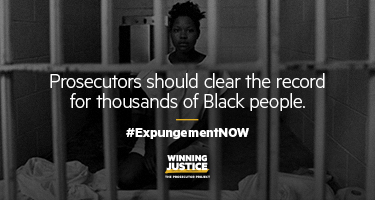
Chicago States Attorney Kim Foxx and Baltimore States Attorney Marilyn Mosby just announced, within a week of each other, that they will be taking action to clear past marijuana convictions and expunge the records of thousands of people facing extreme barriers because of past convictions–and we have a chance to push District Attorneys across the country to do the same. DAs have the power to give our people a fair chance to recover from state violence, the war on drugs, and rebuild their lives by clearing old records on a wide range of misdemeanor charges. However, most expungement processes are antiquated, costly, and inaccessible to everyday people.
The economic impact that an old criminal record can have on a Black person is undeniable. Folks with any kind of record face significant challenges in accessing housing, employment, reuniting with their children, obtaining a student loan, and participating in any government assistance program while they are re-entering their communities.
We want district attorneys to implement speedy, accessible, and thorough processes to automatically expunge the records of all who are eligible people, beyond those with marijuana convictions. Many states have several hundreds of thousands of people eligible for expungement but without a clear or easy pathway to having their record cleared. For example, estimates in Los Angeles County alone are that over 200,000 people are eligible for this kind of automatic expungement. But in order for DAs to take action, they need to hear from the people who elected them! Together we can let district attorneys know: people deserve to live their lives free of the perpetual punishment that comes with a criminal record.
We envision automatic expungement becoming a best practice for all DAs. Can you imagine how that might impact the people in your life? Let your DA know in the comments section!
Below is the letter we will send:
Here is the Petition:
Dear District/State’s Attorney,
It is widely recognized that the war on drugs is one of the primary drivers of mass incarceration. The economic impact it has had on Black people is undeniable. Folks with criminal records face significant challenges in accessing housing, employment, reuniting with their children, obtaining a student loan, and participating in any government assistance programs while they are re-entering their homes. Additionally, many of those affected have plead guilty despite their innocence just to avoid jail time. Over the years this has lead to the wrongful convictions of too many people who are impacted for the rest of their lives. There should be no eternal punishment, especially without crime.
The injustice is clear. That’s why so many district attorneys are using the power inherent to their position to give our people a fair chance to recover from state violence, the war on drugs, and rebuild their lives. However, most expungement processes are antiquated, costly, and inaccessible.
If you were to commit to taking action on automatic expungement it would have a huge impact for the people of your community.


You must be logged in to post a comment.