Tag Archives: vote

Selma ~ In Memory of ~


NMAA-Survey215-Header1.gif
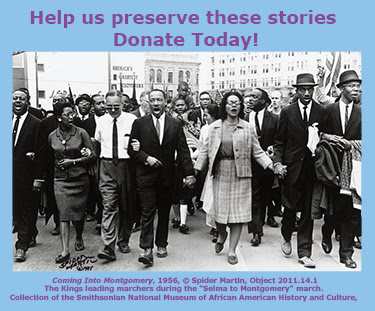
  March on Selma

This month marks the 1965 marches in Selma, Alabama — a moment in American history that is layered with bravery, fear, hope, hatred, violence, perseverance, and triumph.

In many ways, Selma is the quintessential American story of people banding together against all odds to stand up for the promise of freedom and fairness. It is a story that deserves to be told, explored and understood by every American in this country.
Whether we realize it or not, every one of us was touched by this courageous moment that is often considered the emotional and political peak of the Civil Rights Movement.

It is because of events like the Selma marches … and the entire Civil Rights Movement … that makes the completing of the National Museum of African American History and Culture on the National Mall so important.

The construction of the Museum is more than halfway complete. But to ensure we can open the Museum’s doors in early fall of next year as scheduled requires additional support from those of us who understand the importance of building this place of remembrance, celebration and reconciliation. Please help keep us on track with a donation of $ 25 or more today.

When I think of African American history, I often think of Selma, Alabama and the Civil Rights crusaders who made the historic marches and all of the African-American heroes, famous and not famous, and the white supporters who came together to push freedom forward.

I’m thinking of people like Amelia Boynton who was beaten, tear-gassed, and left for dead during the Bloody Sunday March. Ms. Boynton lived to tell her story and she is now 103 years old. But it is up to people like you and me to build our Museum to make sure her brave story lives on forever.

That is why the Museum embarked on the very important task of interviewing people who were foot soldiers in the Civil Rights Movement, to give them the chance to tell their stories and have them preserved and shared in ways that resonate with people from all backgrounds.

So as we spend this month commemorating the heroes who courageously marched from Selma to Montgomery in 1965, please take your celebration one step further by making a special contribution of $ 25 or more to the Museum that will forever share this important history with the world.

On behalf of the entire Museum, thank you again for your leadership and support.
All the best,

Lonnie_Signature.jpg
Lonnie G. Bunch
Founding Director

Spring – did you know? … Our Environment


Pinterestwh_climate_banner

Rachel Carson‘s book Silent Spring, an early voice for our environment in 1962..get it

Climate Change chief victims of global warming are women, we grow the food, walk miles for water, and gather the firewood.

Fend off Allergies … by eating more leafy greens, having high levels of folic acid may decrease your risk of wheezing and silence some genes, including those of the immune system. author, Elizabeth Matsui MD

Making a glass jar impacts our environment, you have to burn a gas furnace 24hrs at 2000 degrees, this consumes a  huge amount of energy.

According to the WTC wiping  your feet off before home entry can reduce tracking pesticides by 25%, removing shoes can cut the amount of dust by 10 times, clean carpets every 18months instead of every 12months and save $300

the EPA states the air indoors is 2 to 5times more polluted, install smoke/carbon monoxide detectors, open windows daily, buy air cleaning plants, English ivy, Philodendron, spider; green cleaning recipes at Planetgreen.discovery.com

Buy local … less packaging if you buy local, more fresh tasty choices …support local farmer’s markets and community gardens

Raising Beef accounts for 18% of global warming emissions worldwide

You can reduce your carbon footprint just by switching to vegetarian meals for 1day, save about 860calories &9pounds of carbon,if done for 2weeks, a reduction of carbon by 122pounds and 12,460calories, losing about 3lbs or more.

So, this post is 11 + yrs old, so the numbers must be staggering now

“remember the ladies” a letter from Abigail Adams


womens_day_2013GOOGLEfeatured photo is from google

In a letter dated March 31, 1776, Abigail Adams writes to her husband, John Adams, urging him and the other members of the Continental Congress not to forget about the nation’s women when fighting for America’s independence from Great Britain.

The future First Lady wrote in part, “I long to hear that you have declared an independency. And, by the way, in the new code of laws which I suppose it will be necessary for you to make, I desire you would remember the ladies and be more generous and favorable to them than your ancestors. Do not put such unlimited power into the hands of the husbands. Remember, all men would be tyrants if they could. If particular care and attention is not paid to the ladies, we are determined to foment a rebellion, and will not hold ourselves bound by any laws in which we have no voice or representation.”

Nearly 150 years before the House of Representatives voted to pass the 19th Amendment giving women the right to vote, Adams letter was a private first step in the fight for equal rights for women. Recognized and admired as a formidable woman in her own right, the union of Abigail and John Adams persists as a model of mutual respect and affection; they have since been referred to as “America’s first power couple.” Their correspondence of over 1,000 letters written between 1762 and 1801 remains in the Massachusetts Historical Society and continues to give historians a unique perspective on domestic and political life during the revolutionary era.

Abigail bore six children, of whom five survived. Abigail and John’s eldest son, John Quincy Adams, served as the sixth president of the United States. Only two women, Abigail Adams and Barbara Bush, have been both wives and mothers of American presidents.

http://www.history.com

African Americans in Full Color – in memory of Black History – a repost


NMAAHC -- National Museum of African American History and Culture

Lonnie Bunch, museum director, historian, lecturer, and author, is proud to present A Page from Our American Story, a regular on-line series for Museum supporters. It will showcase individuals and events in the African American experience, placing these stories in the context of a larger story — our American story.A Page From Our American Story

African Americans in Full Color

In the first half of the twentieth century, Americans became fascinated with photo journalism. Pictures were literally “worth a thousand words” as full-color magazines and tabloid newspapers became the rage.

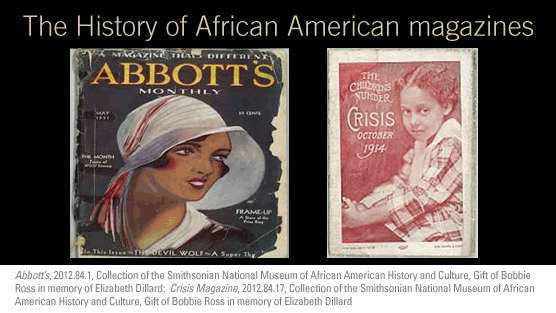
Publications targeted to African American audiences that featured illustrations and photographs began appearing in the early 1900s. One of the earliest to effectively use illustrations and photography was The Crisis, the official publication of the NAACP. Seeking to educate and inform its readers with scholarly articles, the covers of the journal and its entertainment section were designed to appeal to the masses of African Americans.

In the 1930s, we see pictorial magazines such as Abbott’s Monthly, published by Robert Sengstacke Abbott, the founder of the Chicago Defender newspaper, and Flash, which billed itself as a “weekly newspicture magazine.” Published in Washington, D.C., Flash contained a mixture of news, gossip and advertisements and articles on racial issues, providing an overview of the highs and the lows of Black life in the 1930’s.

In 1942, African American businessman John H. Johnson founded the Johnson Publishing Company, a corporation that would go on to publish the well-known magazines Ebony, Jet, Tan, and Ebony Jr. The magazines promoted African American achievements and affirmative black imagery in popular culture, which appealed to readers … and to advertisers. Mr. Johnson was a savvy businessman and used the statistics of a rising black middle class to persuade companies and businesses that it was in their economic “self-interest” to advertise in his magazines to reach African American consumers.

With the success of the Johnson Publishing Company’s magazines, other magazines targeted to African Americans quickly came on the scene. For example, in 1947 Horace J. Blackwell published Negro Achievements, a magazine highlighting African American success articles and featuring reader-submitted true confessions stories. After Blackwell died in 1949, a white businessman named George Levitan bought the company and renamed the publication Sepia. This publication featured columns by writer John Howard Griffin, a white man who darkened his skin and wrote about his treatment in the segregated South, that eventually became the best-selling book Black Like Me.

Whether featuring positive images of African Americans, inspiration stories, news features or commentaries on racism, the rise of African American magazines defied long-held racial stereotypes through rich storytelling, in-depth reporting, and stunning photography.

Due to a variety of economic, editorial, and other factors, most of these magazines have ceased being published. Yet today some African American magazines are still a thriving part of popular culture. Johnson Publishing Company’s Ebony and its digital sites reach nearly 72% of African Americans and have a following of over 20.4 million people.
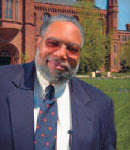
 dd-enews-temp-lonnie-bunch-2.jpg All the best,

Lonnie Bunch
Director

P.S. We can only reach our $250 million goal with your help. I hope you will consider making a donation or becoming a Charter Member today.

To read past Our American Stories, visit our archives.

Civil Rights Activist Rosa Parks


All images

Rosa Parks
Born: February 4, 1913
Died: October 24, 2005
Age: 92 years old
Birthplace: Tuskegee, AL, United States
Occupation: Activist

Early Life & Family

Rosa Parks was born Rosa Louise McCauley on February 4, 1913, in Tuskegee, Alabama. After her parents, James and Leona McCauley, separated when Rosa was two, Rosa’s mother moved the family to Pine Level, Alabama to live with her parents, Rose and Sylvester Edwards. Both were former slaves and strong advocates for racial equality; the family lived on the Edwards’ farm, where Rosa would spend her youth. In one experience, Rosa’s grandfather stood in front of their house with a shotgun while Ku Klux Klan members marched down the street.

Childhood and Education

Rosa Parks’ childhood brought her early experiences with racial discrimination and activism for racial equality. Taught to read by her mother at a young age, Rosa attended a segregated, one-room school in Pine Level, Alabama, that often lacked adequate school supplies such as desks. African-American students were forced to walk to the 1st- through 6th-grade schoolhouse, while the city of Pine Level provided bus transportation as well as a new school building for white students.

Through the rest of Rosa’s education, she attended segregated schools in Montgomery, including the city’s Industrial School for Girls (beginning at age 11). In 1929, while in the 11th grade and attending a laboratory school for secondary education led by the Alabama State Teachers College for Negroes, Rosa left school to attend to both her sick grandmother and mother back in Pine Level. She never returned to her studies; instead, she got a job at a shirt factory in Montgomery.

In 1932, at age 19, Rosa met and married Raymond Parks, a barber and an active member of the National Association for the Advancement of Colored People. With Raymond’s support, Rosa earned her high school degree in 1933. She soon became actively involved in civil rights issues by joining the Montgomery chapter of the NAACP in 1943, serving as the chapter’s youth leader as well as secretary to NAACP President E.D. Nixon — a post she held until 1957.

Life After the Bus Boycott

Although she had become a symbol of the Civil Rights Movement, Rosa Parks suffered hardship in the months following her arrest in Montgomery and the subsequent boycott. She lost her department store job and her husband was fired after his boss forbade him to talk about his wife or their legal case. Unable to find work, they eventually left Montgomery; the couple, along with Rosa’s mother, moved to Detroit, Michigan. There, Rosa made a new life for herself, working as a secretary and receptionist in U.S. Representative John Conyer’s congressional office. She also served on the board of the Planned Parenthood Federation of America.

biography.com