Medicare is NOT “Going Broke” – Center Medicare for Advocacy


Medicare is not in crisis. It is on solid financial footing, and, in fact, is stronger than was predicted before the enactment of the Affordable Care Act.

Medicare Part A is mostly paid for with payroll taxes which go into a trust fund. Prior to the enactment of the ACA, the Part A trust fund was expected to be insolvent in 2017. As a result of the ACA and the recession, the trust fund is not expected to be insolvent until 2028.[1]  However, even if Medicare Part A were to become insolvent by spending more than it is taking in, the program will still be able to pay out 87 percent of its benefits.[2]  While not ideal, this is a far cry from “bankruptcy.”  Further, the date of projected insolvency is not set in stone, and could easily change. The trust fund largely reflects the health of the economy. At various times since 1970, the trustees have projected Trust Fund insolvency in as few as 4 years or as many as 28 years.[3]

Importantly, funding for Medicare Part B and Medicare Part D comes from beneficiary premiums and the government’s “General Fund” –  they are a federal budget item, just like, for example, the Defense Department. Whether to, and how much to, fund these items is a purely political decision.

Let’s not let our elected officials make the wrong decisions about Medicare.

_________________________


[1] Board of Trustees, Federal Hospital Insurance and Federal Supplementary Health Insurance Trust Funds. “2016 Annual Report.” 22 June 2016. https://www.cms.gov/Research-Statistics-Data-and-Systems/Statistics-Trends-and-Reports/ReportsTrustFunds/downloads/tr2016.pdf (site visited November 15, 2016). P.5.
[2] Ibid.
[3] Phil Galewitz and Marilyn Werber Sarafini. “Trustees Issue Warnings on Medicare But Make No Changes to Solvency Projections.” Kansas Health Institute. 24 April 2012. http://www.khi.org/news/article/trustees-issue-warnings-medicare-make-no-changes-s (site visited November 16, 2016).

FEMA – What it does … why it shouldn’t be cut slashed or burned


FEMA’s…

Mission is to support our citizens and first responders to ensure that as a nation we work together to build, sustain and improve our capability to prepare for, protect against, respond to, recover from and mitigate all hazards.

A Nor’easter in March

Winter isn’t over yet. A look at the term nor’easter and what you should do to be safe.

Southeast Severe Storms and Tornadoes

Find up-to-date resources and information on the federal response to the severe storms in Louisiana, Georgia (DR-4297, DR-4294) and Mississippi.

Youth Preparedness Council

The application period for our Youth Preparedness Council is now open. Learn more and apply today. Deadline: March 31, 2017.

National Advisory Council Membership Applications

We’re accepting applications for 13 open positions on the National Advisory Council. Learn more about the open positions and how to apply. Deadline: March 15, 2017.

Spanish Toolkit for Disaster Response

Share information about disaster assistance, safety, and preparedness with Spanish-speaking communities on social media.

EPA … what it does – safe Drinking Water –


Protecting human health and the environment. Learn about EPA's mission. Learn more.

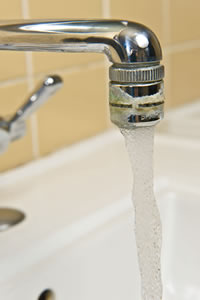
The United States enjoys one of the world’s most reliable and safest Water faucetsupplies of drinking water. Congress passed the Safe Drinking Water Act (SDWA) in 1974 to protect public health, including by regulating public water systems.

The Safe Drinking Water Act (SDWA) requires EPA to establish and enforce standards that public drinking water systems must follow. EPA delegates primary enforcement responsibility (also called primacy) for public water systems to states and Indian Tribes if they meet certain requirements.

Over 155,000 public water systems provide drinking water to most Americans. Customers that are served by a public water system can contact their local water supplier and ask for information on contaminants in their drinking water, and are encouraged to request a copy of their Consumer Confidence Report. This report lists the levels of contaminants that have been detected in the water, including those by EPA, and whether the system meets state and EPA drinking water standards.

About 10 percent of people in the United States rely on water from private wells. Private wells are not regulated under the SDWA.  People who use private wells need to take precautions to ensure their drinking water is safe. Learn more about private wells

Learn more

Top of Page


World Water Day …Did you know it was a thing? 3/22/2017


choke-point-reckoning

On March 22nd, World Water Day 2017, Pope Francis will inspire a global conversation. His address from the Vatican will help shift how the world values and understands its single most precious resource: water. Immediately following the Papal address, at 10:30 a.m. CET, 400 thought leaders from around the world will convene at WATERSHED. These policy makers and academics, together with students, artists, business leaders and men and women from the most at-risk populations will begin an unprecedented dialogue around the value and values of water.

The conference is co-hosted by the Vatican’s Pontifical Council for Culture and the Club of Rome.

Collaborating partners include Circle of Blue, with input from the World Economic Forum Global Future Council on the Environment.

Please look out for World Water Day in 2018 – Nativegrl77