

history… march 3rd

1513 – Spanish explorer Juan Ponce de Leon landed in Florida. He had sighted the land the day before.
1776 – George Washington received an honorary Doctor of Laws degree from Harvard College .
1829 – James Carrington patented the coffee mill.
1860 – The first Pony Express riders left St. Joseph, MO and Sacramento, CA. The trip across country took about 10 days. The Pony Express only lasted about a year and a half.
1865 – Union forces occupy Confederate capital of Richmond, Virginia.
1866 – Rudolph Eickemeyer and G. Osterheld patented a blocking and shaping machine for hats.
1882 – The American outlaw Jesse James was shot in the back and killed by Robert Ford for a $5,000 reward. There was later controversy over whether it was actually Jesse James that had been killed.
1910 – Alaska’s Mt. McKinley, the highest mountain in North America was climbed.
1933 – First Lady Eleanor Roosevelt informed newspaper reporters that beer would be served at the White House. This followed the March 22 legislation that legalized “3.2” beer.
1936 – Richard Bruno Hauptmann was executed for the kidnapping and death of the son of Charles and Anne Lindbergh.
1942 – The Japanese began their all-out assault on the U.S. and Filipino troops at Bataan.
1946 – Lt. General Masaharu Homma, the Japanese commander responsible for the Bataan Death March, was executed in the Philippines.
1948 – U.S. President Harry Truman signed the Marshall Plan to revive war-torn Europe. It was $5 billion in aid for 16 countries.
1949 – Dean Martin and Jerry Lewis debuted on radio on the “Martin and Lewis Show”. The NBC program ran until 1952.
1953 – “TV Guide” was published for the first time.
1967 – The U.S. State Department said that Hanoi might be brainwashing American prisoners.
1968 – Martin Luther King Jr. delivered his “mountaintop” speech just 24 hours before he was assassinated.
1968 – North Vietnam agreed to meet with U.S. representatives to set up preliminary peace talks.
1972 – Charlie Chaplin returned to the U.S. after a twenty-year absence.
1979 – Jane Byrne became the first female mayor in Chicago.
1982 – John Chancellor stepped down as anchor of the “The NBC Nightly News.” Roger Mudd and Tom Brokaw became the co-anchors of the show.
1983 – It was reported that Vietnamese occupation forces had overrun a key insurgent base in western Cambodia.
1984 – Sikh terrorists killed a member of the Indian Parliament in his home.
1984 – Col. Lansana Konte became the new president of Guinea when the armed forces seized power after the death of Sekou Toure.
1985 – The U.S. charged that Israel violated the Geneva Convention by deporting Shiite prisoners.
1986 – The U.S. national debt hit $2 trillion.
1987 – Riots disrupted mass during the Pope’s visit to Santiago, Chili.
1993 – The Norman Rockwell Museum opened in Stockbridge, MA.
1996 – An Air Force jetliner carrying Commerce Secretary Ron Brown crashed in Croatia, killing all 35 people aboard.
1996 – Unabomber suspect Theodore Kaczynski was arrested. He pled guilty in January 1998 to five Unabomber attacks in exchange for a life sentence without chance for parole.
1998 – The Dow Jones industrial average climbed above 9,000 for the first time.
2000 – A U.S. federal judge ruled that Microsoft had violated U.S. antitrust laws by keeping “an oppressive thumb” on its competitors. Microsoft said that they would appeal the ruling.
2000 – The Nasdaq set a one-day record when it lost 349.15 points to close at 4,233.68.
2010 – The first Apple iPad was released.
on-this-day.com
Share this:

In the Library … the Sunburnt Queen
“The Sunburnt Queen is an extraordinary narrative. The writing’s fresh immediacy brings history to life.”—The Sunday Independent (South Africa)
In the late 1730s, the local inhabitants of South Africa found a seven-year-old girl called Bessie, washed ashore on the beach of the Wild Coast. Bessie was brought up by them, growing into a young woman of legendary beauty and wisdom, and marrying one of the most important tribal chiefs in the area.
Using oral histories and written accounts by early missionaries, Hazel Crampton traces the extraordinary story of Bessie and the turbulent history of the Eastern Cape.
Resource: amazon.com
Share this:

Richard Pryor Statue Unveiled in His Hometown of Peoria, Illinois – Black History

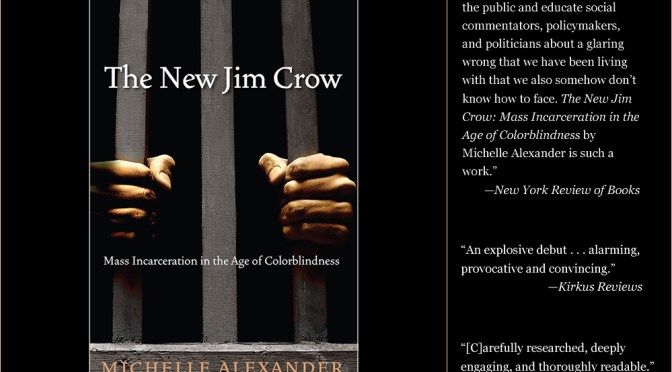
in the Library ~ The New Jim Crow – by michelle alexander… Best Seller

so, i read this review of a book that took me back to information given to us in class at the UW …stunning, sad and eye opening information yet this book review revealed much more …
By Leonard Pitts Jr. / Syndicated columnist
Michelle Alexander’s ‘The New Jim Crow,’ a troubling and necessary book
Columnist Leonard Pitts Jr. suggests reading “The New Jim Crow,” by Michelle Alexander, who contends that the mass incarceration of black men for nonviolent drug offenses, combined with sentencing disparities and laws making it legal to discriminate against felons in housing, employment, education and voting, constitute nothing less than a new racial caste system.
Syndicated columnist
Related
“You have to face the fact that the whole problem is really the blacks. The key is to devise a system that recognizes this all while not appearing to.”
— Richard Nixon as quoted by H.R. Haldeman, supporting a get-tough-on drugs strategy
“They give black people time like it’s lunch down there. You go down there looking for justice, that’s what you find: just us.”— Richard Pryor
Michelle Alexander was an ACLU attorney in Oakland, preparing a racial-profiling lawsuit against the California Highway Patrol. The ACLU had put out a request for anyone who had been profiled to get in touch. One day, in walked this black man.
He was maybe 19 and toted a thick sheaf of papers, what Alexander calls an “incredibly detailed” accounting of at least a dozen police stops over a nine-month period, with dates, places and officers’ names. This was, she thought, a “dream plaintiff.”
But it turned out he had a record, a drug felony — and she told him she couldn’t use him; the state’s attorney would eat him alive. He insisted he was innocent, said police had planted drugs and beaten him. But she was no longer listening. Finally, enraged, he snatched the papers back and started shredding them.
“You’re no better than the police,” he cried. “You’re doing what they did to me!” The conviction meant he couldn’t work or go to school, had to live with his grandmother. Did Alexander know how that felt? And she wanted a dream plaintiff? “Just go to my neighborhood,” he said. “See if you can find one black man my age they haven’t gotten to already.”
She saw him again a couple of months later. He gave her a potted plant from his grandmother’s porch — he couldn’t afford flowers — and apologized. A few months after that, a scandal broke: Oakland police officers accused of planting drugs and beating up innocent victims. One of the officers involved was the one named by that young man.
“It was,” says Alexander now, more than 10 years later, “the beginning of me asking some hard questions of myself as a civil-rights lawyer. … What is actually going on in his neighborhood? How is it that they’ve already gotten to all the young African-American men in his neighborhood? I began questioning my own assumptions about how the criminal-justice system works.”
The result is a compelling new book. Others have written of the racial bias of the criminal-injustice system. In “The New Jim Crow,” Alexander goes a provocative step further. She contends that the mass incarceration of black men for nonviolent drug offenses, combined with sentencing disparities and laws making it legal to discriminate against felons in housing, employment, education and voting, constitute nothing less than a new racial caste system. A new segregation.
She has a point. Yes, the War on Drugs is officially race-neutral. So were the grandfather clause and other Jim Crow laws whose intention and effect was nevertheless to restrict black freedom.
The War on Drugs is a war on African-American people and we countenance it because we implicitly accept certain assumptions sold to us by news and entertainment media, chief among them that drug use is rampant in the black community. But. The. Assumption. Is. WRONG.
According to federal figures, blacks and whites use drugs at a roughly equal rate in percentage terms. In terms of raw numbers, whites are far and away the biggest users — and dealers — of illegal drugs.
So why aren’t cops kicking their doors in? Why aren’t their sons pulled over a dozen times in nine months? Why are black men 12 times likelier to be jailed for drugs than white ones? Why aren’t white communities robbed of their fathers, brothers, sons?
With inexorable logic, “The New Jim Crow” propounds an answer many will resist and most have not even considered. It is a troubling and profoundly necessary book.
Please read it.
Miami Herald columnist Leonard Pitts Jr.’s column appears regularly on editorial pages of The Times. His e-mail address is: lpitts@miamiherald.com

 Be a Seed for Change
You must be logged in to post a comment.