Mindful Behavior … Stop Smoking … new beginnings


energy_smokestacks_480x295

Mindful behavior … Stop smoking

a repost

I believe that great information makes us think – hopefully starts a conversation, and makes us take positive action. We have all heard about the current political noise in California and possibly other states concerning taxing cigarettes; a move that Washington State decided was a good idea, deciding folks must pay both the cigarette tax and the use tax, which goes directly to the Department of Revenue. The art of Mindful behavior takes some a mere moment while others a few hundred tries, but … it can be done.

As a parent and an ex-smoker (cold turkey) for well over 15yrs, the idea of taxing cigarettes is a good idea though no revenue will benefit the state itself, it will help others in the different ways the act of smoking affects our lives. It took becoming a parent to stop, along with an increase in allergies and asthmatic symptoms.  My mindful behavior, and the love of my kids not to mention a long family history of asthma helped so much.  Mindful behavior has a lot of angles … by definition or what society thinks of when contemplating the word “behavior”  is a need for guidance or in its totality has to do with the quality of awareness that a person brings to everyday living; learning to control your mind, rather than letting your mind control you.  However, being mindful in this case includes actions that can be stopped, controlled, or at least altered if you make a lifestyle change, reduce stress with exercises, and or find other things to do.

California and other states can or should at least explore subscribing to a Tobacco Tax; the increases can offer win-win-win solutions, especially as they face a severe fiscal crisis and work to balance budgets while preserving essential public services.

  Stop Smoking

In 2009, Orzechowski and Walker, an economic consulting firm, said …

$1,712 is the average amount a pack-a-day smoker in the US spends annually

What can $1,712 buy?

** 170 mosquito nets from nothingbutnets.net and prevent malaria transmission to African families.

** Provide 11,900 meals for the nation’s hungry through www.feedingamerica.org

** Donate to local programs to give 10 kids fun and creative after-school options every day for a month.  www.aferschoolalliance.org for tips on finding an organization near you.

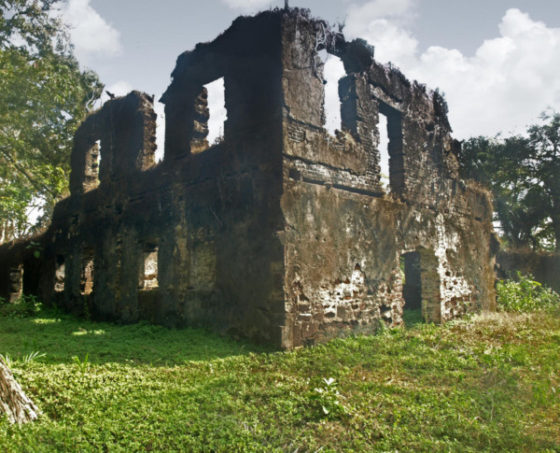
BUNCE ISLAND: BRITISH SLAVE TRADING POST IN THE 18TH CENTURY


 POSTED BY JAE JONES – APRIL 25, 2021 – BLACK CULTURELATEST POSTSSLAVERY

Bunce Island is an island in the Sierra Leone River. It is situated in Freetown Harbour, the estuary of the Rokel River and Port Loko Creek, about 20 miles upriver from Sierra Leone’s capital city Freetown.

The early history of the castle begins with it being operated by two London-based firms, the Gambia Adventurers and the Royal African Company of England, the latter a “Crown-chartered company,” subsidized by the British government. The castle was not commercially successful at this period, but it served as a symbol of British influence in the region.

The first phase of the castle’s history ended in 1728 when an Afro-Portuguese competitor, José Lopez da Moura, who was involved in the slave trade, raided Bunce Island. The castle was abandoned until the mid-1740s.

During the second phase of the castle, Bunce Island was operated later by two London-based companies: Grant, Oswald & Company and John & Alexander Anderson, and at that period it was a highly profitable enterprise. During the second half of the 18th century, the companies sent thousands of African captives from Bunce Island to British- and French-controlled islands in the West Indies and to Britain’s North American colonies. The London-based owners grew wealthy from the castle’s operations.

During the early history of the castle, Afro-Portuguese sold slaves and local products there. During its late history, Afro-English families, such as the Caulkers, Tuckers, and Cleveland’s, sold slaves at Bunce Island. The slave ships came from the British ports of London, Liverpool, and Bristol; from Newport, Rhode Island in the North American colonies; and from France and Denmark. They transported slaves mostly to the Caribbean and the American South.

French naval forces attacked the Island four times in 1695, 1704, 1779, and 1794, causing extreme damage or destroying it.
The castle was also attacked by Pirates twice in 1719 and again in 1720, including Bartholomew Roberts, or “Black Bart,” the most notorious pirate of the 18th century. Bunce Island shut down for slave trading and completely abandoned around 1840.

sources:

https://glc.yale.edu/lectures/evening-lectures/past-lectures/20042005/bunce-island/bunce-island-history

1968 – Students seized the administration building at Ohio State University


See the source image

On April 26, LaQuita Henry walked into the main administration building at The Ohio State University like she had done on the same day, and nearly the same time, 50 years earlier. The circumstances, though, could not have been more different.

“I believe we were actually there a little bit before 10 a.m. It was right before noon that the administration building was taken over because there was so much resistance to what was being stated and what we were trying to negotiate – a change on campus,” Henry said.

Henry was one of the leaders of the Black Student Union at Ohio State who staged a protest inside what is now Bricker Hall to bring issues of educational inequality, racial disparities and police misconduct to the attention of university leadership in 1968. The flashpoint for the protest came after four black female students were kicked off a bus and allegedly harassed by campus police. Once the protest began, students pushed for more diversity in academic leadership, courses and the student body.

Fifty years later, the Ohio State Alumni Association and the Office of Diversity and Inclusion (ODI) hosted a series of events last weekend to honor those students.

Henry joined several of her former classmates on a bus tour of the Columbus campus to get a sense of how much the university has changed. They were also the guests at receptions hosted by the alumni association, ODI and the African American and African Studies Community Extension Center, and they were guests of President Michael V. Drake.

John Sidney Evans was the spokesman for the Black Student Union at the time of the protests. He, like 33 of his peers, was expelled and criminally charged for the takeover of the administration building.

All had to fight to clear their names and reverse their expulsions. Evans said they also had to fight for their place in history.