

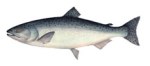
 How to
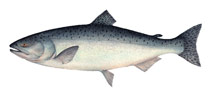
Identify
Sustainable Seafood
Know the label to look for when shopping for fish.
by Virginia Sole-Smith – 2010
This international nonprofit organization uses independent certifying agencies to make sure fisheries are catching their fish in the most environmentally friendly way possible. The label now appears on more than 180 frozen, fresh, and smoked-fish products sold in grocery stores across the country, including Whole Foods and Target,Wal-Mart has committed to buying all its store-brand fish products from MSC-certified fisheries within the next two to four years. For more information, visit eng.msc.org
Please ask your grocer if they buy and sell certified Sustainable fish … Nativegrl77
facts about MSC
Our vision is of the world’s oceans teeming with life, and seafood supplies safeguarded for this and future generations
Our mission is to use our ecolabel and fishery certification program to contribute to the health of the world’s oceans by recognising and rewarding sustainable fishing practises, influencing the choices people make when buying seafood, and working with our partners to transform the seafood market to a sustainable basis.
MSC vision and mission
-
The MSC is a global program with fisheries participating from all the world’s oceans
We have a staff of 100 spread across the HQ in London and regional offices in the Netherlands, USA, Australia, Baltic region, France, Germany, Japan, South Africa, and Spain, where our multilingual staff can be contacted to answer questions.
MSC offices and staff -
The MSC program assesses wild capture fisheries only
The MSC assessment program is used to certify wild capture freshwater and marine species. Our program does not assess fish farming (aquaculture), although some forms of enhanced fishery may be eligible for assessment.
Why MSC doesn’t certify aquaculture fisheries -
We do not certify fisheries, we set standards
To maintain impartiality, the MSC operates a ‘third-party’ certification program. This means that MSC itself does not assess fisheries or decide if they are sustainable. Instead certificates are issued by certifiers who are independently accredited to be able to perform assessments of fisheries and decide if they meet the MSC’s standards.
Third party certification -
The market for certified sustainable seafood creates an incentive for fishery improvements
Most fisheries say MSC certification helps them retain existing markets and gain access to new ones. For example the Germany North Sea saithe fishery used to rely entirely on fresh fish sales, but is now winning contracts for frozen fillets because its customers are requesting MSC certified products. This presents a powerful incentive for other fisheries to demonstrate their sustainability or to make improvements so that they can be eligible for certification too.
Benefits of MSC certification (PDF, 8.2 mb) -
Fisheries in the MSC program can influence fishery policies
An example from the South Africa hake fishery illustrates how fisheries in the MSC program can influence government policy. The fishery introduced tori lines (streamers flown from boats to keep birds away) in response to one MSC condition. These are now mandatory on all trawling vessels in South Africa.
Net benefits report (PDF, 8.2 mb) -
The MSC program has delivered environmental improvements in fishery management
For example the MSC assessment process for the Ekofish Group plaice fishery led to a voluntary agreement with NGOs to close certain sensitive areas for this bottom-trawl fishery, and to take part in scientific research on the impact fishing gear has on habitats and the seabed.
Find out about other environmental benefits resulting from the MSC program -
The MSC program uses the best available science
MSC certification is a robust scientific process, which draws on scientific expertise from marine scientists worldwide as well as contributing to improving scientific understanding through the fishery assessment process.
MSC standards and methodologies -
Every MSC certified fishery has demonstrated that it maintains sustainable fish stocks, minimises environmental impacts and is effectively managed
These are the three MSC environmental principles that every fishery in the program must prove it meets. Measurable environmental benefits that have occurred in MSC certified fisheries include the recovery of the New Zealand hoki fishery‘s historically low stock levels, due to a raft of management measures including a stock rebuilding plan.
-
The MSC program is transparent
Information from each step of the assessment process is available on the MSC website to make it easier for stakeholders to contribute. We also invite stakeholders to participate in key improvement projects and publish progress online.
Consultations
-
We work collaboratively with stakeholders around the world
The input that stakeholders provide during a fishery’s assessment is key to ensuring a thorough assessment and a credible outcome. For this reason, certifiers are required to carefully consider all comments received, and justify and document their responses. The MSC also has an objections procedure which provides a mechanism for any disagreement with the assessment of the fishery to be reviewed and resolved. The MSC is continually improving its program, and stakeholders are invited to contribute to its development through regular meetings of the Stakeholder Council and public consultations.
Have your say
-
We work with fisheries in developing countries to ensure there is equal access to the benefits of certification
The MSC program is open to all fisheries regardless of size, scale, location and intensity. To promote equal accessibility to its ecolabelling program, the MSC works with stakeholders and fisheries from all over the world. Through the MSC’s Developing World Program, the MSC seeks to promote increased participation of developing country fisheries in certification.
Developing World Program -
We are a non-profit organisation
The MSC is a registered charity and non-profit (501c3) and to a great extent relies on financial support from donors with an interest in protecting sustainable fishing. The majority of this income is received in the form of grants from private foundations, as well as some more limited support from governments, companies, other NGOs and individual supporters. Additional revenue is also generated from MSC International (the trading arm of the MSC) which administers a fee structure for use of the MSC eco-label, helping the MSC to become more financially independent and reduce its dependence on charitable donations.
Make a donation -
We meet best practice for ecolabels and setting social and environmental standards
The MSC has the only seafood ecolabel in the world that is consistent with the ISEAL Code of Good Practice for Setting Social and Environmental Standards and the United Nations Food and Agriculture Organisation’s guidelines for ecolabelling of fish products.
How we meet best practice -
MSC certification helps to safeguard livelihoods and sustain communities
Encouraging responsible fisheries management improves security for the livelihoods of communities who depend on them, especially for smaller scale artisanal fisheries. In the Net Benefits report there are many examples, such as in the American Albacore Fishing Association Pacific tuna fishery which in 2005 had unstable incomes and lack of resources to invest in repairing vessels. After certification, the fishery found new buyers in Switzerland, Germany, France and the United Kingdom – and, confident of a market, was able to set its own price for the first time in its history. Now fishing is a reliable industry for the future of the community.
Net benefits report (PDF, 8.2 mb) -
Buying MSC labelled fish makes a difference
To remain MSC certified, fisheries must continually meet requirements for maintaining fish populations, so your favourite fish can still be enjoyed in years to come.
Where to buy sustainable seafood -
You can be sure that all fish with the MSC ecolabel can be traced back to a certified sustainable fishery
MSC-labelled seafood is traceable through the whole supply chain. When a product is sold with the MSC ecolabel, each business in the chain must have a Chain of Custody certificate, proving they have demonstrated to independent auditors that MSC certified fish comes from a certified supplier and is kept separate from non MSC-certified fish.
MSC chain of custody certification -
23% of shoppers across markets around the world recognise the MSC ecolabel
2010 research carried out in the USA, Canada, UK, Germany, France, and Japan shows that across these regions, 23% of the adult population is now aware of the MSC ecolabel – up from 9% in 2008.
Find out more about the research -
Consumers respond positively to the promotion of certified sustainable seafood
When promoted as part of a campaign called ‘Les Jours Bleus’ (Blue Days), the MSC ecolabel helped increase sales for MSC Partners. Findus increased their market share for breaded fish in Carrefour stores by 30% in volume. Sales of Connétable products were multiplied by 10 compared to their average annual sales throughout the year.
Les Jours Bleus campaign -
Our ‘Fish & Kids’ project teaches the next generation why seafood matters
By working with education caterers, schools and children, the MSC is bringing sustainable seafood to over 4000 (roughly 20%) of primary schools in the UK. The project teaches children about sustainable seafood issues and helps schools source MSC fish for school meals. In 2010 the project was also launched in 60 schools in Sweden.
Fish & Kids website -
The MSC is widely recognised as the leader in the sustainable seafood labelling field
Independent comparisons of seafood labelling programs routinely place the MSC at the top of the list and recognise the MSC as having the most robust and scientific standards of all seafood ecolabelling programs.
MSC standards and methodologies
Visit certified sustainable fisheries on the map and find out more about them.
Financial support is critical to our success. Find out how you can help.


 ing Industrial Technology at the University of Louisiana at Lafayette. I was an active member of the Pride of Acadiana Marching Band and could play almost every brass instrument, guitar and piano. I also loved to cook and workout. Not only did I lose the ability to do the things I love but I also lost the ability to do things I need to care for myself.



 Be a Seed for Change
You must be logged in to post a comment.